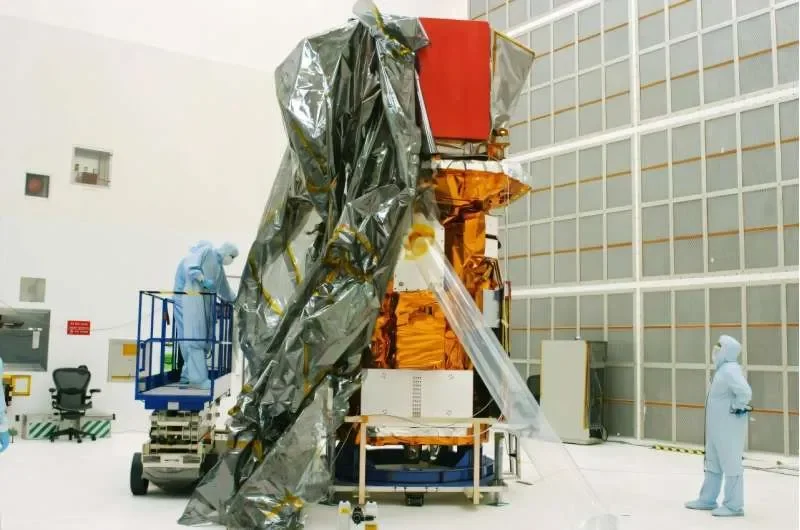
NASA is embarking on a novel series of experiments aimed at understanding how fire behaves on the Moon, a fundamental aspect of future extraterrestrial habitation and exploration. The Flammability of Materials on the Moon (FM2) mission represents a significant step in assessing the risks and behaviors of combustion in an environment vastly different from Earth. Current safety protocols and material flammability standards are largely based on terrestrial conditions, where gravity and airflow dictate flame patterns—typically a droplet shape as hot gases rise and cooler air descends. On the Moon, this predictable behavior is altered by its reduced gravitational pull.
Early findings and existing research suggest that flames in space do not exhibit the familiar upward plume seen on Earth. Experiments aboard the International Space Station have already provided initial data on this phenomenon. The upcoming lunar tests are designed to directly confront the unique physics of combustion on the Moon's surface.
Read More: NASA Robot Mission Launched to Raise Swift Telescope Orbit, Add 10 Years
The motivation for these experiments appears tied to the progression of NASA's Artemis program, which aims to establish a sustained human presence on the Moon. Preliminary tests are planned before Artemis 4 and Artemis 5 missions, which intend to land humans. This move towards direct lunar surface testing follows the recent successful fly-around of the Moon by the Artemis II mission. Engineers ultimately aspire to conduct comprehensive material qualification tests directly on the lunar terrain.
Broader Context: Lunar Environment and Unforeseen Risks
The Moon's environment presents a host of challenges for exploration. Beyond the peculiarities of combustion, research indicates the Moon is not as static as once believed. Recent studies suggest the Moon is gradually shrinking, a process that causes its surface to wrinkle and increases the likelihood of moonquakes. These seismic events could trigger landslides and damage sensitive equipment deployed by robotic landers or astronauts.
Read More: Belagavi and Goa Forests Closed Until Monsoon Ends
Furthermore, the possibility of celestial impacts cannot be discounted. New research indicates a non-negligible chance of an asteroid collision with the Moon in 2032, which could create a visible flash. While the immediate implications for human missions are unclear, such events highlight the dynamic nature of our celestial neighbor.
The Artemis program itself has faced scrutiny. Concerns have been publicly raised regarding potential design flaws, specifically related to the heat shield of the Orion capsule used in the Artemis II mission. While mission planners adjusted re-entry procedures to mitigate risks for the crew, the agency plans to modify the heat shield design for subsequent flights, underscoring the iterative and often challenging process of space exploration.