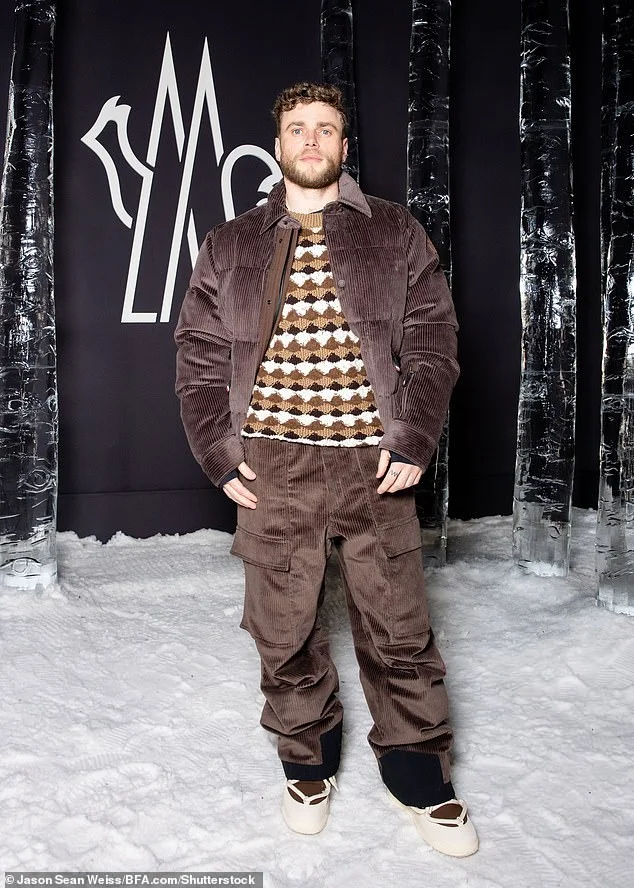
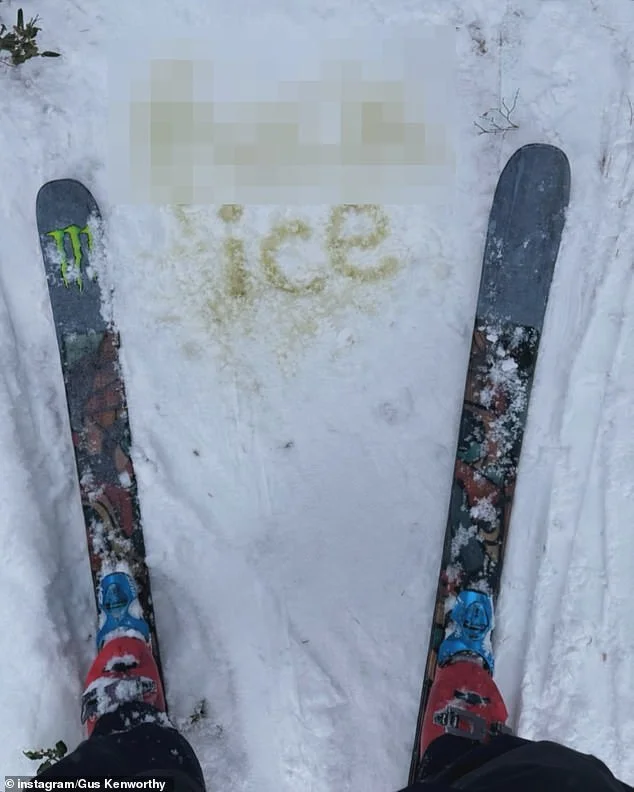
MILAN – As the world's eyes turn to the glittering spectacle of the Winter Olympics, a defiant act in the snow has ignited a firestorm of controversy, blurring the lines between sport and political protest. British-American freestyle skier Gus Kenworthy, a seasoned Olympian switching his allegiance from the U.S. to Team GB, has publicly expressed his vehement opposition to U.S. Immigration and Customs Enforcement (ICE) by urinating the words "F ICE" into the snow. This provocative gesture comes at a politically charged moment, coinciding with the arrival of U.S. Vice President JD Vance* in Milan for the Games. The incident has not only drawn condemnation from some but has also amplified pre-existing tensions surrounding ICE's controversial role in U.S. immigration policy, leading to protests and a somber atmosphere even before the opening ceremony.
The stakes here are immense. Kenworthy's action, amplified by social media, has thrust the harsh realities of U.S. immigration policy into the global spotlight, right at the heart of an event meant to celebrate international unity. Questions loom large: Is this a brave stand for human rights, or an inappropriate politicization of a sporting event? Will this incident overshadow the athletes' performances and the Olympic spirit itself? And crucially, what does this say about the current climate of political discourse, both within the United States and on the international stage?
Read More: Italian Athletes Do Well at Home in Winter Olympics
A Trail of Discontent: ICE, Protests, and the Olympic Shadow
The presence of U.S. Vice President JD Vance at the Winter Olympics in Milan was always going to be a sensitive matter. This sensitivity has been amplified by the ongoing scrutiny and public anger directed at U.S. Immigration and Customs Enforcement (ICE). Recent events, particularly the fatal shooting of two U.S. citizens by ICE agents in Minnesota, have galvanized activists and led to widespread protests.
Minneapolis Killings: The incidents in Minnesota have served as a potent catalyst, bringing the actions of ICE agents under intense public pressure. These tragic events are at the forefront of the protests and have directly fueled Kenworthy's outspoken stance.
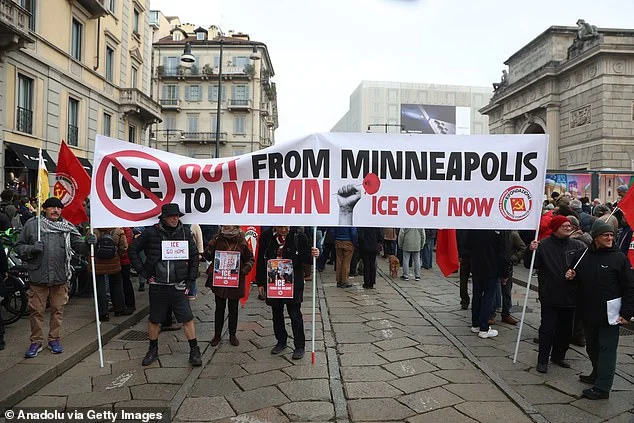
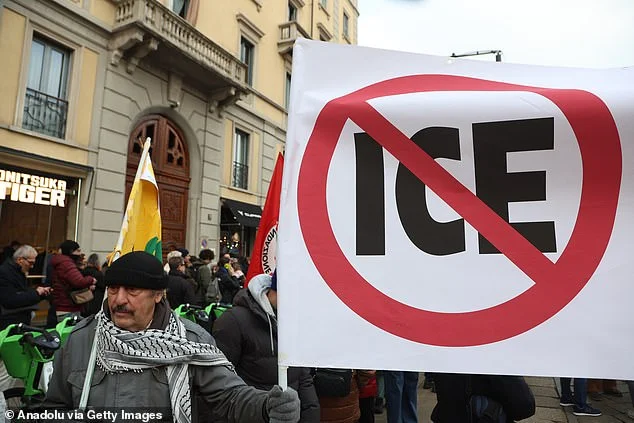
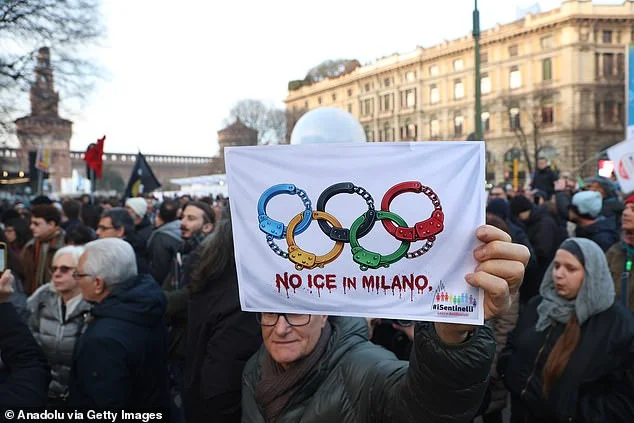
Protests in Milan: Even before the Games officially began, hundreds gathered in Milan to voice their opposition to ICE. Signs bearing messages like "Ice = Gestapo" have been seen, indicating the depth of the sentiment against the agency.
Official Responses: The International Olympic Committee (IOC) has acknowledged the brewing discontent, with Milan's Mayor Giuseppe Sala explicitly stating that ICE agents are not welcome. The IOC has even issued pleas for fans not to boo JD Vance during the Games, highlighting the palpable tension.
Security Measures: While the U.S. State Department confirmed that federal agencies, including ICE, would assist in protecting American visitors, assurances have been given that these personnel will not be involved in policing on Italian streets. It's understood that ICE officers accompanying Vance are from the Homeland Security Investigations unit, focused on cross-border crimes rather than domestic immigration enforcement. However, the mere presence of ICE has become a lightning rod.
Read More: Trump Disagrees with Federalist Society, Judge Stops His Courtroom Talk
This confluence of factors – a controversial U.S. agency, high-profile political presence, and the global stage of the Olympics – has created a volatile backdrop. It raises questions about the intersection of international sports and domestic political issues:
How does the presence of ICE personnel, even for security, reconcile with the Olympic ideal of peace and unity?
Was the decision to send a delegation including JD Vance a miscalculation given the current climate of protest?
What responsibility does the IOC have in mediating such political tensions that spill into the Olympic environment?
Kenworthy's Defiance: A Calculated Risk or an Outburst?
Gus Kenworthy, a prominent figure known for his Olympic success and advocacy, has once again placed himself at the center of a significant controversy. His latest social media post, a photograph depicting the words "F* ICE" etched into the snow, is a clear and unvarnished condemnation of the U.S. agency.
Read More: Lindsey Vonn Hurt in Ski Race Crash
The Message: The act itself is graphic and intended to shock. Kenworthy later confirmed the image depicted urine. This visceral expression aims to convey extreme disapproval.
Social Media Amplification: Kenworthy posted the image to his 1.2 million Instagram followers, a strategic move to maximize its reach. He also provided a "sample script" for his followers to contact their senators, urging them to pressure lawmakers regarding Department of Homeland Security funding.
Historical Context: This is not Kenworthy's first foray into activism. He has previously spoken out against ICE, advocating for accountability and an end to what he terms "brutality" and "unchecked power." His call for senators to "demand real guardrails and accountability" against ICE and CBP (Customs and Border Protection) highlights a sustained commitment to his cause.
Allegations and Context: Kenworthy's statement is partly fueled by recent events, including the killings of two U.S. citizens by ICE agents in Minnesota. This context imbues his protest with a sense of urgency and righteous anger.
The question is whether this was a spontaneous act of frustration or a carefully planned statement.
Read More: Lawmakers Question Attorney General Bondi on Epstein Files
"I just want to say, I've been waiting to say this in any interview, but just f ICE so hard right now." - Gus Kenworthy*
Why did Kenworthy choose the snow as his canvas?
Is the act of urinating as a protest a deliberate choice to be provocative, or does it devalue the message?
Does his role as a Team GB athlete, born in Britain but raised in the U.S., complicate his position on U.S. policy?
How does his ability to leverage a large social media following for political advocacy reflect on the role of athletes in contemporary society?
Olympic Optics: Boos, Cheers, and the Blurring of Lines
The arrival of U.S. Vice President JD Vance in Milan was met with a divided reception, illustrating the deep political fissures extending into the Olympic arena. While the U.S. Olympic team received cheers, Vance himself became the focal point of a different kind of crowd reaction.
Read More: Spurs Look at Tactics and Player Choices
Boos for Vance: Reports indicate that JD Vance was booed at the Winter Olympics opening ceremony when he appeared on the big screen. This was described as a rare occurrence, with some commentators noting it's been over two decades since such audible dissent was heard at an opening ceremony.
Contrasting Reactions: This contrasts sharply with the reception of the U.S. athletes and the Ukrainian team, who were met with enthusiastic cheers. This suggests that the crowd's displeasure was specifically directed at the political figure.
IOC's Plea: The IOC, aware of the potential for politically charged reactions, had reportedly urged fans to refrain from booing. The fact that boos were still audible raises questions about the effectiveness of such pleas and the intensity of public sentiment.
Milan Mayor's Stance: Giuseppe Sala, the Mayor of Milan, had also publicly stated that ICE agents were not welcome in the city, further underscoring the local opposition to the agency's presence.
The Olympics are meant to be a sanctuary from political strife, a place where nations come together in shared competition. However, this year, political tensions have undeniably infiltrated the Games.
Read More: Congress Leader Accuses Finance Minister of Lying to Parliament About WTO Deal
| Event | Crowd Reaction | Implication |
|---|---|---|
| Team USA's Entrance | Loud Cheers | Traditional support for national athletes. |
| Vice President JD Vance on Screen | Significant Boos and Jeers | Direct disapproval of U.S. political figures and/or ICE policies. |
| Ukrainian Team's Entrance | Loudest Cheers | Expression of solidarity and support for Ukraine. |
This situation prompts several critical questions:
Is it inevitable that political figures and their associated policies will draw reactions at international events, even those intended to be apolitical?
How does the IOC balance its mandate of promoting peace and unity with the reality of global political dissent?
Does the crowd's reaction reflect a broader sentiment against U.S. immigration policy, or is it a targeted protest against the political administration?
No Censure, But a Lasting Impression: The Athlete's Voice
Despite the provocative nature of Gus Kenworthy's protest, he is unlikely to face any formal disciplinary action from Olympic authorities. This non-punitive outcome, however, does not diminish the impact of his statement.
Read More: Top Girls' Basketball Teams Stand Out in Southern California
IOC's Stance: The International Olympic Committee (IOC) has clarified that it does not regulate athletes' personal social media posts. This distinction means that Kenworthy's actions, while performed at the Olympic venue, are considered outside the purview of Olympic rules governing on-field political statements.
Team GB's Position: Team GB also appears unconcerned, viewing the post as a personal opinion on an issue external to the Games, and one that does not directly involve or represent the team. This hands-off approach suggests a recognition of athletes' rights to free expression, within certain boundaries.
Athlete's Motivation: Kenworthy's decision to switch allegiance from the U.S. to Team GB for the Beijing Games and his continued residence in the U.S. make his outspokenness on American policy particularly noteworthy. It signals a deep-seated concern that transcends national representation in sport.
The "Urinating" Element: The choice to use urine to create the message adds another layer of shock value. While some might find it crude, others may see it as a powerful, albeit unconventional, act of defiance, turning a bodily function into a potent symbol of disgust.
While Kenworthy himself faces no sanctions, the broader implications are significant:
Read More: Keir Starmer Faces Questions After Top Civil Servant Leaves and Controversial Appointments
Does this create a precedent for athletes to engage in political protest via social media during Olympic periods without consequence?
What is the ethical line between an athlete's right to express personal beliefs and their responsibility to uphold the neutrality and spirit of the Olympic Games?
How do sporting bodies navigate the increasing pressure from athletes and the public to take stances on pressing social and political issues?
The Bigger Picture: Beyond the Snow
Gus Kenworthy's "F* ICE" message in the Milan snow is more than just a controversial social media post; it's a symptom of a larger trend: the increasing entanglement of global sports with socio-political issues. The Winter Olympics, often perceived as more niche than their summer counterparts, have unexpectedly found themselves at the epicenter of a fierce debate over U.S. immigration policy.
The simultaneous presence of JD Vance, a prominent political figure associated with a more hawkish stance on immigration, and the protests against ICE, have created a charged atmosphere. Kenworthy's act, whether intended or not, tapped into this existing wave of discontent, amplifying it on a global stage.
Athlete Activism: This incident highlights the growing role of athletes as activists, using their platforms to advocate for causes they believe in. The question remains: where do we draw the line between advocacy and distraction from the sporting event itself?
Political Symbolism: The act of urinating on a message carries a potent symbolic weight, representing a complete rejection and devaluation of the entity being targeted. In this case, it's directed at an agency accused of human rights abuses.
International Scrutiny: The Winter Olympics in Milan have inadvertently become a platform for international scrutiny of U.S. domestic policy. This exposure forces a confrontation with the realities of immigration enforcement, far from the usual arenas of political debate.
"My last post was pee so it only felt appropriate to follow it up with a lil’ dump … of photos from January." - Gus Kenworthy on Instagram.
The situation raises profound questions about the future of sports and politics:
Will future Olympic Games be increasingly defined by political protests and controversies rather than athletic achievements?
How will governing bodies like the IOC adapt to manage the rising tide of athlete activism and public political engagement?
What message does this send to fans and aspiring athletes about the values and priorities of the Olympic movement?
Sources
Daily Mail - Winter Olympics 'traitor' 'urinates "F* ICE"' in the snow
Daily Mail - Winter Olympics chief begs fans not to boo JD Vance amid ICE fury
The Guardian - Team GB skier targets ICE with graphic message written in snow
Brave - JD Vance booed at Winter Olympics opening ceremony as furore over ICE escalates
ESPN - Winter Olympics: Team GB skier avoids censure for anti-ICE message
Metro - Team GB star urinates 'F**k ICE' in the snow in protest at Winter Olympics
Mediaite - British-American Olympic Skier Urinates ‘F*ck ICE’ Into Snow in Milan
Metro - Winter Olympics booed for 'first time in 22 years' as JD Vance appears on screen
Sport Bible - Olympic Crowd Goes Against IOC Orders During Team USA's Opening Ceremony Entrance
Daily Mail - inter Olympics start disrupted by too much SNOW!
Daily Mail - GB Winter Olympic skeleton gold favourite told his helmet is ILLEGAL
Daily Mail - There's a chilling sight casting a shadow over the Winter Olympics
Daily Mail - Angry Italians boo American athletes and JD Vance at Winter Olympics
The Independent - Olympic crowd boos as JD Vance appears at 2026 Winter Games opening ceremony
The Independent - JD Vance arrives in Milan for Winter Olympics after local anti-ICE protests