The New York Times daily word-grouping game, Connections, reached iteration #1071 on May 17, 2026. Data aggregation from multiple sources confirms a difficulty consensus of 4/5, categorizing the puzzle as notably taxing for regular players.
The core mechanic requires sorting sixteen distinct terms into four thematic quartets, a process often confounded by "red herring" vocabulary.
Categorical Breakdown
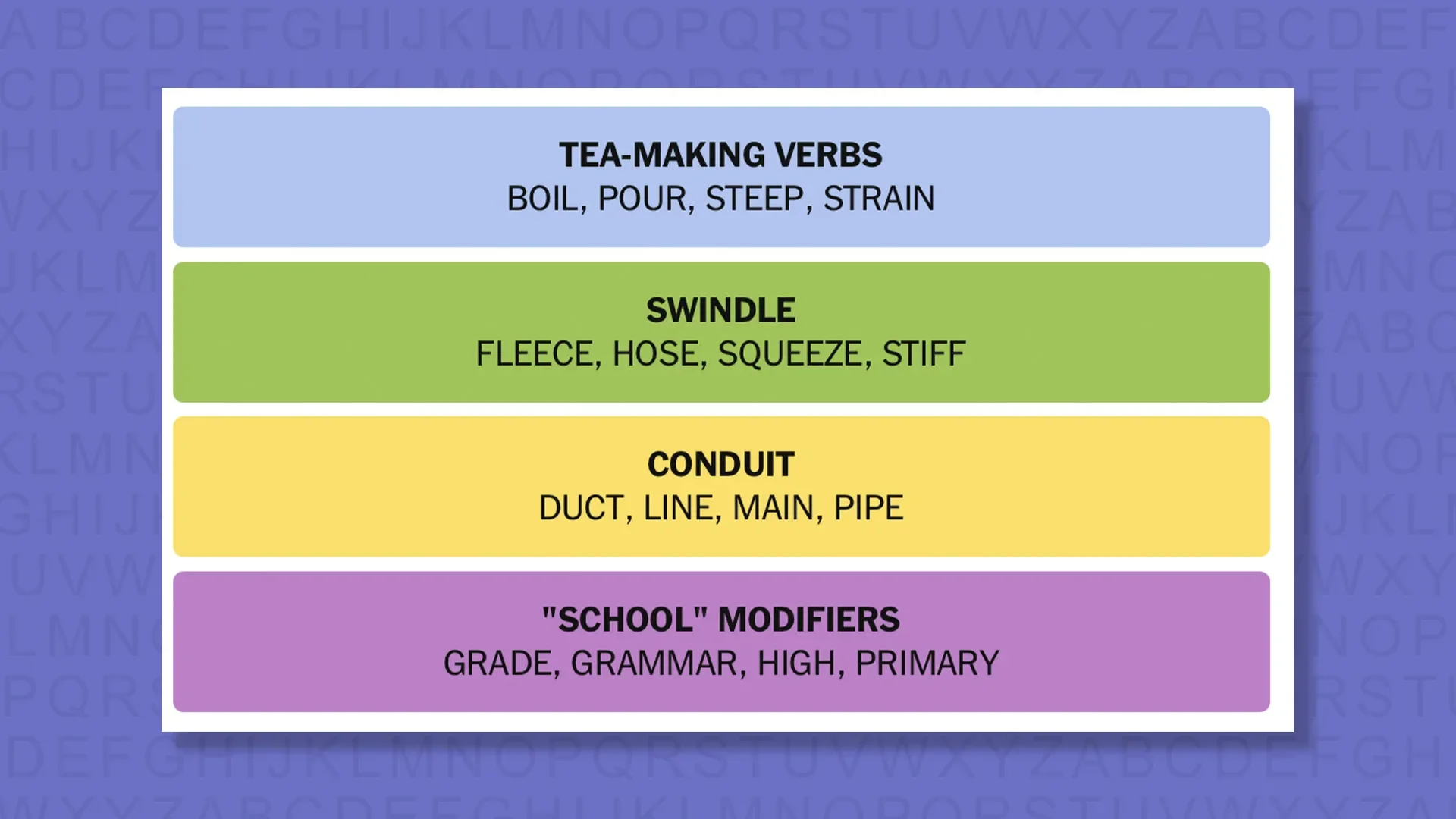
The following table outlines the successful classification of terms for puzzle #1071:
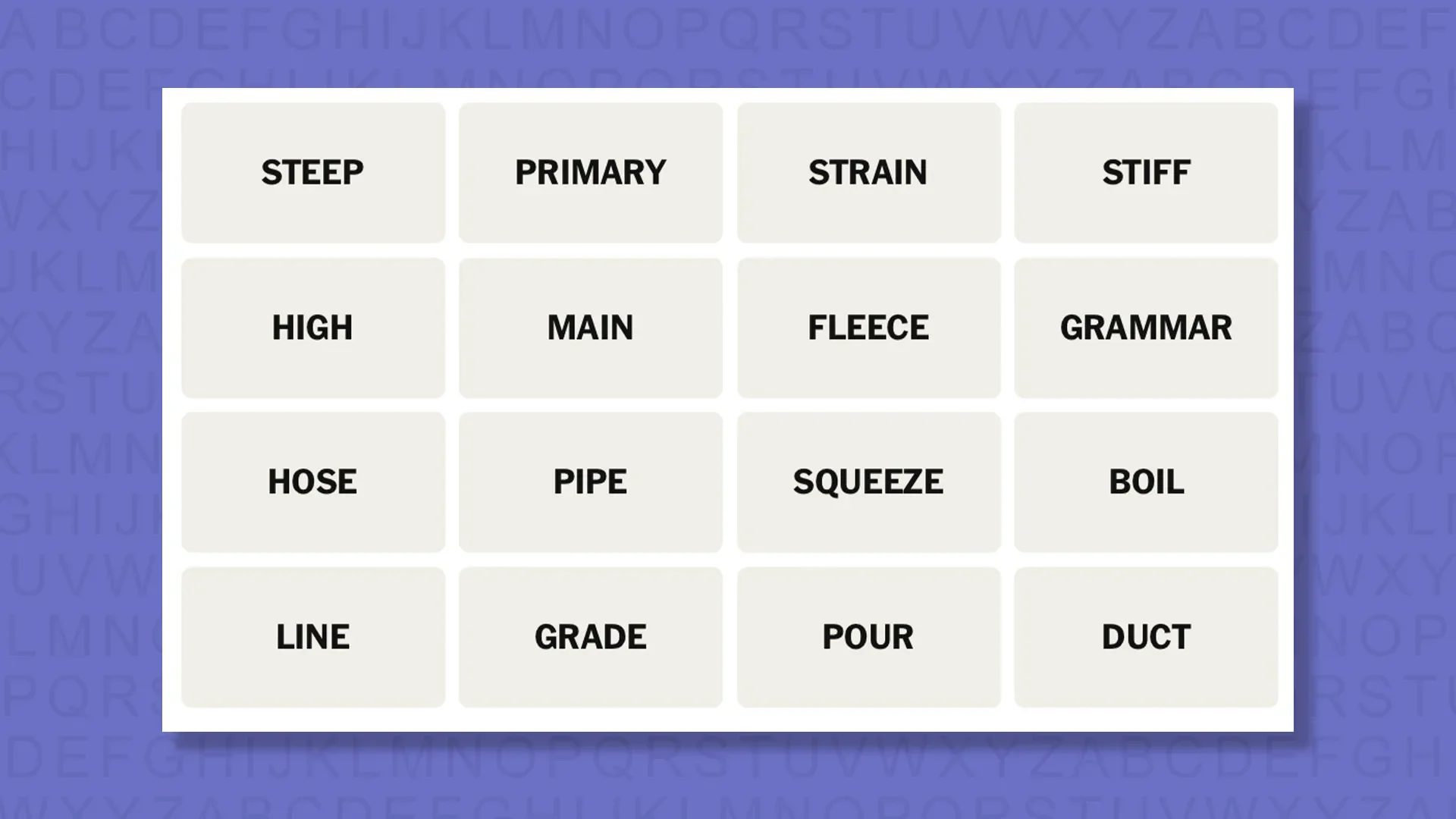
| Difficulty | Category | Associated Words |
|---|---|---|
| Yellow | Conduit | Duct, Line, Main, Pipe |
| Green | Swindle | Fleece, Hose, Squeeze, Stiff |
| Blue | Tea-making Verbs | Boil, Pour, Steep, Strain |
| Purple | "School" Modifiers | Grade, Grammar, High, Primary |
Procedural Observations
Strategy: Success relies on identifying lexical overlaps—words that possess multiple definitions. In this instance, Steep serves as a primary friction point, potentially functioning as both a descriptor of inclination and a verb related to beverage preparation.
Engagement: Digital platforms remain saturated with Hints and Solution guides, highlighting a reliance on external aid to maintain daily streaks. This trend suggests that while the game is marketed as an accessible mobile pastime, its design increasingly rewards lateral thinking that pushes past surface-level definitions.
Background: The Mechanics of Connections
The Connections format, developed by the New York Times, departs from traditional crossword puzzles by prioritizing semantic categorization over direct synonymy. Since its inception, the game has utilized a system where each grid contains precisely four groups of four words.
Critics of the genre observe that the game leverages linguistic ambiguity to create artificial difficulty. By introducing words that could feasibly belong to two categories, the designers force the player to abandon the initial, most obvious grouping—a process that defines the user experience of Connections. The persistence of external "hint" sites acts as an informal ecosystem, indicating that the game's difficulty has successfully shifted from casual recreation to a competitive exercise in logic.
Read More: NYT Connections Sports Edition 648 July 2026 Answers and Hints