Nvidia CEO Jensen Huang has forcefully rejected comparisons between advanced graphics processing units (GPUs) and nuclear weapons, asserting that such analogies are "stupid" and ill-informed. Huang argued that governmental restrictions on selling GPUs to "adversarial countries" are misguided and fail to recognize the multifaceted nature of AI development. He suggested that these policies are not only ineffective in curbing technological advancement but actively hinder innovation and American leadership in the field.

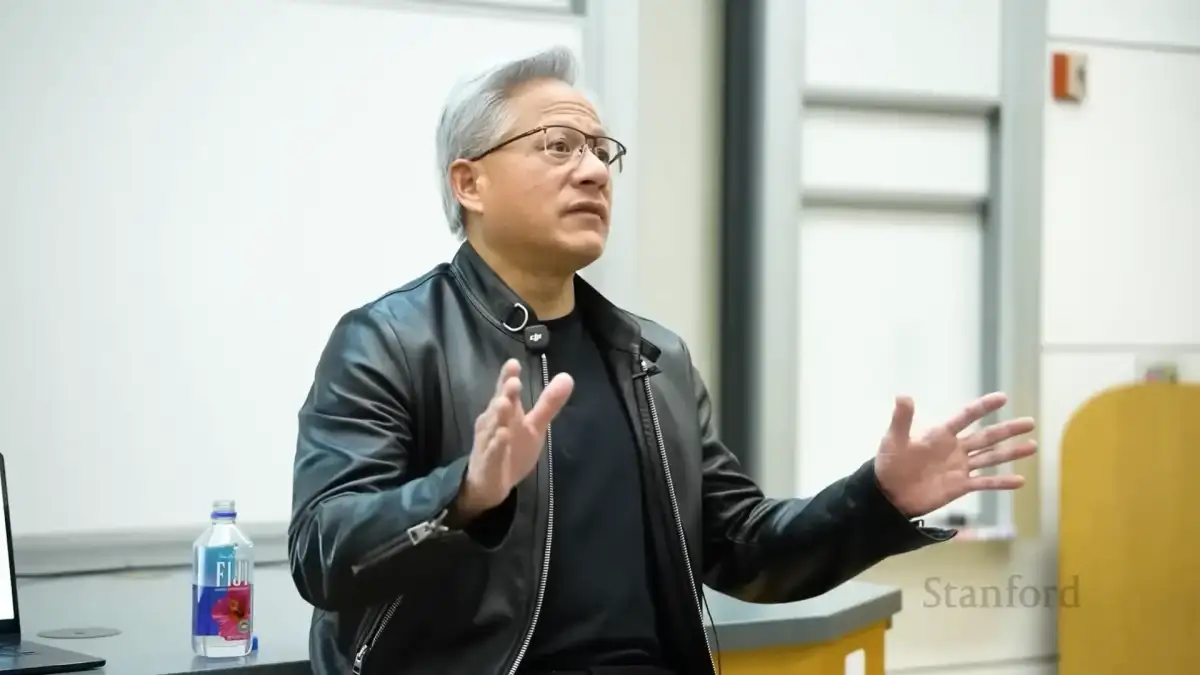
Huang’s public statements, delivered recently at Stanford University's CS 153 Frontier Systems course and in interviews, come as Nvidia navigates complex geopolitical pressures surrounding its dominant position in the AI chip market. The CEO contends that the US government should permit the export of GPUs "like crazy," believing the benefits of broad market access outweigh concerns about competitors gaining technological parity. He presented AI development as a "full-stack" endeavor, likening it to a layered cake where focusing on one component, like chip exports, at the expense of others is "nonsensical."
Read More: Why Goodput Is Better Than Throughput For LLM Performance In 2026

Market Share Declines Amidst Policy Fallout
Nvidia has experienced a significant contraction in its Chinese market share, which Huang claims has plummeted from 95% to an estimated 50% over the past four years. This downturn, he attributes directly to US export control policies implemented under both the Trump and Biden administrations. The company has already accounted for a multi-billion dollar write-down on unsold H20 chips, a product specifically engineered to comply with US restrictions but ultimately blocked from sale. Huang characterized these US bans, particularly on the H20 chip, as "deeply painful," underscoring the substantial financial implications for Nvidia and the broader AI ecosystem. He indicated that in some segments of the Chinese market, Nvidia's presence has effectively "dropped to zero."

Criticism of US Policy Effectiveness
Huang directly challenged the efficacy of US semiconductor policies, arguing that they have not demonstrably slowed China's progress in AI. He expressed concern that these restrictions, including the now-rescinded AI Diffusion Rule, could inadvertently lead to the US losing its competitive edge rather than securing it. He asserted that any belief that a single policy move, like banning specific chips, would halt China's AI capabilities is rooted in a fundamental misunderstanding of the technology's distributed nature. Huang’s public engagements have included meetings with Republican leaders and former President Donald Trump to discuss these export control matters.
Read More: Why office credit rules change workplace power in May 2026

Broader Economic and Technological Landscape
The current AI revolution, according to Huang, is comparable in scale to the Industrial Revolution, necessitating American leadership and a strategic approach to global market engagement. He believes that China's AI researchers and scientists are world-class, and that preventing sales of advanced chips is counterproductive. Nvidia's business in China historically represented a significant portion of its revenue, around 14% in the financial year ending January 26, 2025. Huang’s stance suggests a preference for competition over restriction, advocating for a strategy that leverages Nvidia’s global success to maintain dominance rather than relying on trade barriers.