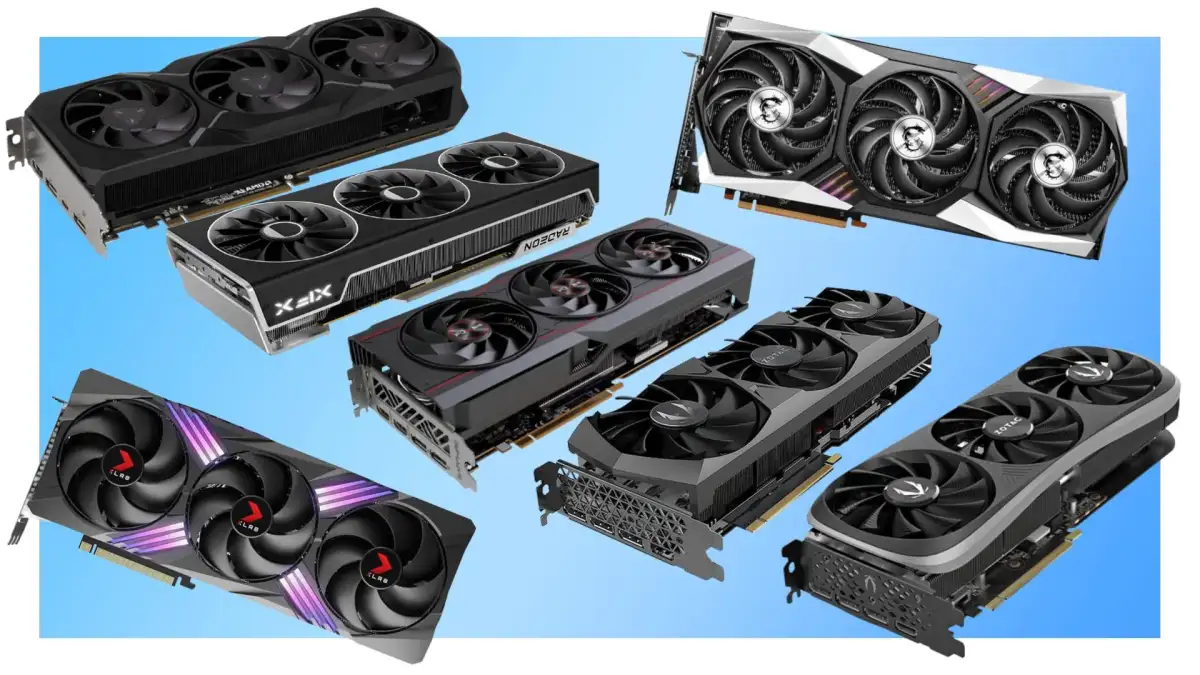
Nvidia and Advanced Micro Devices (AMD) have jointly issued a significant warning to Wall Street, aggregating a colossal $711 billion market valuation alert that investors in the artificial intelligence (AI) sector cannot afford to dismiss. This signals a potential recalibration in the stratospheric valuations of companies deeply entrenched in the AI boom, particularly those supplying the foundational hardware. The sheer scale of this figure underscores a growing unease about the sustainability of current market expectations versus the tangible realities of AI development and deployment.
The persistent performance of Nvidia's graphics processing units (GPUs) has long cemented its near-monopoly in the crucial enterprise data center market. This dominance has been a bedrock for its ascent, enabling it to be a central player in the unfolding AI revolution. Similarly, AMD has established itself as a key contender in this landscape. However, the "warning" itself appears less about a sudden decline in AI adoption – reports suggest AI uptake is robust – and more about the market's perception and valuation of this adoption, coupled with the underlying infrastructure build-out.
Read More: Portable power stations 2026: Why usable energy is hard to find
Investor Skepticism Amidst Strong Financials
Despite consistently strong operating results and the apparent lack of an issue with AI adoption itself, Nvidia's stock performance has shown a curious lack of enduring positive reaction to these disclosures. This disconnect suggests that while the demand for AI technology is undeniable, the market's enthusiasm might be tempered by other concerns. Reports mention a nearly $630 billion warning from Nvidia alone, which has reverberated through Wall Street, yet questions linger about investor attentiveness to these signals.
Key anxieties seem to revolve around two primary points: competition and skepticism regarding the return on investment (ROI) for AI initiatives. While companies are actively purchasing Nvidia's technology, the explicit celebration of AI ROI from these same entities is less pronounced. This disparity may contribute to the market's hesitant response, even as Nvidia continues to unveil impressive order pipelines, with one report citing a $1 trillion figure for its order book.
Read More: Massachusetts Loses $4.2 Billion Income After Millionaire Tax

The Shifting Landscape: Inference Over Training
A crucial element potentially being overlooked by a significant portion of AI investors is the escalating importance of AI 'inference'—the process of using AI models to generate predictions or decisions. Historically, the focus has been on AI 'training', which requires immense computational power. However, the maturation of AI development points towards inference becoming a dominant demand driver.
New hardware architectures, such as Nvidia's GB200 NVL72, are touted to offer substantial performance and cost efficiencies for inference tasks, positioning them as critical infrastructure for the scaling of 'agentic AI workloads'. This architectural shift, coupled with licensing agreements that unlock low-latency inference performance, suggests that Nvidia's leadership in this domain is widening. Analysts highlight that the company's vertically integrated platform, encompassing chips, systems, and software, is proving difficult to replicate, supporting the notion of a more durable market cycle than some currently underwrite.
Read More: New Tool Shows Lowest Graphics Card Prices Online from August 2024
Insider Activity and Market Ambiguity
Further layers of complexity arise from insider trading activity. Reports indicate a pattern of aggressive selling by insiders at both Nvidia and Palantir, a company also deeply involved in AI. This persistent insider selling, juxtaposed with a stark absence of insider buying, has been interpreted as a "stark message" suggesting that the shares of these companies may not be attractively priced, or that their rapid ascents are not sustainable. This behavior adds a layer of ambiguity, creating a disconnect between the companies' disclosed operational successes and the private financial positioning of those with intimate knowledge of their businesses.
The broader market environment is also characterized by what some describe as "eyewatering numbers" regarding Nvidia's business and its ecosystem. However, the speed of innovation itself appears to have introduced a new, unexpected uncertainty. While headlines might suggest low enterprise adoption of AI, some industry observers contend that this paints an incomplete picture, based on their direct conversations with market participants. This suggests that the narrative surrounding AI adoption and its economic impact remains fluid and subject to ongoing interpretation.
Read More: Hafnia share price drops 11% after Q3 loss and analyst doubts