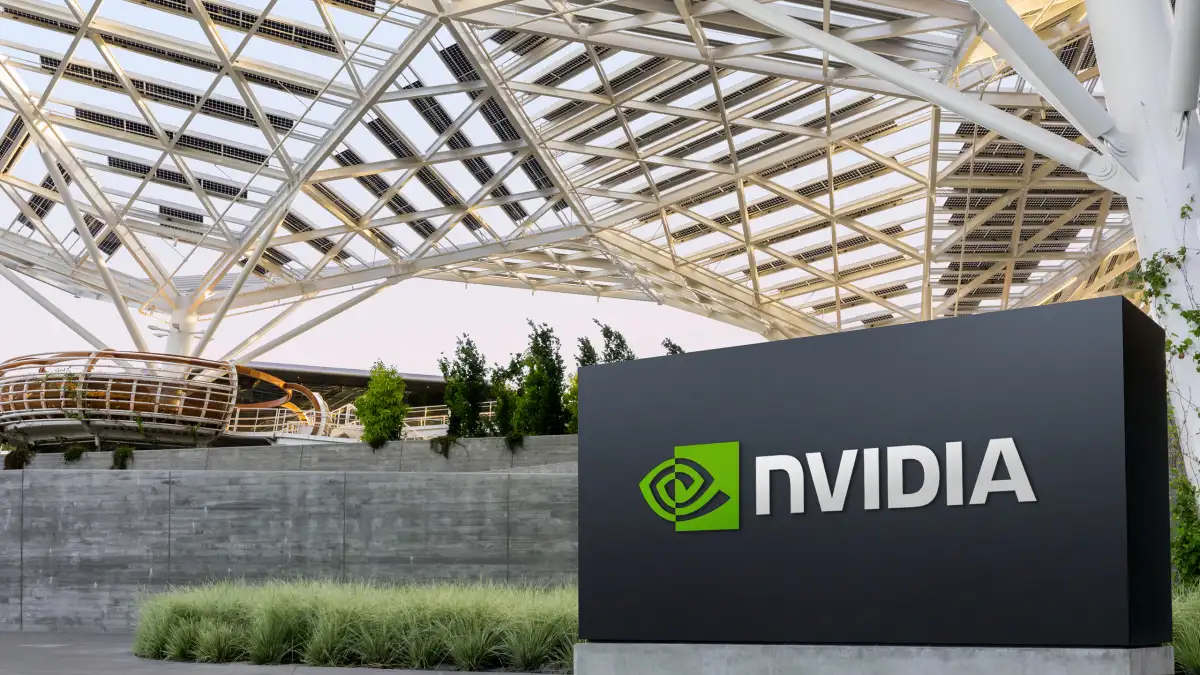
Nvidia's financial results reveal a significant surge in profits and revenue, largely driven by the escalating demand for its advanced artificial intelligence (AI) chips. The company's performance has exceeded expectations, underscoring its central role in the burgeoning AI ecosystem. This strong showing, however, also raises questions about market sustainability and competitive pressures within the AI chip industry.
Financial Performance and AI Chip Dominance
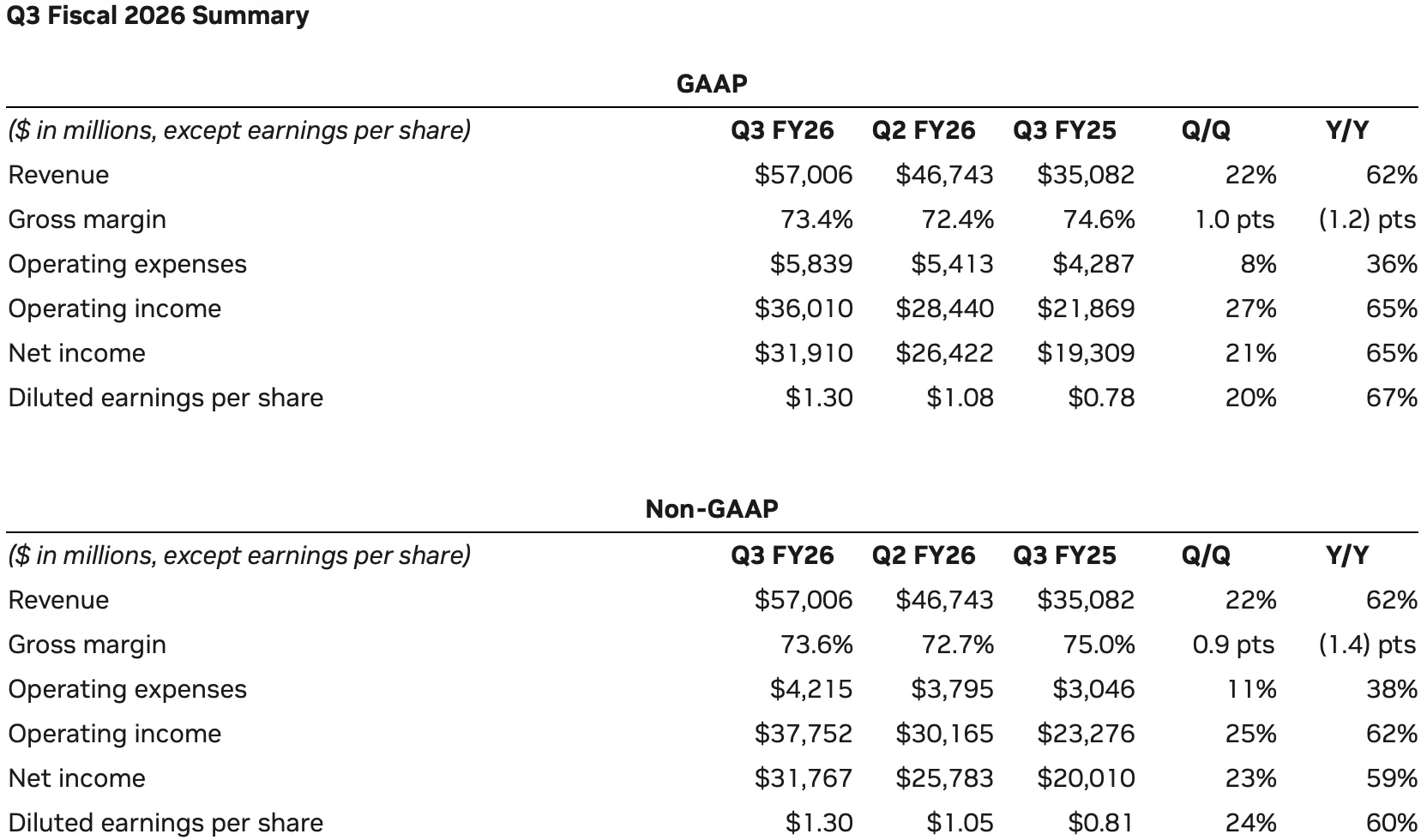
Nvidia announced record-breaking financial results, with net income for the three months ending January reaching $42.9 billion, a 94% increase year-on-year. Revenue for the same period climbed to $68.1 billion, up 73% from the previous year. The company's fiscal year 2025 also saw total profits of $120 billion, a substantial leap from $4.4 billion just three years prior.
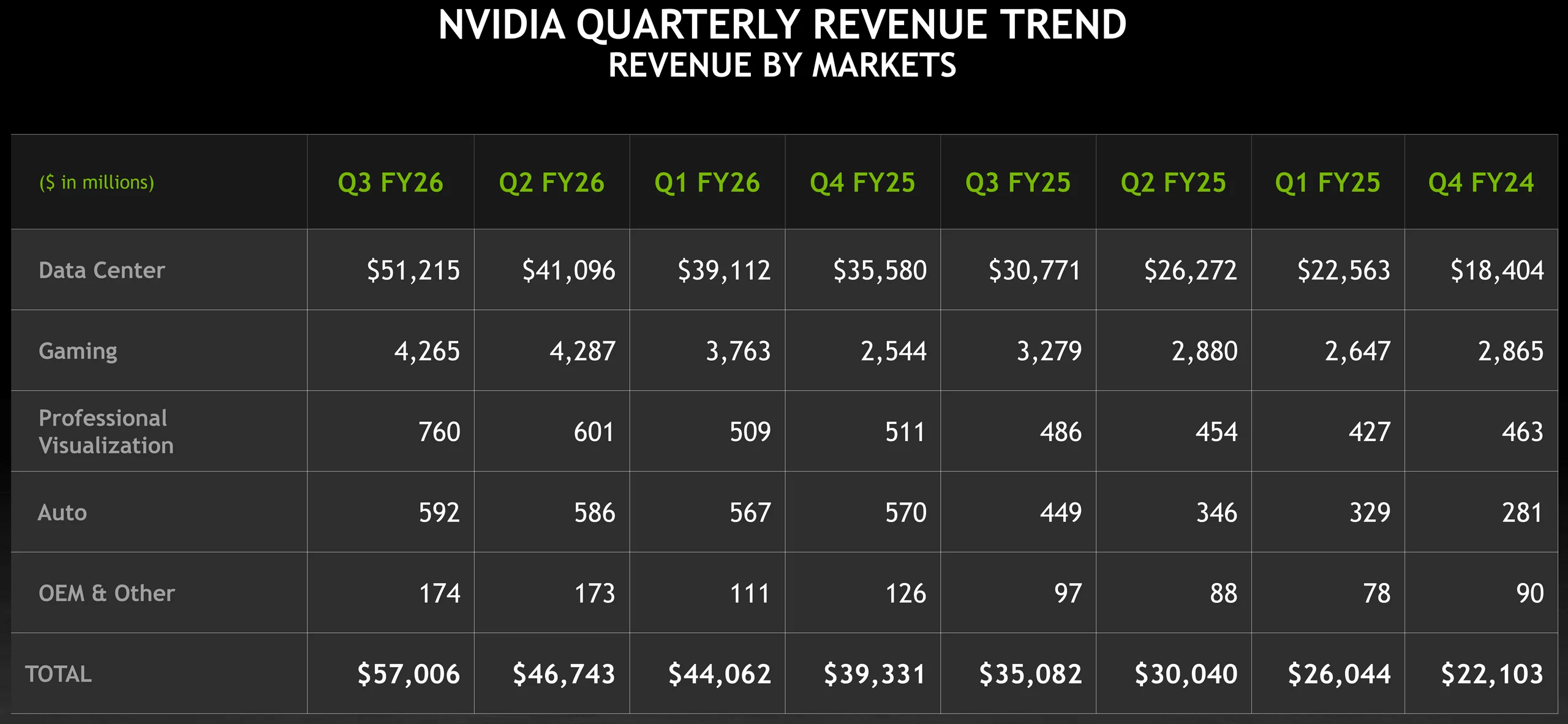
The primary driver behind this impressive financial growth is the robust demand for Nvidia's AI chips, particularly within its Data Center segment.
Read More: California Woman Claims Instagram, YouTube Harmed Her Childhood Mental Health in Meta Trial
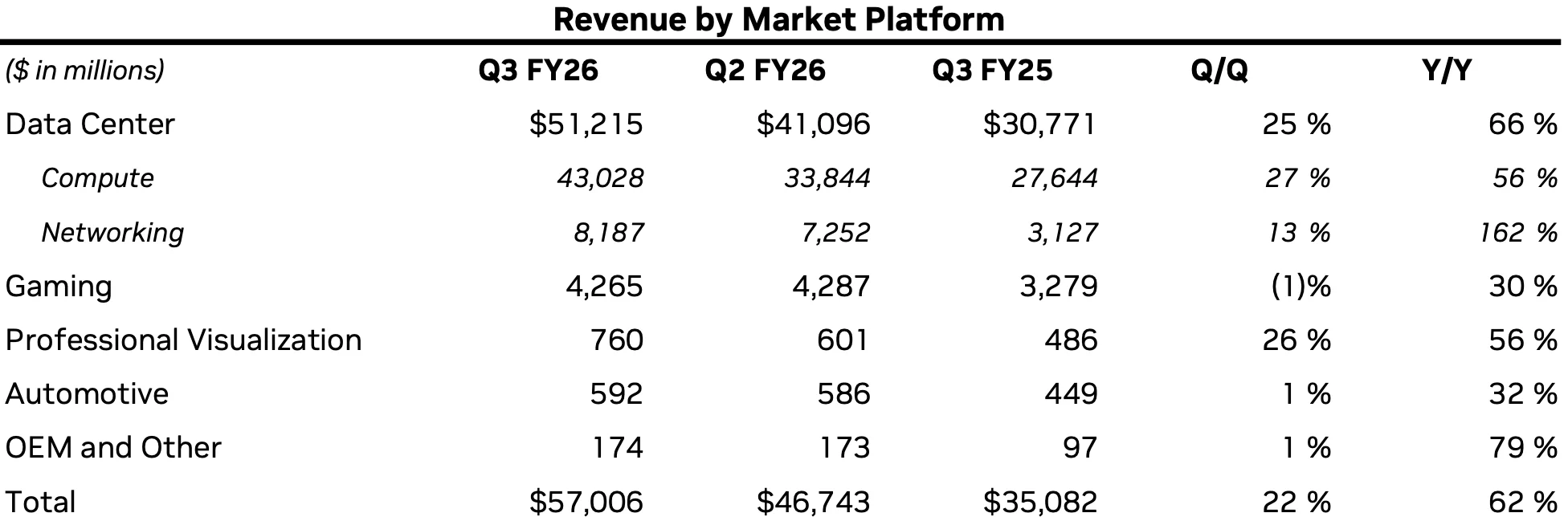
This segment's revenue reached a new record of $35.6 billion in the fourth quarter, a 93% increase compared to the previous year. For the first quarter of fiscal year 2026, Nvidia reported adjusted earnings of 81 cents per share on revenue of $44.06 billion, a 69% increase year-over-year. Sales from the data center segment grew 73% to $39.1 billion.
Blackwell sales, a key product for AI processing, accounted for two-thirds of Nvidia's data center revenue in the quarter.
The company's Chief Financial Officer, Colette Kress, noted that Blackwell sales exceeded expectations.
CEO Jensen Huang highlighted the "amazing" demand for Blackwell, attributing it to "reasoning AI" enhancing model intelligence.
Market Position and Competitive Landscape
Nvidia's dominance in the AI chip market is attributed to factors beyond mere hardware speed. The company's AI position rests on its ability to meet the rapidly growing needs of the AI ecosystem.
The sustained high demand for Nvidia's AI hardware is supported by several short-term trends, including the rapid scaling of the AI ecosystem, the proliferation of AI startups, and increasing AI adoption across various industries and countries.
While Nvidia is experiencing a boom, the competitive landscape is active:
Read More: Ajay Devgn Whisky The GlenJourneys Earns Rs 4.14 Crore in 4 Months and Expands to 6 States
Existing competition: Chip designers and cloud providers are already challenging Nvidia in certain areas of the AI market.
China market: Nvidia is seeking U.S. government clearance to sell its second-most-powerful chip to China, indicating an ongoing effort to navigate international market complexities.
DeepSeek's development: Chinese company DeepSeek has developed a large language model that claims to compete with U.S. rivals like ChatGPT, while being more cost-effective in its use of Nvidia chips for training.
Future Outlook and Industry Impact
Nvidia's leadership anticipates continued growth, driven by emerging AI trends. Huang pointed to the "next wave" of AI, including "agentic AI for enterprise, physical AI for robotics and sovereign AI."

The company's strategic initiatives, such as launching NVIDIA AI Blueprints and NIM microservices, aim to further embed its technology in AI agent development and safeguard AI applications.
The strong performance of Nvidia has a ripple effect on the broader technology sector, including Indian IT stocks like Infosys, TCS, and HCL Tech, which are expected to be influenced by these AI chip market developments. However, concerns about the sustainability of the current AI boom and potential overheating of the market persist among investors.
The demand for AI inference token generation has surged tenfold in one year, signaling accelerated demand for AI computing as AI agents become more common.
Nvidia has indicated an expected $8 billion hit in the current quarter due to new export curbs impacting sales to China.
Expert Insights and Analysis
Industry analysts and company executives provide perspectives on Nvidia's performance and the future of AI.
"Global demand for NVIDIA’s AI infrastructure is incredibly strong. AI inference token generation has surged tenfold in just one year, and as AI agents become mainstream, the demand for AI computing will accelerate." – Jensen Huang, CEO of Nvidia (Article 9)
"The massive AI-led technology buildout — in which Nvidia’s chips play a critical role — is still firmly underway." – Market observation (Article 4)
"Investors are scrutinising whether hyperscalers continued their heavy spending on AI infrastructure, translating into Nvidia’s data centre sales." – Industry analysis (Article 6)
The consensus among observers is that Nvidia holds a dominant position, but the long-term sustainability of its growth and the impact of competitive and regulatory factors remain key areas of scrutiny.
Read More: Brady Tkachuk says White House AI video of him insulting Canada is fake
Conclusion
Nvidia has achieved remarkable financial success, with its AI chips being the undeniable engine of its record profits and revenue. The company's strategic focus on advanced AI hardware and its deep integration into the rapidly expanding AI ecosystem have solidified its market leadership.
Key Findings:
Record quarterly and fiscal year profits and revenues.
Overwhelming reliance on Data Center segment, driven by AI chip sales.
Significant demand for Blackwell chips.
Implications:
Reinforces Nvidia's critical role in the global AI infrastructure.
Highlights the substantial growth potential of the AI market.
Raises questions about market sustainability and competitive responses.
Next Steps:
Continued monitoring of Nvidia's sales to China and the impact of U.S. export regulations.
Observation of competitive advancements from other chip manufacturers and cloud providers.
Assessment of investor sentiment regarding the long-term health of the AI market.
Sources
Nvidia’s Quarterly Profit Hits $43 Billion on Strong A.I. Chip Sales
Context: General news report on Nvidia's financial results.
Link: https://dnyuz.com/2026/02/26/nvidias-quarterly-profit-hits-43-billion-on-strong-a-i-chip-sales/
Nvidia’s Quarterly Profit Hits $43 Billion on Strong A.I. Chips Sales - G2Key - Buy Cheap Game Keys
Context: Report on Nvidia's financial performance, highlighting profit figures.
Link: https://www.g2key.com/2026/02/25/nvidias-quarterly-profit-hits-43-billion-on-strong-a-i-chips-sales/
Nvidia’s 43 Billion AI Profit and What It Means for Your Future
Context: Analysis of Nvidia's AI chip dominance and its market implications.
Link: https://www.aiplusinfo.com/nvidias-43-billion-ai-profit-and-what-it-means-for-your-future/
TCS to Infosys, HCL Tech: Nifty IT jumps 2% after AI Chipmaker Nvidia post strong Q4 earnings | Stock Market News
Context: Financial news discussing the impact of Nvidia's earnings on Indian IT stocks.
Nvidia's revenue skyrockets to record $57 billion per quarter — all GPUs are sold out
Context: Report on Nvidia's revenue growth and GPU sales. (Note: This article's publication date is November 20, 2025, and mentions $57 billion revenue, which may refer to a different period or projection compared to the more recent Q4 reports.)
Nvidia earnings beat expectations and signal strong AI chip demands
Context: News report on Nvidia's financial results and strong AI chip demand.
Nvidia posts record quarterly net profit, sales on AI demand | NHK WORLD-JAPAN News
Context: News report detailing Nvidia's record net profit and revenue driven by chip demand.
Nvidia sales surge in the fourth quarter on demand for AI chips
Context: News article covering Nvidia's profit and sales surge due to AI chip demand.
Link: https://apnews.com/article/nvidia-ai-artificial-intelligence-f72da2deff83510987a0017e61eac335
Nvidia's Revenue Hits Record High, But China Sales Restrictions Squeeze Profits
Context: Report on Nvidia's Q1 FY2026 results, including revenue and the impact of export curbs.
Link: https://www.investopedia.com/nvidia-earnings-q1-fy2026-11742553
NVIDIA Announces Financial Results for Fourth Quarter and Fiscal 2025
Context: Official press release from Nvidia detailing financial results for Q4 FY2025 and FY2025.