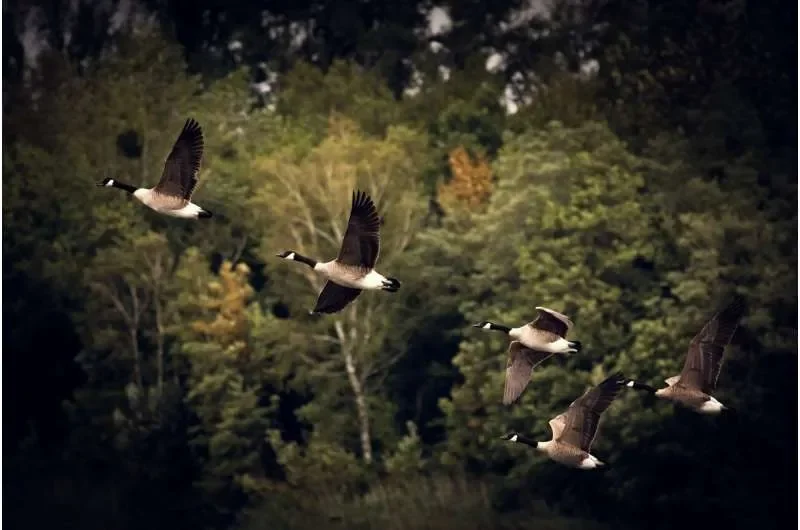
Large numbers of dead and sick wild birds, primarily Canada geese, have been reported across New Jersey. Officials suspect bird flu is the cause of these deaths, leading to public warnings and the closure of some public spaces. The situation has prompted concern and calls for caution among residents.
Between Saturday and Monday, at least 1,100 dead or sick wild birds were reported across the state. The outbreak appears to have begun around Valentine's Day. Reports indicate a significant number of these cases involve Canada geese. Gloucester County has been particularly affected, with dead geese found in Pitman. As a result, Betty and Alcyon parks in Pitman were closed to the public. Other counties reporting dead geese include Burlington, Camden, Middlesex, Monmouth, and Somerset.
Official Response and Public Health Measures
State officials, including the New Jersey Department of Environmental Protection (NJ DEP) and county health officers, are actively monitoring the situation.
Read More: NJ Turnpike Plane Crew Knew Low Altitude Before Pole Hit Tuesday

Reporting: The NJ DEP has received numerous calls regarding sick or dead wild birds. Residents are urged to report any such encounters to the state environmental department.
Safety Guidelines: The public is advised not to handle sick or dead birds. This is a key measure to prevent potential spread.
Human Risk: Officials state that bird flu generally poses a low risk to humans.
Scientific Assessment and Ongoing Investigation
The New Jersey State Wildlife Pathologist, Dr. Patrick Connelly, has been receiving many reports and is investigating the growing number of bird deaths.
Suspected Cause: Bird flu is the leading suspect for the widespread mortality.
Spread Mechanism: Dr. Connelly explained that the virus typically spreads among birds through close contact, saliva, and respiratory secretions.
Testing: Test results to confirm the cause of death are expected within one to two weeks.
Camden County Status: As of Wednesday, no birds in Camden County had tested positive for bird flu, according to county health officials.
Geographic Distribution of Cases
Reports of dead and sick geese have emerged from various locations across New Jersey.
| County | Reported Locations |
|---|---|
| Gloucester | Pitman (Betty and Alcyon Parks) |
| Burlington | Hainesport |
| Camden | Sicklerville |
| Middlesex | Edison |
| Monmouth | Holmdel, Manalapan, Matawan |
| Somerset | Basking Ridge |
Public Concern and Park Closures
The substantial number of dead birds has understandably caused concern among residents and led to proactive measures by local authorities.

Park Closures: The closure of Betty and Alcyon parks in Pitman highlights the local impact and the need for immediate action to manage public access in affected areas.
Public Awareness: The widespread reporting of sick and dead birds serves as a signal for increased public awareness regarding wildlife health.
Expert Insights on Bird Flu Transmission
Dr. Patrick Connelly, the State Wildlife Pathologist, provided information on how bird flu can spread among avian populations.
"The virus spreads between birds through close contact, saliva and respiratory secretions."
This statement underscores the importance of maintaining distance from affected wildlife and avoiding direct contact with sick or deceased birds to minimize further transmission.
Conclusion and Next Steps
The current outbreak of sick and dead wild birds, predominantly Canada geese, across New Jersey is strongly suspected to be caused by bird flu. Over 1,100 birds have been reported affected since the weekend. Public health measures, including reporting guidelines and advisories against handling dead birds, are in place. Investigations are ongoing, with test results expected soon to confirm the diagnosis. The closure of parks in Gloucester County demonstrates the immediate local response to manage potential risks. Continued monitoring and adherence to public health guidance are essential as officials work to understand the full scope and implications of this avian flu event.
Read More: Rebecca Bennett challenges Tom Kean Jr. over Congressional absence in NJ
Sources:
phys.org: "1,100 dead or sick geese in NJ spark bird flu warning, prompt lake's closure" - https://phys.org/news/2026-02-dead-sick-geese-nj-bird.html
nbcphiladelphia.com: "Bird flu may be why over 1,000 geese died in NJ this week. How Pa., Del. are fighting back" - https://www.nbcphiladelphia.com/news/local/bird-flu-sick-geese-new-jersey/4354961/
newjersey.news12.com: "NJ DEP: Bird flu likely to blame for dead and dying geese" - https://newjersey.news12.com/nj-dep-bird-flu-likely-to-blame-for-dead-and-dying-geese
app.com: "NJ DEP flooded with calls for dead wild birds, flu suspected in some" - https://www.app.com/story/news/local/2026/02/18/bird-flu-nj-nj-dept-environmental-protection-bird-flu-wild-bird-deaths-canadian-geese/88737728007/
patch.com: "Bird Flu Suspected In Multiple Locations In Gloucester Co." - https://patch.com/new-jersey/westdeptford/bird-flu-suspected-multiple-locations-gloucester-co