The Nellore Charitable Trust committed ₹15 crore this week to a fractured landscape of public needs in Andhra Pradesh, splitting the sum between religion, health, and state-run classrooms. This influx of private capital coincides with a broader push by the coalition government to bridge budget deficits by soliciting funds from Non-Resident Indians (NRIs) and former students.
The trust’s managing trustee, Bachu Krishna Kumar, confirmed the allocation after meeting IT Minister Nara Lokesh in Undavalli. The money follows a rigid internal map:
₹5 crore for infrastructure in government schools and junior colleges within the Bogolu mandal.
₹5 crore for a Primary Health Centre in Kovvurupalli village.
₹5 crore for the Sri Prasanna Venkateswara Swamy temple at Kondabitragunta.
The Outsourced Classroom
The state is currently building a dedicated website to formalize this reliance on "alumni participation." By inviting the Nellore Charitable Trust to lead foundation-laying ceremonies, the government acknowledges its own inability to maintain government schools without external gifts. This shift moves education from a state mandate to a charitable choice.
Read More: 700,000+ Children Lose Food Aid After Budget Cuts
"The coalition government is making efforts to encourage NRIs and alumni to participate in the development of government schools." — Summary of state policy direction.
Religious Assets as Infrastructure
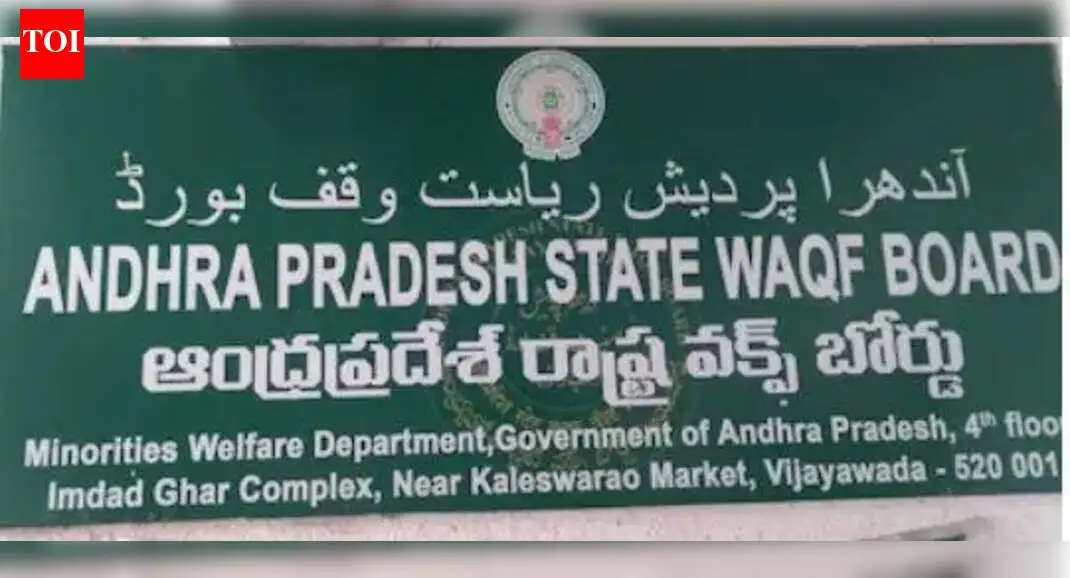
While the Nellore Charitable Trust funds temples, the Waqf Board is attempting a different form of specialized education. Chairman Shaik Abdul Azeez announced plans for an International School for Muslim children on 13 acres of waqf land linked to the Jamia Masjid in Nellore.
| Project | Entity | Funding/Land Source | Target |
|---|---|---|---|
| School Infra | Nellore Charitable Trust | Private Donation | Bogolu Government Schools |
| Intl. School | Waqf Board | Religious Land (13 acres) | Muslim Community |
| Health Centre | Nellore Charitable Trust | Private Donation | Kovvurupalli Village |
| Skill Training | Swarna Bharat Trust | NGO/CSR | Rural Youth |
Azeez has cautioned against the politicization of these assets, though the proposal currently sits with Municipal Administration Minister Narayana for approval. The use of religious land for modern schooling suggests a turn toward self-contained community development rather than broad state integration.
The NGO Clutter
The region is increasingly managed by a thicket of small-to-mid-sized entities performing basic social work.
Vara Parivar Seva Foundation operates in marginalized zones like Drivers Colony and Vaikuntha Puram, soliciting small-scale donations to sustain daily "upliftment" activities.
Swarna Bharat Trust remains a fixture in Venkata Chalam, focusing on job enabling skills and farmers training, operating on the logic that "rural poor must become part of development."
Investigative Reflection: The CSR Dependency
Recent academic analysis in the SPS Nellore District suggests that Corporate Social Responsibility (CSR) and NGO interventions are no longer supplementary; they are structural. The "Mandatory CSR" laws in India have turned local businesses into a second, unelected tier of local government.
Read More: Andhra University Adds More Seats for B.Tech Courses
In Nellore, this manifests as an uneven patchwork. One village receives a high-tech health center because a wealthy trustee has roots there, while another mandal relies on the slow decay of state funds. The asymmetry of charity means that "development" in Nellore is becoming a collection of isolated successes rather than a coherent public system. The government’s new website for NRI funding will likely deepen this trend, turning public infrastructure into a marketplace of donor interests.