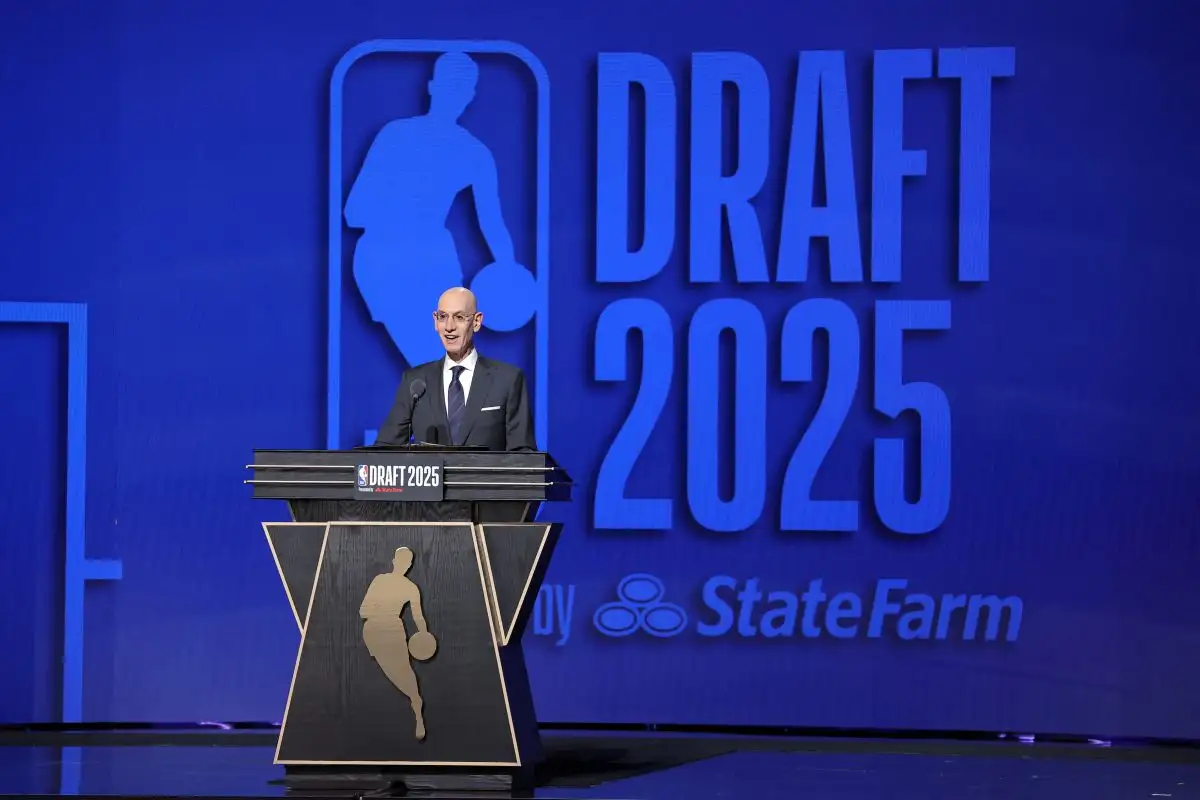
The NBA is moving toward a restructuring of its draft lottery, aiming to eliminate the strategic incentive for losing. Under the newly proposed framework, the bottom three teams—designated as a "relegation area"—face restricted lottery access and lower draft security. The league seeks to shift the behavior of teams that prioritize high-position drafting over competition.
| Feature | Change |
|---|---|
| Lottery Pool | Expanded to 16 teams |
| Relegation Zone | Bottom 3 records; restricted to 2 lottery balls |
| Mid-Lottery | Spots 4-10 receive 3 lottery balls each |
| Play-in Losers | Receive 1 lottery ball |
The core intent is to remove the benefit of possessing the league’s worst record, while granting the association broad power to police and punish teams for intentional performance suppression.

Mechanics of the Reform
The proposed structure moves away from traditional weighted odds based on record alone. Instead, it relies on a "3-2-1" logic designed to redistribute potential success:
Teams missing both the playoffs and the Play-in tournament, but finishing outside the bottom three, are positioned to receive three lottery balls (an 8.1% chance at the first pick).
The three worst-performing teams receive only two balls and are subject to a floor for their draft position, effectively capping the value of being last.
Teams defeated in the seventh/eighth seed Play-in matches are allocated one ball (2.7% chance).
Safeguards are included to prevent long-term cycles of rebuilding: no team may secure the No. 1 pick in back-to-back years, nor may they collect three consecutive top-five selections.
Structural Discipline
The league is pushing for an expansion of its disciplinary authority. Under the new guidelines, the NBA reserves the right to intervene directly in a franchise's roster operations. This includes the ability to unilaterally reduce lottery odds or force a modification of a team’s position in the draft order if league officials determine a team is failing to meet competitive standards.
Read More: NCAA Basketball Tournaments to Expand to 76 Teams in 2027
Contextual Drift
For years, the ' Draft Lottery ' has acted as the primary mechanism for distributing incoming talent, frequently incentivizing teams to finish with poor records to maximize their ' Odds ' for top-tier prospects. Previous iterations of the lottery were designed to reward failure to foster parity. The shift currently under development by the ' Board of Governors ' follows months of deliberation over multiple ' Anti-Tanking ' proposals. These measures are a response to a perception that late-season apathy is eroding the product, turning the final months of the schedule into an exercise in calculation rather than sport. By widening the pool to 16 teams and penalizing the basement dwellers, the league is testing if the structure of the game can force a higher degree of effort.