Natural selection, the fundamental process driving adaptation and evolution, appears to operate not solely at the individual organism level, but across a vast spectrum of biological organization. Evidence suggests this mechanism influences the survival and reproduction of entities as small as molecules and as expansive as entire ecosystems, challenging a singular focus on individual organisms. The implications of this multilevel operation could be significant for understanding the complex tapestry of life's development.
The Principle of Natural Selection
At its core, natural selection describes a process where organisms possessing traits beneficial for their environment are more likely to survive and produce more offspring than those lacking such traits. Over generations, this leads to populations where advantageous characteristics become more common.

This process requires variation within a population.
Beneficial traits contribute to an organism's success, often termed "fitness."
Conversely, traits that hinder success tend to be eliminated.
Multiple Levels of Operation
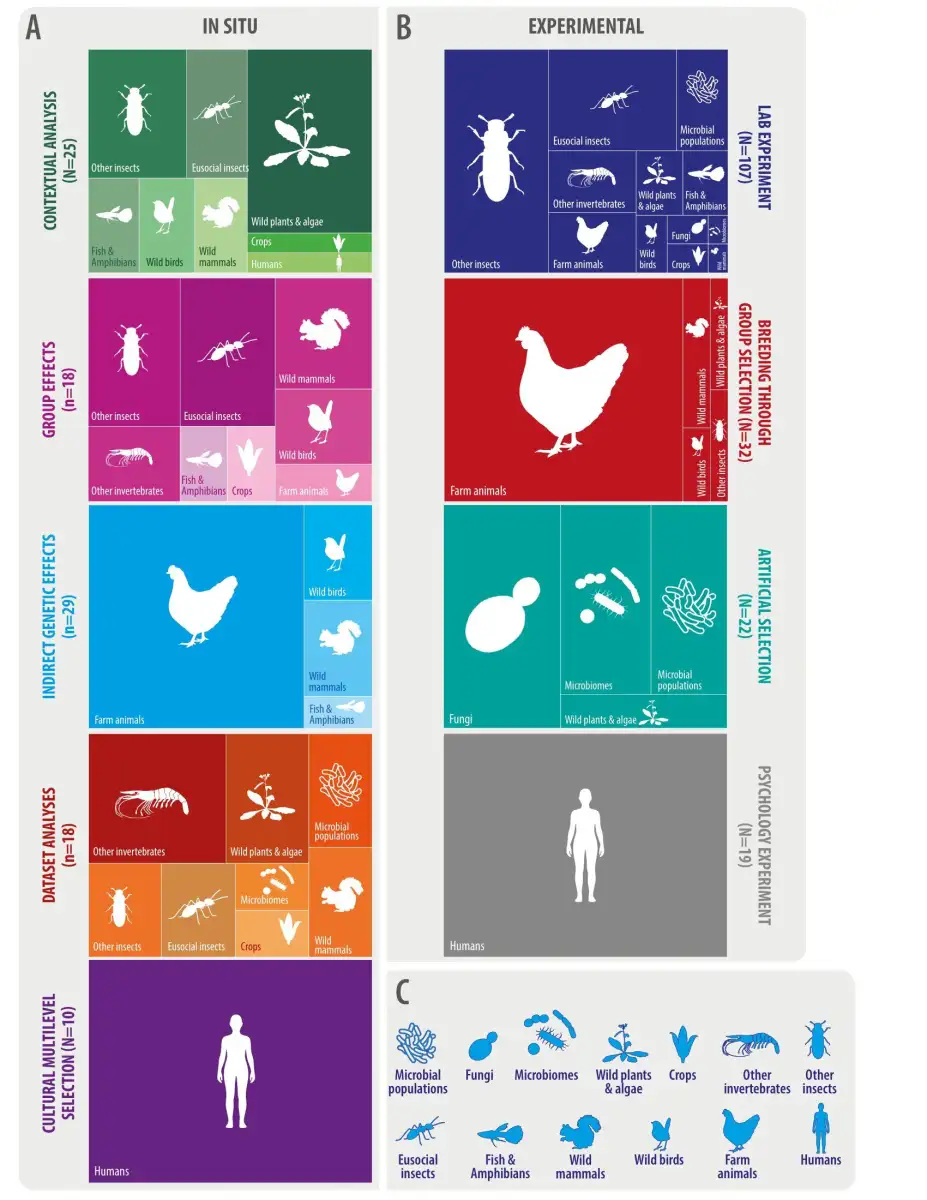
The concept of natural selection extends beyond the individual. A theory known as multilevel selection posits that selection can occur simultaneously at different scales.
Read More: Indigenous Data Rights Now Key in Conservation Genomics
Molecular Level: Thermodynamics and Structure
At the molecular level, thermodynamic principles may guide selection.

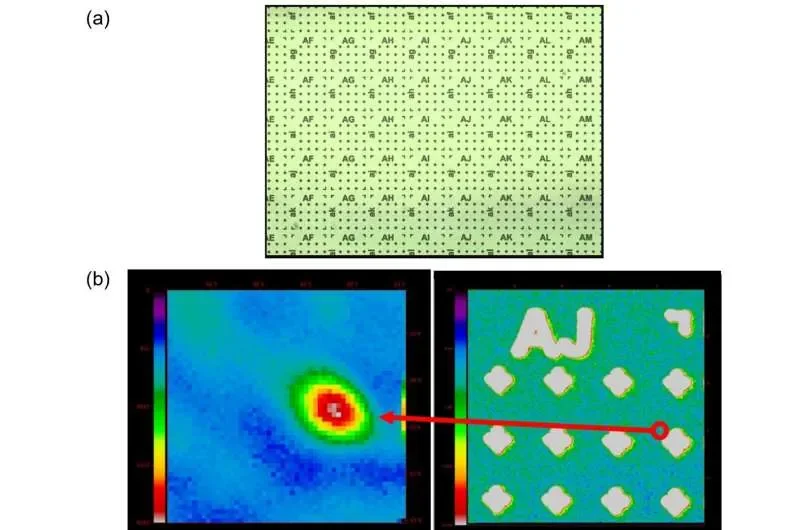
Dissipative structuring, driven by thermodynamic selection, has been observed to lead to increased molecular complexation.
This process is linked to greater photon dissipation, a fundamental aspect from the origin of life to the current biosphere.
The interaction of UV-C light with carbon-based molecules is theorized to form complex UV-C pigments, which facilitate efficient photon dissipation. This is seen as a fundamental molecule of life.
Cellular and Individual Levels: Common Mechanisms
The operation of natural selection at the cellular and individual organism levels is widely recognized.
Gene mutations are the source of new genetic material, giving rise to novel traits.
Combined with sexual reproduction, mutations increase the genetic variation within a population, providing the raw material for selection.
Selection can be directional, shifting a population's average trait; stabilizing, maintaining the current average; or balancing, preserving genetic diversity.
Different types of selection, such as frequency-dependent selection (where common or rare traits are favored) and sexual selection, also operate.
Species and Ecosystem Levels: Long Timescales
Natural selection's influence can also be observed at higher levels of organization, such as species and ecosystems, though these processes unfold over much longer periods.
Species with patchy geographic distributions may give rise to new species that also have patchy distributions.
Similarly, species with uninterrupted distributions tend to produce descendant species with continuous ranges.
Speciation, the formation of new species, can be driven by selection acting on isolated populations within a species.
Observing selection at the species or ecosystem level is considerably more challenging due to the millions of years these changes typically require.
Types of Selection and Environmental Influence
Natural selection is not a single, monolithic process. It encompasses various forms, often triggered by environmental shifts or existing genetic variation.
Soft sweep selection acts on pre-existing genetic variations that were neutral or detrimental but become advantageous due to changes in the environment or the organism's genetic makeup.
This contrasts with selection acting directly on beneficial alleles.
Current efforts to identify selection in humans involve analyzing common genetic variations (polymorphisms) and comparing them to various aspects of human life, including their physical and socioeconomic environments.
Addressing Misconceptions
Despite its foundational role in biology, natural selection is subject to common misunderstandings.
Some believe evolution and religion are incompatible, a notion that is often challenged.
Misconceptions can also arise regarding the pace of evolution and the precise definition of "evolutionary fitness."
Expert Perspective
The idea that natural selection operates at multiple levels is a subject of ongoing scientific discourse.
"A theory called multilevel selection explains how natural selection happens at more than one level of life, from molecules to ecosystems."— Article 1: Natural Selection From Molecules to Ecosystems
This perspective suggests that group-level traits, such as cooperation, can be favored by selection, leading to more cooperative populations over time. For instance, groups of more cooperative chipmunks might outcompete more aggressive ones.
Read More: Hagfish Lost Eyes But Gained Other Senses, Fossils Show
Conclusion and Implications
The evidence indicates that natural selection is a pervasive force, shaping life not just at the individual level but also at molecular, cellular, species, and even ecosystem scales. Understanding these diverse levels of operation is crucial for a comprehensive grasp of evolutionary processes.
The thermodynamic drive for photon dissipation at the molecular level provides a foundational thermodynamic basis for life's emergence and evolution.
The interplay between genetic variation, environmental pressures, and differential reproduction/survival at individual and population levels remains central to adaptation.
Species-level selection, though slow, can lead to macroevolutionary patterns and the diversification of life over geological timescales.
Further investigation is warranted to fully elucidate the mechanisms and interactions of natural selection across these varied organizational strata.
Sources Used:
Article 1: Natural Selection From Molecules to Ecosystems - https://kids.frontiersin.org/articles/10.3389/frym.2023.1186583
Article 3: The hierarchy of selection - https://evolution.berkeley.edu/the-hierarchy-of-selection/
Article 4: Natural Selection - an overview | ScienceDirect Topics - https://www.sciencedirect.com/topics/social-sciences/natural-selection
Article 5: The Non-Equilibrium Thermodynamics of Natural Selection: From Molecules to the Biosphere - https://www.mdpi.com/1099-4300/25/7/1059
Article 7: Natural Selection - https://education.nationalgeographic.org/resource/natural-selection/
Article 9: Evolution by Natural Selection | manoa.hawaii.edu/ExploringOurFluidEarth - https://manoa.hawaii.edu/exploringourfluidearth/biological/what-alive/evolution-natural-selection
Article 10: Misconceptions about evolution - https://evolution.berkeley.edu/teach-evolution/misconceptions-about-evolution/
Article 11: Natural Selection & Population Genetics – Introductory Biology: Ecology, Evolution, and Biodiversity - https://ncstate.pressbooks.pub/introbio181/chapter/natural-selection-as-a-driving-force-for-microevolution/
Article 12: Chapter 3: Natural Selection – Introductory Biology 2 - https://raider.pressbooks.pub/biology2/chapter/3-natural-selection/