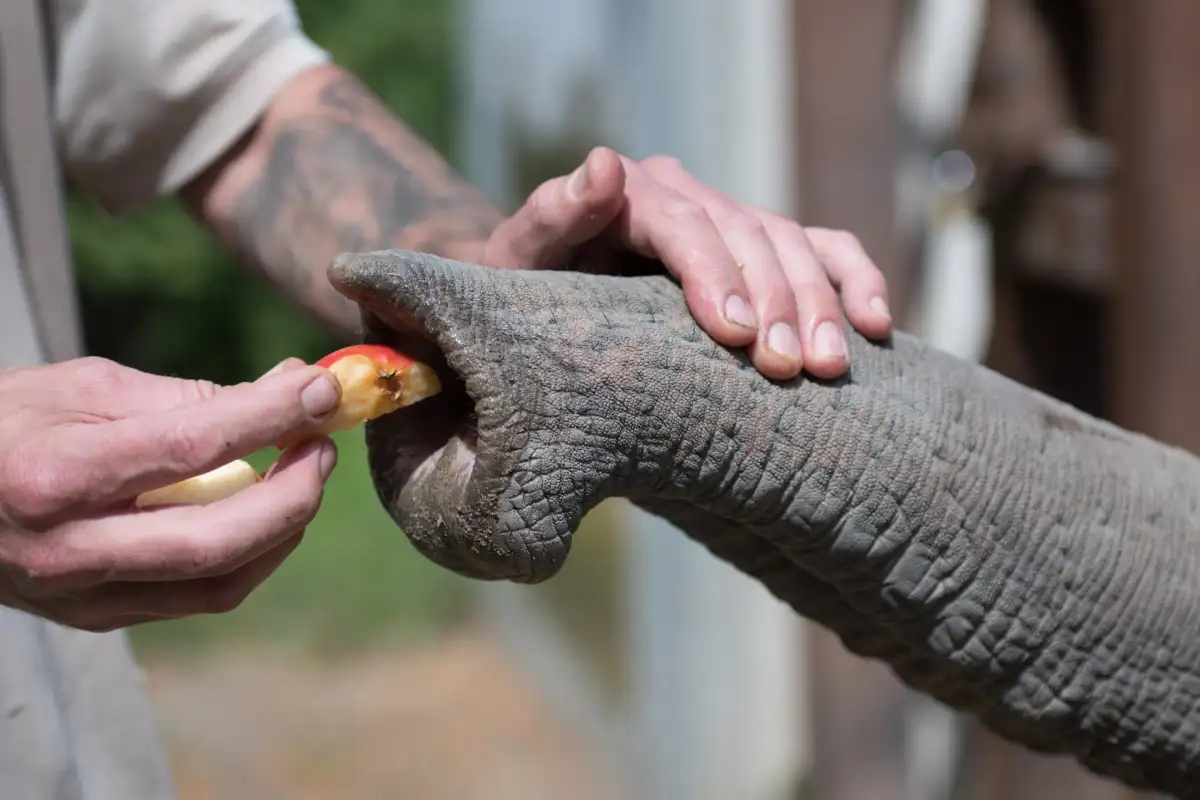
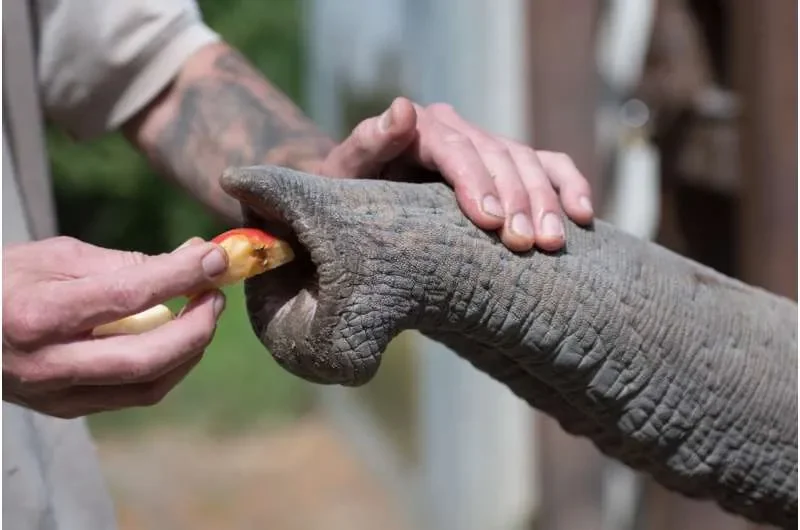
Recent scientific scans of Asian elephant trunks show that their ability to handle delicate items comes from a specific type of hair. While the trunk is strong enough to pull down trees, it is also sensitive enough to pick up a single peanut or a thin tortilla chip without breaking it. This sensitivity is not just in the muscles. New data shows that roughly 1,000 whiskers covering the trunk act as built-in sensors. These hairs have a unique physical structure that changes from the bottom to the top, allowing the animal to feel exactly where it is touching an object.
The study highlights that these whiskers do not grow back if they are damaged. This makes their durability a key factor for the animal's survival, especially since elephants spend many hours each day searching for and eating food. This discovery helps explain how elephants navigate their world despite having thick skin and poor eyesight.
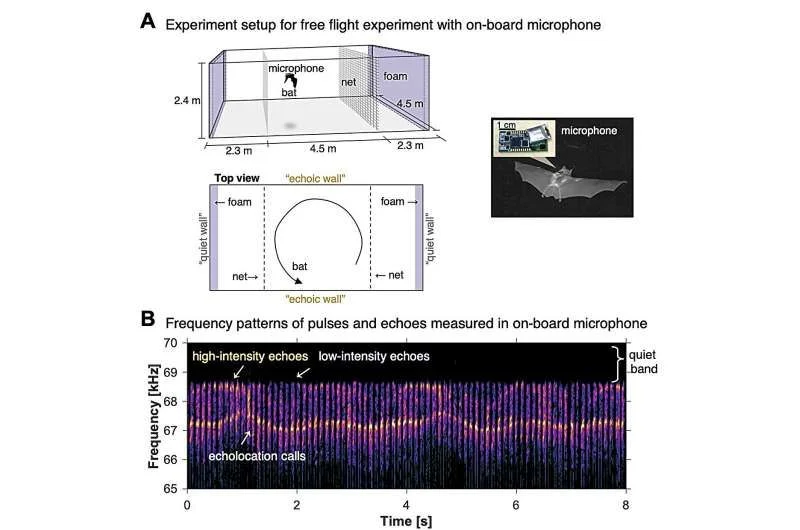
Read More: Bats Create Silent Zones to Hear Bugs Better in Noise
Timeline of Findings and Research Actors
The research was conducted by a team of scientists, including Dr. Andrew Schulz, who used advanced scanning tools to look inside the hairs of Asian elephants.
5 Days Ago: Initial reports detail the "material intelligence" of the whiskers, comparing them to tools rather than just hair.
4 Days Ago: Data is released showing that elephant whiskers are structurally different from those of rats and other common mammals.
3 Days Ago: Researchers confirm the "stiffness gradient," which describes how the hair changes from hard to soft along its length.
2 Days Ago: Analysis is shared regarding how these whiskers survive the wear and tear of an elephant eating up to 200 kilograms of food daily.
Physical Evidence and Structural Data
The team used micro-CT scanning to create 3D models of the whiskers. They found that these hairs are porous and have a specific "functional gradient."
"We found the same kind of gradient in domestic cat whiskers… a transition from a stiff, plastic-like base to a soft, rubber-like tip." — Research Team Summary
| Feature | Elephant Trunk Whisker | Rat Whisker |
|---|---|---|
| Quantity | Approximately 1,000 | Fewer, concentrated on face |
| Structure | Stiff base, soft tip (Gradient) | Uniformly stiff throughout |
| Shape | Tapered and porous | Mostly circular and solid |
| Regrowth | Does not grow back | Can regenerate if trimmed |
| Main Use | Tactile sensing for food/objects | Navigation and space sensing |
The core discovery is that the elephant whisker is a "smart" material. Its changing stiffness helps the brain understand exactly which part of the hair is touching an object.
Analysis of Whisker Mechanics
The Gradient of Stiffness
Unlike human hair, which is mostly the same from root to tip, an elephant’s trunk whisker changes its density. The base is rigid, similar to hard plastic. As the hair grows longer, it becomes softer, reaching a texture like rubber at the tip.
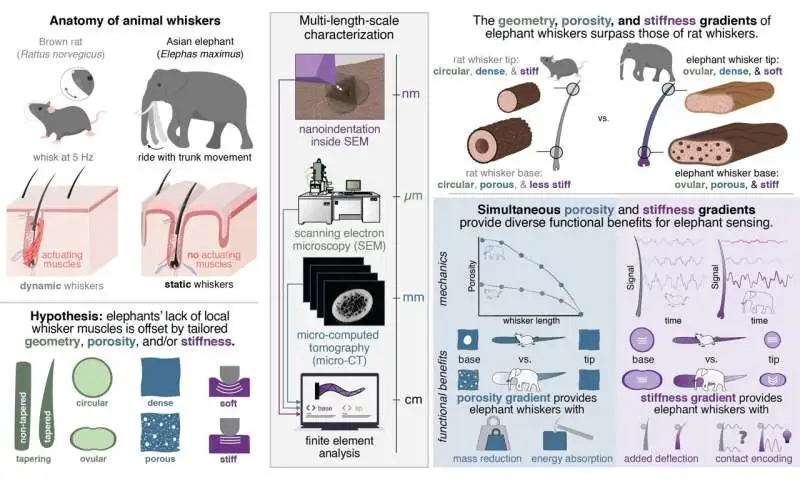
This allows the whisker to bend and vibrate when it touches something.
These vibrations travel down to mechanoreceptors (touch-sensing cells) at the base.
Because the stiffness changes, the vibration pattern tells the elephant if the contact is happening at the tip or the middle of the hair.
Comparison to Other Species
The researchers were surprised to find that elephant whiskers have more in common with domestic cats than with rats or mice. Most rodents have whiskers that are solid and stiff all the way through. The elephant’s whiskers are more complex.
Read More: Hagfish Lost Eyes But Gained Other Senses, Fossils Show
"Elephants are famous for their dexterous trunks… we’ve now figured out how they work. The specialized hairs help the poor-sighted creatures navigate the world." — Smithsonian Magazine Report
Survival and Wear
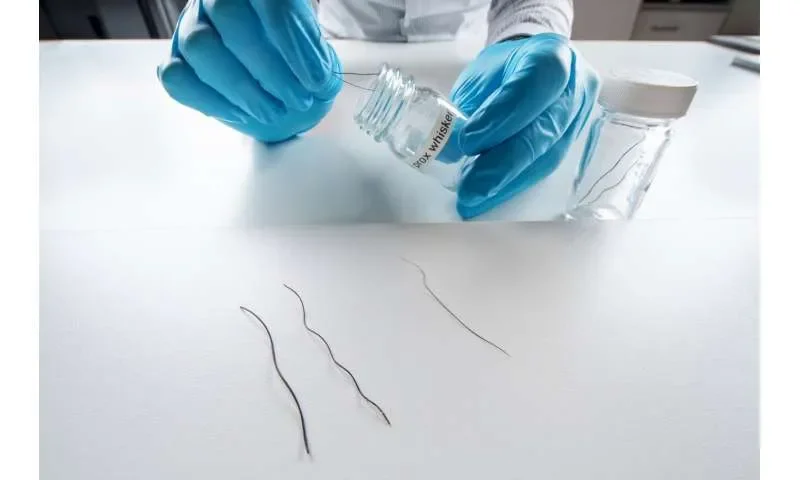
Elephants are heavy users of their trunks. They consume massive amounts of vegetation, which subjects the whiskers to constant friction and impact. The study found that the whiskers are built to be resilient. Since they do not grow back, the material must be strong enough to last a lifetime while remaining sensitive enough to detect small textures.
Expert Observations
Dr. Andrew Schulz and his colleagues noted that the elephant trunk is a "wonder of evolution" because it combines massive strength with extreme precision.
Tactile Feedback: The whiskers compensate for the elephant's lack of sharp vision.
Material Intelligence: The hair itself "processes" information based on how it bends, reducing the amount of work the brain has to do to understand a touch.
Robotics Interest: While the study focused on biology, the team noted that the way these whiskers work is of interest to those making sensors for machines, as they show how a simple hair can provide complex data.
Investigative Findings
The investigation into elephant trunk whiskers confirms that these animals rely on a complex biological sensor system that is unique among large land animals.
Precision Sensing: The 1,000 whiskers provide a high-resolution "map" of objects the trunk touches.
Structural Uniqueness: The transition from stiff to soft material is rare and serves a specific purpose in locating objects.
Permanent Equipment: Because these whiskers do not regenerate, the animal's ability to sense its environment depends on the health of these 1,000 hairs.
Visual Aid: The whiskers act as the primary "eyes" for the trunk, allowing for the manipulation of small food items that the elephant cannot see clearly.
Sources
Earth.com: Elephant trunks have hundreds of whiskers that work like built-in sensors (Focus on material properties and cat comparisons).
The Hindu Business Line: Elephant trunk whiskers give keen sense of touch (Details on mechanoreceptors and Asian elephant scanning).
Smithsonian Magazine: An Elephant’s Trunk Is Covered in Whiskers (Context on navigation and animal comparisons).
Ars Technica: Unique structure of elephant whiskers give them built-in sensing "intelligence" (Detailed anatomical history of whiskers in mammals).
Good News Network: Whiskers on Elephant's Trunk Are Key to its Amazing Sense of Touch (Explains the tortilla chip and peanut dexterity).
Science and Technology Times: How Elephant Whiskers Shape Their Sense of Touch (Covers the wear and tear from 200kg of food daily).
Popular Science: Elephants are smart. So are their whiskers. (Highlights the use of micro-CT scanning).