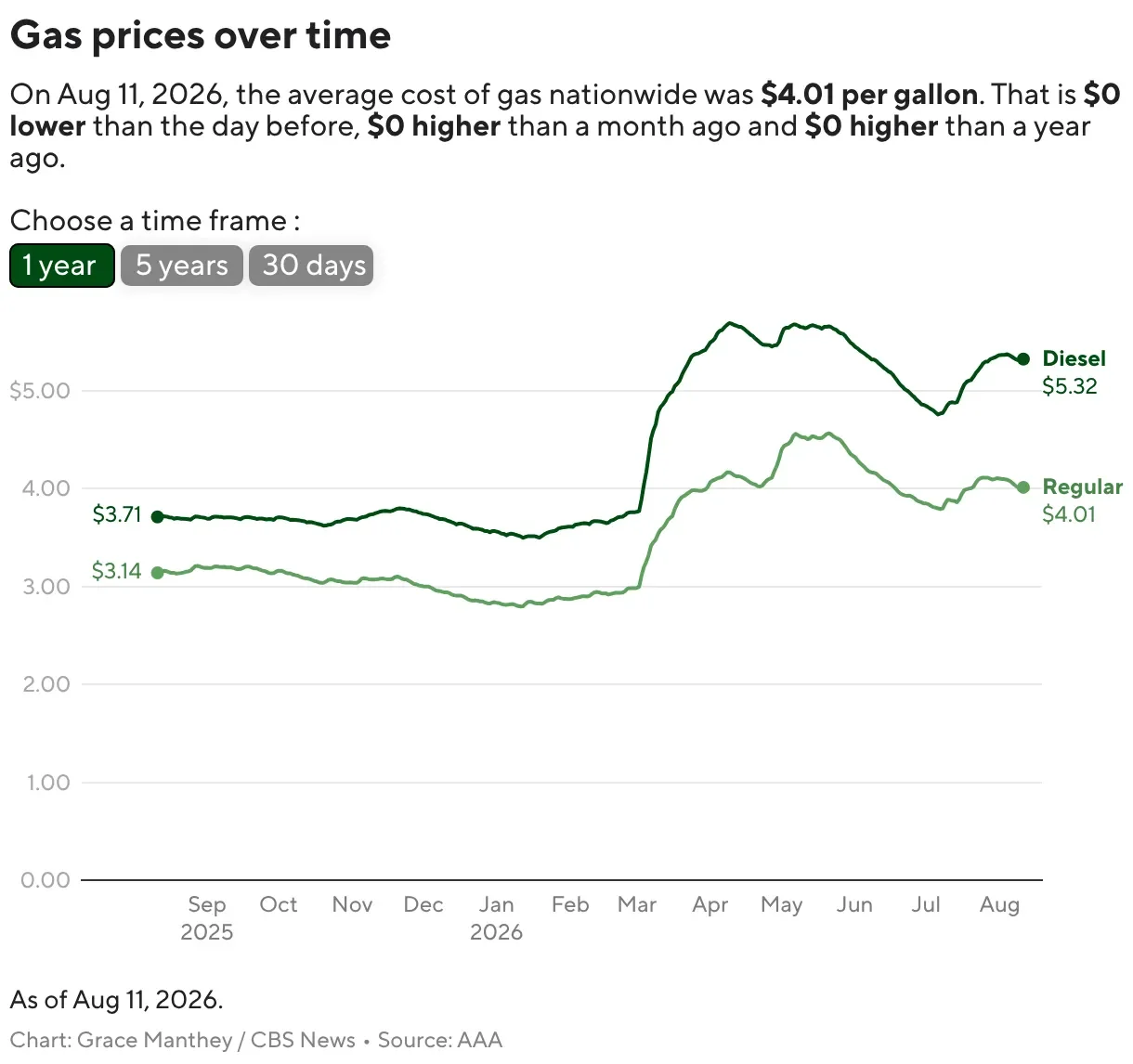
Current energy projections suggest national gasoline averages will remain above the $3.00 per gallon threshold for the foreseeable future. Despite localized downward trends, geopolitical instability in the Middle East continues to constrain global oil supply, preventing a return to pre-conflict pricing levels.
Market Volatility and Supply Constraints
Economists and energy analysts maintain a guarded outlook regarding pump prices as of April 22, 2026. While some market observers posit that seasonal peak pricing has passed, the structural reality of the global energy market points toward sustained elevation.
Geopolitical Pressure: Ongoing military friction involving Iran serves as the primary driver for price volatility. Threats regarding the targeting of civilian infrastructure introduce immediate upward pressure on crude valuations.
Supply Chain Disruption: The residual effects of strikes launched by the U.S. and Israel on Feb. 2026 have permanently altered supply calculations. Analysts note that the diminished global inventory is not being replenished at a rate sufficient to lower consumer costs significantly.
Recovery Timeline: Experts suggest it may take several months—or longer—for retail fuel prices to revert to the cost structures observed prior to the escalation of hostilities in the region.
| Factor | Influence on Gas Price | Directional Outlook |
|---|---|---|
| Global Crude Supply | Constrained | Upward/Stable |
| Iran Conflict Escalation | High | Volatile |
| Seasonal Demand | Moderate | Upward |
The Expert Consensus
"Diminished global oil supply is likely to keep U.S. fuel prices elevated for months to come," stated Mark Zandi, noting that market normalization remains tethered to broader geopolitical stability.
While voices like Patrick De Haan observe the potential for price spikes linked to specific policy threats—namely rhetoric regarding infrastructure targets—other analysts remain focused on the simple mathematical reality of restricted output. The energy market is currently functioning within a framework of scarcity, where any deviation in military posturing could trigger rapid, asymmetric price hikes.
Read More: Goldman Sachs predicts 15 million US jobs lost to AI by 2036
Background
The current price floor is a direct derivative of the mid-winter strikes in Iran, which disrupted international shipping lanes and extraction capabilities. These events effectively nullified previous forecasts that anticipated a softening of costs in the second quarter of 2026. Consumers are currently navigating a market defined by risk premiums rather than domestic consumption trends alone.