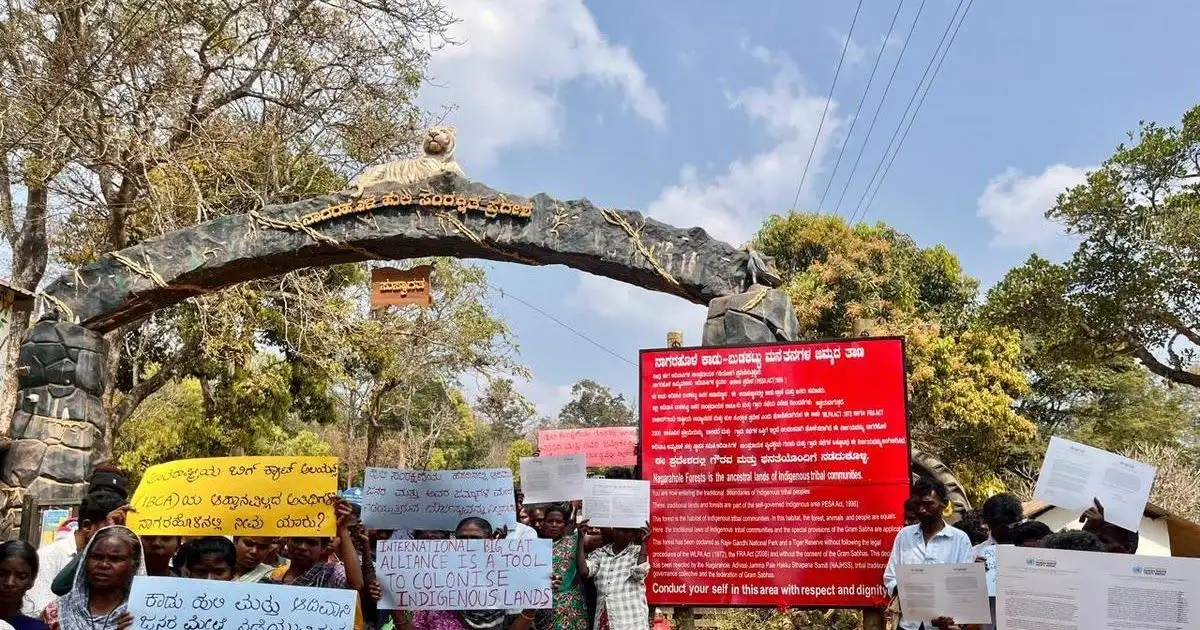
Tensions simmer in Nagarahole as indigenous groups call for an enduring ban on wildlife safaris and voice strong objections to the International Big Cat Alliance (IBCA), framing it as a mechanism for forest exploitation. The Nagarahole Adivasi Jamma Paale Hakku Sthapana Samithi (NAJHSS), a collective of gram sabhas representing communities like the Jenu Kuruba, Betta Kuruba, Paniya, and Yerava, has publicly condemned the IBCA and the recent Global Big Cat Summit. Their concerns highlight a deep-seated conflict between traditional land rights, conservation strategies, and external conservation initiatives.
Background: A Timeline of Disruption and Discontent
The controversy gained prominence in early November 2025, following a series of fatal tiger attacks on humans in the Saragur and H.D. Kote regions, areas proximate to the Bandipur and Nagarahole Tiger Reserves.
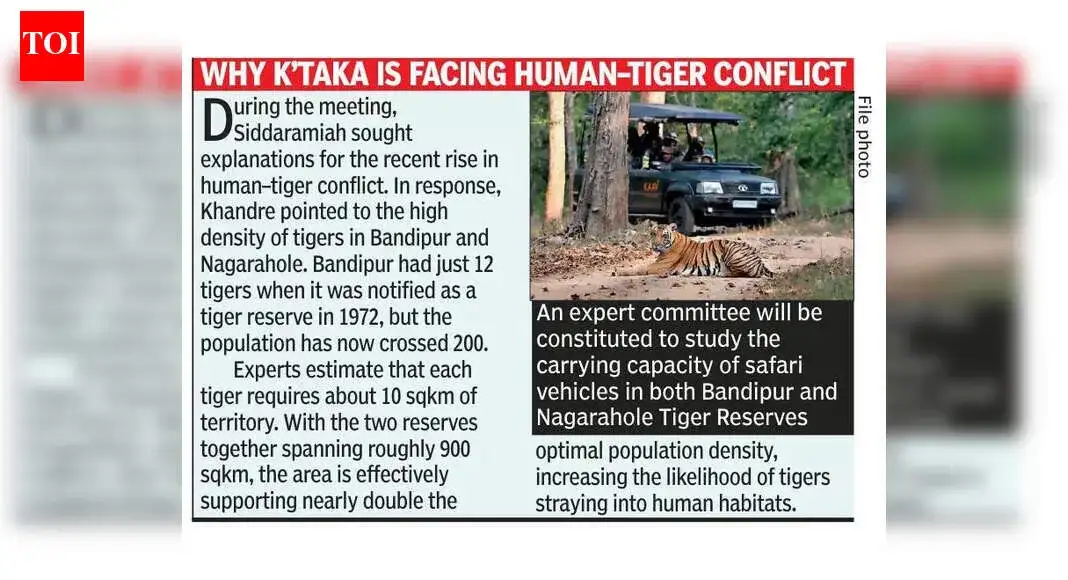
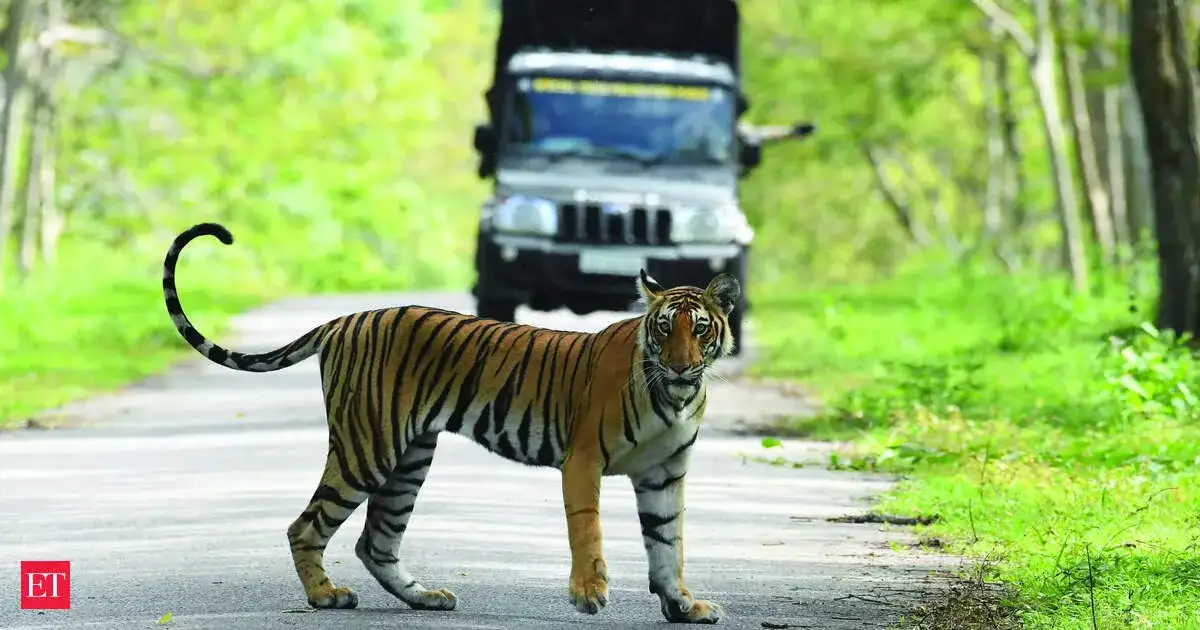
November 7, 2025: In response to these incidents, Karnataka Forest Minister Eshwar Khandre ordered the immediate suspension of safari operations in both Nagarahole and Bandipur Tiger Reserves. Trekking in conflict-prone zones was also banned statewide. Safari staff were redeployed to assist in tiger rescue operations.
November 2025 onwards: The suspension of safaris triggered significant economic repercussions. Ecotourism stakeholders, including resort owners and travel agents, reported substantial daily losses, estimating collective daily losses exceeding ₹3 crore. The state also faced an estimated loss of ₹60-70 lakh per day in GST revenue. International travel agents began rerouting tourists, impacting advance bookings.
December 2025: A growing chorus emerged from tourism operators, travel associations, and even some wildlife experts advocating for the resumption of safaris. Arguments centered on the lack of direct evidence linking safaris to the attacks and the severe economic distress faced by communities dependent on tourism.
Early February 2026: Ahead of the Global Big Cat Summit, the NAJHSS voiced its strongest objections. They labeled the IBCA as a "facade" for land occupation and exploitation, asserting that their conservation methods are rooted in exclusion. The summit, scheduled for February 9-13, was criticized for taking place amidst global concern over climate change and human rights violations against indigenous peoples.
February 2026: The NAJHSS continued its advocacy, explicitly condemning the IBCA and calling for the continuation of the safari ban. They accused government departments and conservation groups of advancing "extractive agendas" and highlighted historical dispossession dating back to the 19th century.
Evidence of Indigenous Concerns and Economic Impact
The NAJHSS’s stance is built on historical grievances and contemporary observations:
Read More: 250 Kiwis Return to Wellington Hills After 100 Years
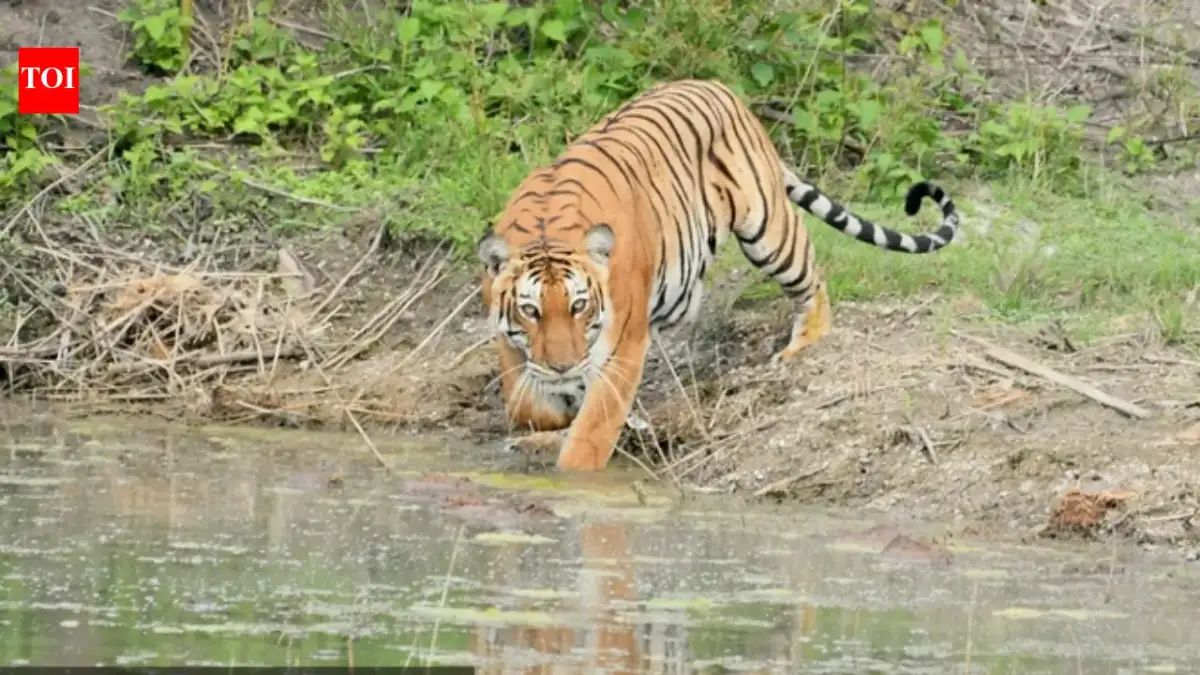
Traditional Governance vs. External Agendas:
The NAJHSS argues that their communities have lived in Nagarahole for generations, practicing customary methods that treat humans, animals, and forests as interconnected.
They contend that these traditional practices, recognized under acts like the Panchayats (Extension to Scheduled Areas) Act and the Forest Rights Act, are undermined by official actions.
The organization claims forest officials have filed cases and issued threats against community members, even for sacred rituals, despite traditional governance systems.
They see the IBCA and the summit as efforts to legitimize the extraction of forest resources and further dispossess indigenous peoples.
Economic Fallout of the Ban:
KETRA (Karnataka Ecotourism Resorts Association) members report daily losses exceeding ₹3 crore.
State-owned Jungle Lodges and Resorts incurred daily losses of approximately ₹30 lakh.
The state government faced a daily loss of ₹60-70 lakh in GST revenue due to the safari suspension.
Thousands of families, including safari drivers and guides, depend directly on safari-related employment.
The ban has led to mass cancellations, significant declines in resort bookings, and is reportedly disrupting the plans of foreign tourists who book travel months in advance.
The IBCA and the Global Big Cat Summit
The International Big Cat Alliance (IBCA) and its associated Global Big Cat Summit have become a focal point for the NAJHSS's opposition.
Accusations of Exploitation:
The NAJHSS labels the IBCA as a tool to "legitimise extraction of forests, people and animals."
They describe IBCA's conservation methods as based on "exclusion and extraction."
The federation accused the Ministry of Environment, Forest and Climate Change, the National Tiger Conservation Authority, and various conservation groups of advancing these extractive agendas.
Summit Proceedings and Participants:
The Global Big Cat Summit was scheduled to take place in Bandipur and Nagarahole from February 9 to 13, 2026.
The summit's agenda included sessions on collaborative conservation, landscape approaches, community stewardship, and immersive wildlife tourism.
Delegates included retired and current officials from forest departments and wildlife authorities, indicating official support for the IBCA's objectives.
Divergent Perspectives on Safari Operations
The debate over resuming safaris reveals a clear division between conservationists advocating for indigenous rights and those focused on economic recovery and alternative conservation models.
| Indigenous Federation (NAJHSS) | Tourism Stakeholders & Some Officials |
|---|---|
| Safari Ban | Demand for continuation; sees it as necessary to halt exploitation. |
| IBCA/Summit | Strongly condemn; view it as a tool for extraction and dispossession. |
| Cause of Conflict | Implied to be related to forest management and historical dispossession. |
| Conservation Focus | Traditional, community-based practices, human-animal-forest equality. |
| Economic Impact | Acknowledged, but secondary to the preservation of rights and forests. |
Expert Analysis and Official Stance
Official responses have oscillated between addressing immediate safety concerns and exploring economic recovery.
"Ahead of the initial proceedings of the Global Big Cat Summit… the Nagarahole Adivasi Jamma Paale Hakku Sthapana Samithi (NAJHSS)… have alleged that the International Big Cat Alliance (IBCA) is a facade to further occupy indigenous lands and intensify their exploitation." (Article 2)
Karnataka State Board for Wildlife (SBWL): In late 2025, the SBWL recommended a gradual reopening of safari operations, forming an expert committee to assess carrying capacity.
Anil Kumble: Former cricketer and Karnataka's forest ambassador stated there was no direct evidence linking safaris to animals straying into human settlements.
Forest Minister Eshwar Khandre: Initially ordered the ban following fatal attacks, directing staff to focus on tiger capture operations. Later, discussions and reviews for resuming safaris commenced.
Wildlife Experts: Several experts maintain that the recent tiger attacks occurred in ranges significantly distant from designated safari zones, suggesting the ban may not be directly addressing the root cause of the attacks.
Conclusion and Implications
The situation in Nagarahole presents a complex intersection of indigenous rights, conservation strategies, and economic pressures. The NAJHSS's resolute opposition to the IBCA and their demand for a continuing safari ban underscore a deep mistrust of external conservation models perceived as exploitative. Their call for the recognition of community forest and habitat rights under the Forest Rights Act remains a central demand.
Simultaneously, the severe economic impact of the safari ban on local communities and the broader tourism sector has led to strong calls for its immediate resumption. Stakeholders argue that tourism provides essential livelihoods and that the ban is disproportionately affecting them without direct causal links to the wildlife attacks.
Read More: AI and Indigenous Data Rights: New Laws Needed by April 2027
The Karnataka government faces the intricate challenge of balancing these competing interests. The future of safari operations and the success of conservation initiatives in Nagarahole will likely hinge on how effectively these divergent perspectives are addressed and whether a framework can be established that respects indigenous rights while supporting sustainable economic development.
Sources Used:
The Hindu:
Tribals of Nagarahole call for continuing safari ban, condemn International Big Cat Alliance
IBCA delegates arrive in Bandipur for technical sessions, field visits
Times of India:
Post 2 months of ban, tiger safari may reopen in phases in Bandipur, Nagarahole
Safari ban leaves Bandipur, Nagarahole resorts struggling ahead of holidays
Lift safari ban in tiger reserves immediately, tourism stakeholders urge govt
Karnataka Suspends Tiger Safaris After Series of Fatal Attacks: Trekking Banned Statewide
Counterview.net:
Indigenous federation protests Big Cat Alliance meet in Karnataka forests
Star of Mysore:
Economic Times:
Safari ban at two popular Karnataka tiger reserves spark booking cancellations
The Telegraph:
Nagarhole, Bandipur safaris halted after tiger attack kills farmer in third such death in a month
Travel And Tour World:
Karnataka Reviews Safari Ban In Bandipur And Nagarahole To Protect Wildlife And Tourism
Change.org:
Sign the Petition: Resume safari services in Bandipur and Nagarahole Tiger Reserves