


The annual Munich Security Report (MSR) has highlighted a significant shift in the global political landscape, suggesting a move away from a US-dominated world towards a more multipolar system. This reorientation, accelerated by recent US foreign policy decisions and rhetoric, presents a complex set of challenges and opportunities for international cooperation and stability. The report indicates that nations are increasingly reassessing their reliance on the United States, viewing it as a potential risk rather than a consistent partner.

Europe Re-evaluates US Reliance Amidst Shifting Global Tides
The Munich Security Report indicates a growing realization among European leaders that their long-standing reliance on the United States for security and economic matters is becoming unsustainable. This sentiment is particularly pronounced following remarks and policy shifts attributed to the Trump administration.

The report suggests that European dependence on the US military and its willingness to accommodate US policies is reaching a breaking point.
There are indications that certain European political figures have pushed back against claims of authoritarian censorship within European leadership.
Past instances, such as remarks disparaging the contributions of European NATO members in Afghanistan, have caused significant offense.
The report also directly accuses certain US political figures of a "lust for destruction" and of aligning with geopolitical rivals.
US Policy Under Scrutiny as Global Order Reconfigures
The Munich Security Conference report paints a picture of a world order in flux, with the United States' role increasingly questioned. The report argues that US actions and stated intentions have injected considerable uncertainty into the international system.
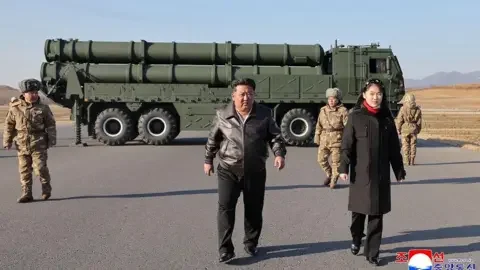
Read More: Kim Jong Un's Daughter May Be Next Leader of North Korea

The MSR, released prior to the main conference, details a broad geopolitical move away from a US-centric international order towards a multipolar world.
Specific actions, such as tariff threats and proposals concerning territorial claims in various regions, are cited as contributing to global economic and political instability.
The report poses a critical question: "The next four years will show whether a more selectively engaged US fuels or contains global disorder."
The potential re-election of a particular US president and the subsequent transformation of foreign policy have led to Washington being perceived as a "risk to be hedged against" by other global powers.
Multipolarity: A Double-Edged Sword for Global Stability
The Munich Security Report 2025 offers a nuanced view of the emerging multipolar world order, acknowledging both its potential benefits and inherent risks. While the rise of new global players may foster a more equitable system, increased competition could also lead to greater conflict.
Read More: Trump Disagrees with Federalist Society, Judge Stops His Courtroom Talk

The report notes that while a more multipolar world holds promise for a fairer and more peaceful international system, growing rivalry and polarization pose a threat to global stability.
This shift presents a complex dynamic where emerging powers' increased influence offers hope for a more just order, but the accompanying increase in rivalry and unilateral actions could result in a more conflict-ridden world.
A survey linked to the report indicates a divergence in perspectives: citizens in Western industrialized nations tend to view the multipolar order with concern, fearing increased disorder, while majorities in BRICS countries see it as a path toward a fairer world.
The report observes that the current international system exhibits characteristics of unipolarity, bipolarity, multipolarity, and nonpolarity simultaneously.
Expert Insights and Analysis
The implications of the Munich Security Report have been a subject of discussion among international relations experts. The report's findings suggest a fundamental re-evaluation of established diplomatic norms and security alliances.
Read More: People Protest Worldwide Due to Money Problems
Daniel B. Shapiro, a former US ambassador to Israel, commenting on the broader geopolitical context, has stated that "The shift toward multipolarity is undeniable, and how major powers navigate this transition will be critical for global stability."
The report itself emphasizes the need for "depolarization" and substantial reforms to the international order to address growing divides and competition.
The report points to the growing autonomy of regional powers in their political, economic, and security decisions on the global stage.
Conclusion: Navigating a Complex Geopolitical Transition
The Munich Security Report 2025 underscores a period of significant geopolitical transition. The perceived shift in US foreign policy and the consequent reconfiguration of global power dynamics necessitate a careful analysis of international relations. The report highlights a growing sentiment among nations to diversify their alliances and mitigate risks associated with a less predictable global leadership. The coming years will be crucial in determining whether this period of flux leads to increased global cooperation or heightened conflict, with the report's emphasis on multipolarity and the re-evaluation of established international structures serving as a central theme.
Sources:
The Guardian: "Europe’s ‘painful’ realisation it must be bolder with US set out in security report" (Published: February 9, 2026)
https://www.theguardian.com/world/2026/feb/09/europe-us-munich-security-conference-report
Politico: "Vance brings a wrecking ball to diplomatic gathering in Munich" (Published: February 14, 2025)
https://www.politico.eu/article/vance-brings-a-wrecking-ball-to-diplomatic-gathering-in-munich/
Semafor: "US becoming ‘a risk to be hedged against,’ Munich Security report warns" (Published: February 10, 2025)
https://www.semafor.com/article/02/10/2025/us-becoming-a-risk-to-be-hedged-against-munich-security-report-warns
Anadolu Agency (AA): "Global order shifting from US-led unipolarity toward multipolarity: Munich Security Report" (Published: February 10, 2025)
https://www.aa.com.tr/en/europe/global-order-shifting-from-us-led-unipolarity-toward-multipolarity-munich-security-report/3477327
World Policy Hub: "Analytical Review of the Munich Security Report 2025: A Multipolar World Between Optimism and Challenges" (Published: April 9, 2025)
https://worldpolicyhub.com/analytical-review-of-the-munich-security-report-2025-a-multipolar-world-between-optimism-and-challenges/
European Parliament - ESPAS: "Munich Security Report 2025 | ORBIS" (Published: February 14, 2025)
https://espas.secure.europarl.europa.eu/orbis/document/munich-security-report-2025
Read More: Lawmakers Question Attorney General Bondi on Epstein Files
Note: Article 3 from NAMPA.org was excluded due to its content being unrelated to the Munich Security Report's themes, focusing on sports results and Namibian governmental photos.


:max_bytes(150000):strip_icc():focal(612x1166:614x1168)/Switzerland-accident-fire-020826-02-7cbc5d49ad0f413883178cfd825a77de.jpg)


