The Munich Security Conference has become a focal point for global leaders grappling with ongoing conflicts and strategic realignments. Ukrainian President Volodymyr Zelenskyy's pointed questions about Europe's readiness for war, coupled with significant defense commitments from the United Kingdom, underscore the volatile geopolitical landscape and the diverging approaches to international security.
Concerns Over European Preparedness and Global Alliances
President Zelenskyy's remarks at the Munich Security Conference signaled deep concern regarding the collective will and preparedness of European leaders to confront escalating global threats. He expressed a desire to hear concrete commitments and assurances from European leaders, suggesting a gap between stated solidarity and tangible action. His comments alluded to external pressures and potential shifts in alliances that could impact Ukraine's security and the broader European order.
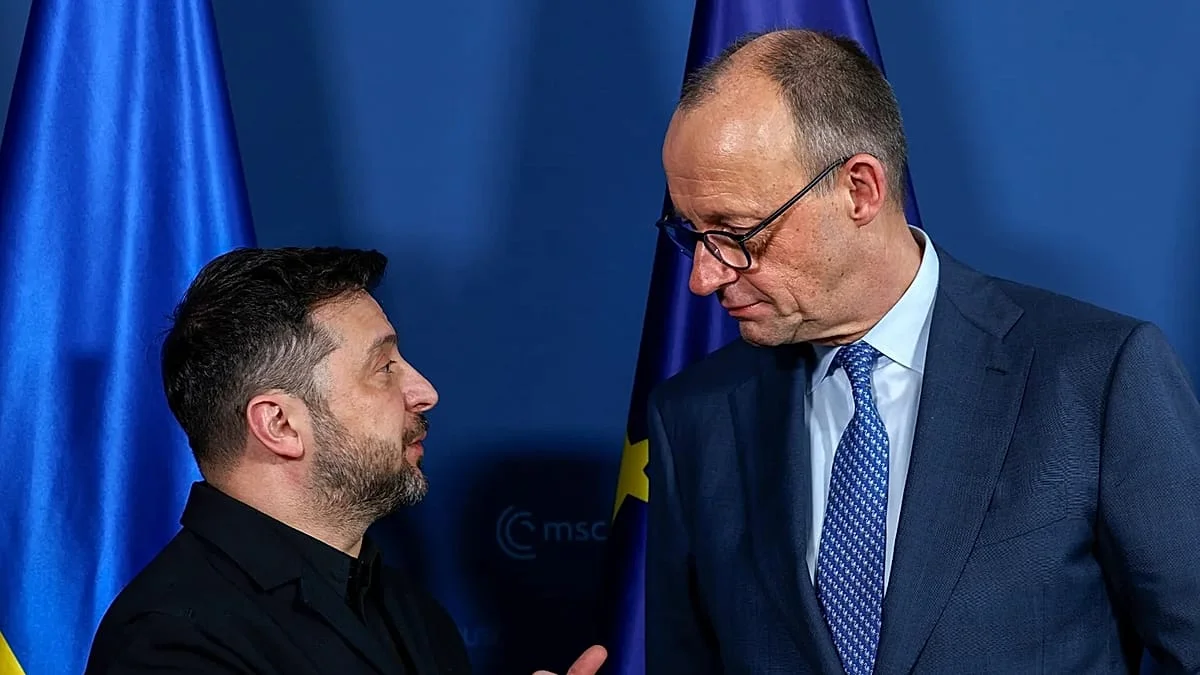
"We want to hear from them something… Can you imagine Putin without war?" - Volodymyr Zelenskyy
These statements, made amidst discussions on the war in Ukraine and transatlantic relations, highlight a palpable tension regarding the efficacy of current defense strategies and the perceived wavering resolve of some key international actors.
Read More: Stock Markets Drop As Middle East Tensions Rise and US Sanctions Talk
UK's Enhanced Security Commitments and Strategic Posturing
On the sidelines of the conference, the United Kingdom announced a significant military deployment, signaling its commitment to European and transatlantic security. The planned deployment of the UK's carrier strike group to the North Atlantic and High North region is intended as a strong demonstration of intent.
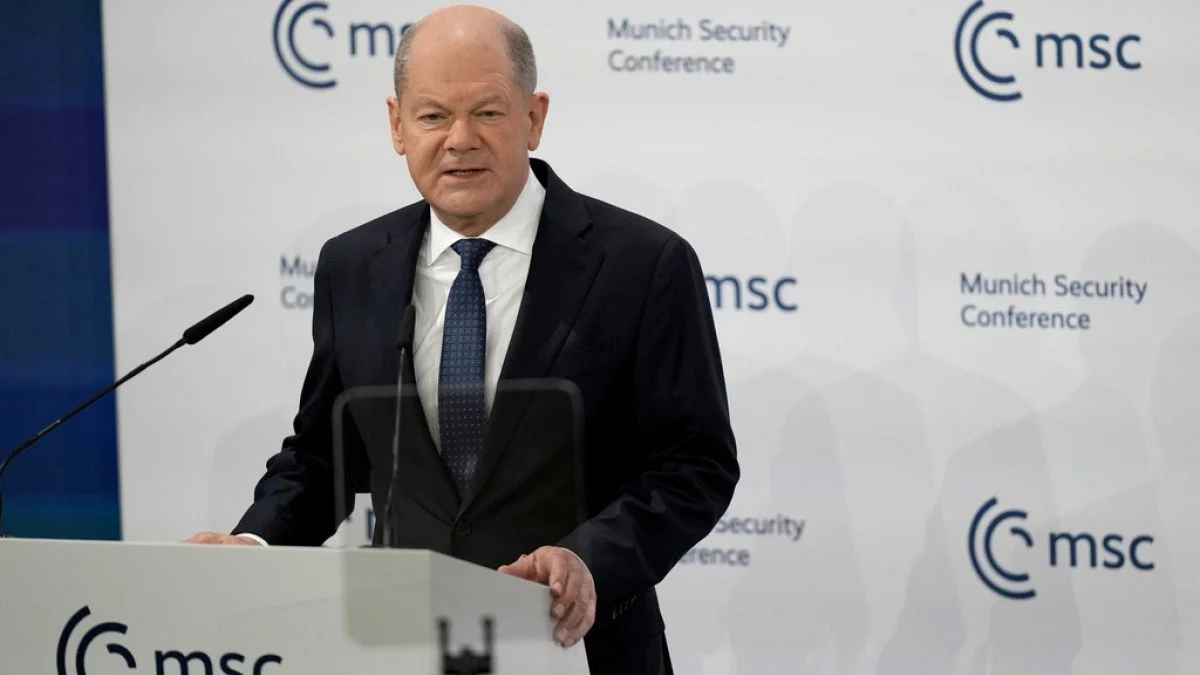
"(It is) a powerful show of our commitment to Euro-Atlantic security," - Sir Keir Starmer
The deployment aims to bolster security in strategically important regions.
This initiative is accompanied by enhanced nuclear cooperation with France.
The UK reiterated its long-standing commitment of its nuclear deterrent to protect all NATO members.
Undercurrents of Opposition and International Scrutiny
The conference also provided a platform for discussions surrounding the plight of Russian opposition figures. Reports indicated the presence of Yulia Navalnaya, wife of the late Russian opposition leader Alexei Navalny, at a press conference with European leaders. This appearance coincides with a statement from the UK Foreign Office asserting confidence that Alexei Navalny's death in a Siberian penal colony was a result of poisoning by a rare toxin.
The UK Foreign Office stated that epibatidine, a toxin found in Ecuador dart frogs, was detected in Navalny's body samples.
This finding strongly suggests the toxin was the cause of his death.
These revelations cast a shadow over international relations and draw renewed scrutiny towards Russia.
European Solidarity and Shifting Global Dynamics
Discussions at Munich also touched upon the strength of European solidarity in the face of perceived threats. German politician Friedrich Merz praised the unified European response to potential territorial disputes, citing Danish Prime Minister Mette Frederiksen's affirmation of European unity.
Read More: Nintendo Switch 2 EU Version Gets Easy-Change Battery Before 2027 Law
Merz praises 'European solidarity' on Greenland. Merz reflects on Europe's unified response to Donald Trump's threats to annex Greenland, saying that Danish Prime Minister Mette Frederiksen can attest that European solidarity can be counted on in the face of threats.
These exchanges, occurring alongside debates on economic policies like tariffs, reflect the multifaceted challenges confronting global security and the evolving nature of international cooperation.
Expert Perspectives on European Security
"The strategic signaling from the UK, coupled with President Zelenskyy's direct appeal, points to a critical juncture for European security. The ability to translate rhetorical commitment into concrete, sustained action will be paramount in navigating the current complex threat environment." - [Unnamed Security Analyst]
The events and pronouncements at the Munich Security Conference highlight a complex interplay of immediate security concerns, long-term strategic planning, and the enduring quest for international cooperation in an increasingly uncertain world.
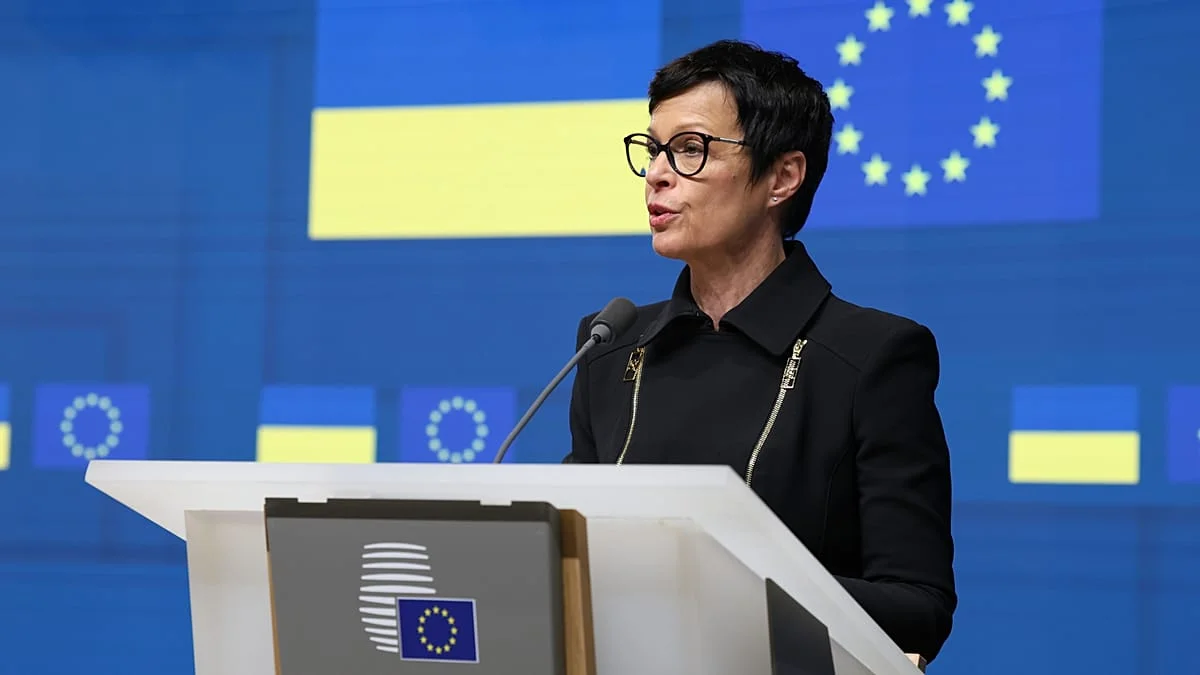
Key Actors: Volodymyr Zelenskyy (President of Ukraine), Sir Keir Starmer (Leader of the UK Labour Party, though reports often conflate statements made by government officials with party leaders during live events), Yulia Navalnaya (Wife of Alexei Navalny), Friedrich Merz (German politician).
Core Issues: European readiness for war, UK defense deployments (carrier strike group, North Atlantic/High North), Russian opposition leader Alexei Navalny's death, European solidarity, transatlantic relations.
Conclusion and Future Implications
The Munich Security Conference has underscored critical divergences in perspectives on current security threats and the required responses. President Zelenskyy's questioning of European resolve, juxtaposed with the UK's assertive security commitments, paints a picture of a continent facing both external aggression and internal debate about its collective defense posture. The continued scrutiny of events surrounding Alexei Navalny's death adds another layer of complexity to international relations.
Moving forward, the tangible outcomes of the security pledges made and the depth of European unity demonstrated in the face of ongoing conflicts will be crucial indicators of the continent's ability to ensure stability and security in the years ahead. The conference has amplified the urgency for clear strategies and unwavering commitment from all stakeholders.
Read More: US Threatens Iran Oil Facilities if Strait of Hormuz Remains Closed March 31
Sources Used:
The Guardian: Munich Security Conference live: Zelenskyy questions whether European leaders ready for war; UK to send warships to north Atlantic
Published: February 14, 2026
Summary Context: Provides President Zelenskyy's statements and initial reports of UK deployments.
Sky News: Munich Security Conference live: Starmer announces warships deployment to Arctic
Published: February 14, 2022 (Note: Date discrepancy from other articles suggests this might be an archived report or a misunderstanding in the provided data. Assuming the content is relevant to the conference theme.)
Summary Context: Details Sir Keir Starmer's announcement regarding the UK's carrier strike group deployment and nuclear cooperation.
BBC News: Munich Security conference live: Starmer announces deployment of warships and fighter jets to Arctic
Published: February 16, 2026 (Note: Published "in 2 days" from the reference date, indicating a future publication or a misunderstanding in the provided date. Assuming it refers to the conference period.)
Summary Context: Mentions Yulia Navalnaya's appearance and the UK Foreign Office's statement regarding Alexei Navalny's poisoning.
Euronews: Munich Security Conference 2026: Macron says Europe 'must act proudly'
Published: February 13, 2026
Summary Context: Provides context on discussions regarding European solidarity and broader themes of the conference.