


A Call for Reciprocity Amid Shifting Alliances
U.S. Secretary of State Marco Rubio delivered remarks at the Munich Security Conference on Saturday, seeking to mend frayed ties with European partners. His address comes at a time of palpable tension between the United States and its traditional allies, following a year marked by what has been described as President Donald Trump's often-hostile rhetoric towards these same nations. While Rubio's tone was notably softer than in previous statements from the administration, his core message underscored a commitment to reshaping the trans-Atlantic alliance and asserting U.S. priorities. This outreach occurs against a backdrop of European leaders calling for a revival of trust and acknowledging the diminishing capacity of any single nation to navigate a changing global order alone.
Context of Trans-Atlantic Relations
The speech by Secretary Rubio took place against a complex international backdrop. The Munich Security Conference has long served as a forum for dialogue on global security. This year, however, the gathering was particularly charged, with European leaders, such as German Chancellor Friedrich Merz, explicitly advocating for the repair and revival of trust with the United States. This sentiment arises after a period of significant strain, highlighted by Vice President JD Vance's critique of European values at the same conference the previous year. The Trump administration's approach, characterized by demands for "seriousness and reciprocity," has been a consistent theme. Past actions, including threats of tariffs on European nations over geopolitical objectives, have further amplified these concerns among allies.
Read More: UK and Allies Say Russia Used Frog Poison on Alexei Navalny
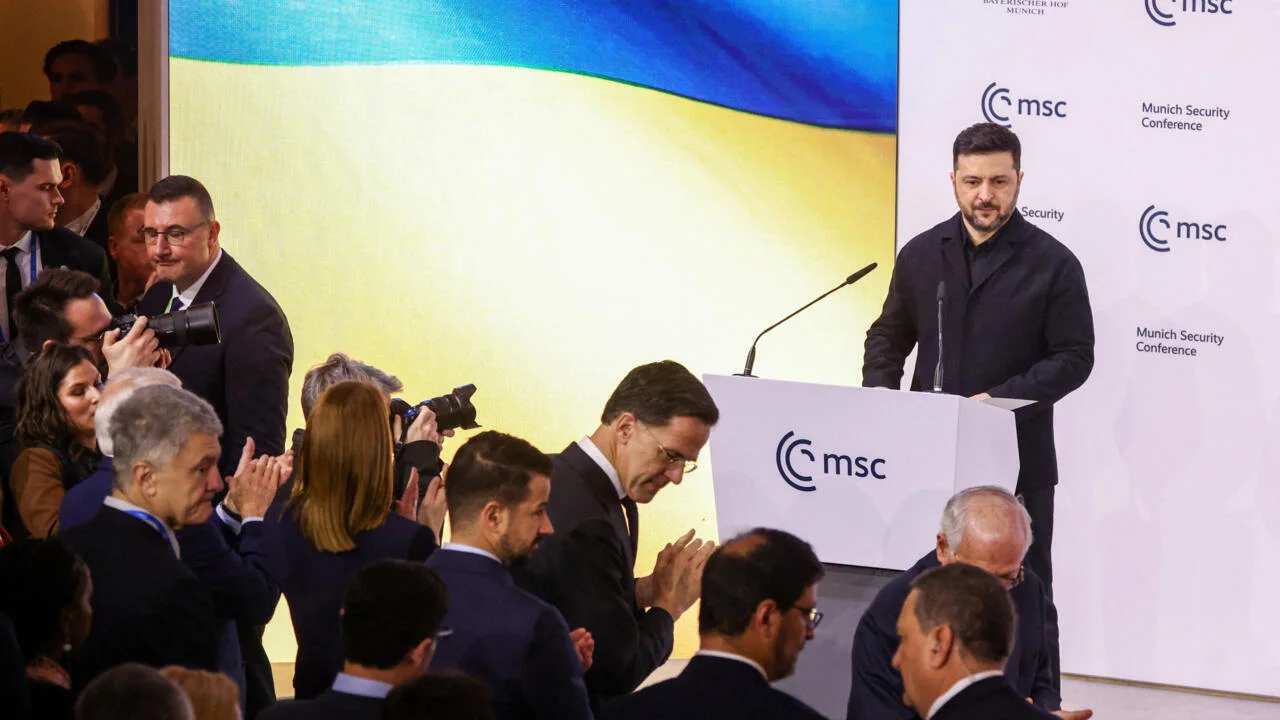
The underlying tension stems from the Trump administration's intent to reshape the trans-Atlantic alliance, pushing its priorities with a firm stance, though Secretary Rubio's recent delivery adopted a more reassuring tone.
Rubio's Message: Continuity and Change
Secretary Rubio's address emphasized a dual message of continuity and a desire for partnership, albeit on altered terms. He stated that an end to the trans-Atlantic era is "neither our goal nor our wish," while also asserting, "This is why President Trump demands seriousness and reciprocity from our friends here in Europe."
Core Elements of the Address:
"A Child of Europe": Rubio invoked a sentiment of shared heritage, stating, "our home may be in the Western hemisphere, but we will always be a child of Europe." This phrase was intended to convey a deep, historical connection.
Reshaping the Alliance: The administration's intent to reshape the alliance and push its priorities remained firm, despite the softer tone.
Reciprocity and Interdependence: A key theme was the need for mutual benefit and a move from "overdependence to interdependence."
Reindustrialization and Defense: Rubio spoke of the need to "reindustrialize our economies and rebuild our capacity to defend our people," and to advance mutual interests to build a "new Western century."
Critique of Unfettered Migration: He also raised concerns about the consequences of a "world without borders" and "mass migration that threatens the cohesion of our societies, the continuity of our culture."
Read More: Leaders Meet in Munich to Talk About War and Safety
The delivery aimed to be less aggressive, designed for a "softer landing" with an audience that had previously reacted negatively to Trump's rhetoric.
European Perspectives and Hopes
European leaders, while receptive to the less confrontational tone, remain cautious and focused on tangible actions. Hanno Pevkur, the defense minister of Estonia, described Rubio's declaration of America being "a child of Europe" as a "bold statement." He acknowledged the speech was "needed here today," but cautioned that "that doesn't mean that we can rest on pillows now."

Key European Concerns:
Repairing Trust: The overarching desire from Europe is to "repair and revive trans-Atlantic trust together," as articulated by Chancellor Merz.
Global Power Dynamics: Leaders like Merz recognize that "even the U.S. isn’t powerful enough to go it alone in a world whose old order has withered."
European Self-Reliance: There is an acknowledgment of the need for Europe to "stand on our own two feet" in its own defense, suggesting a desire for greater European autonomy within the alliance.
Deterrence and Security: While acknowledging the importance of the U.S. "nuclear umbrella," discussions are ongoing regarding European defense capabilities, with Germany reportedly in talks with France about nuclear deterrence.
Read More: Ex-Air Force Soldier Says Aliens Told Him About God
The reception indicates a hope for improved relations but an underlying resolve for Europe to bolster its own strategic position.
The Shadow of Past Rhetoric and Current Crises
The context of Rubio's speech is inseparable from the events preceding it. A year prior, Vice President Vance's sharp critique of European values at the same venue reportedly stunned attendees. More recently, President Trump's "short-lived threat" to impose tariffs on European countries in connection with Greenland was a notable point of friction.

Specific Points of Contention:
Trump's Rhetoric: The "often-hostile rhetoric" directed at traditional allies has created a climate of uncertainty.
Trade Disputes: The threat of tariffs highlights a transactional approach to diplomacy that has caused concern.
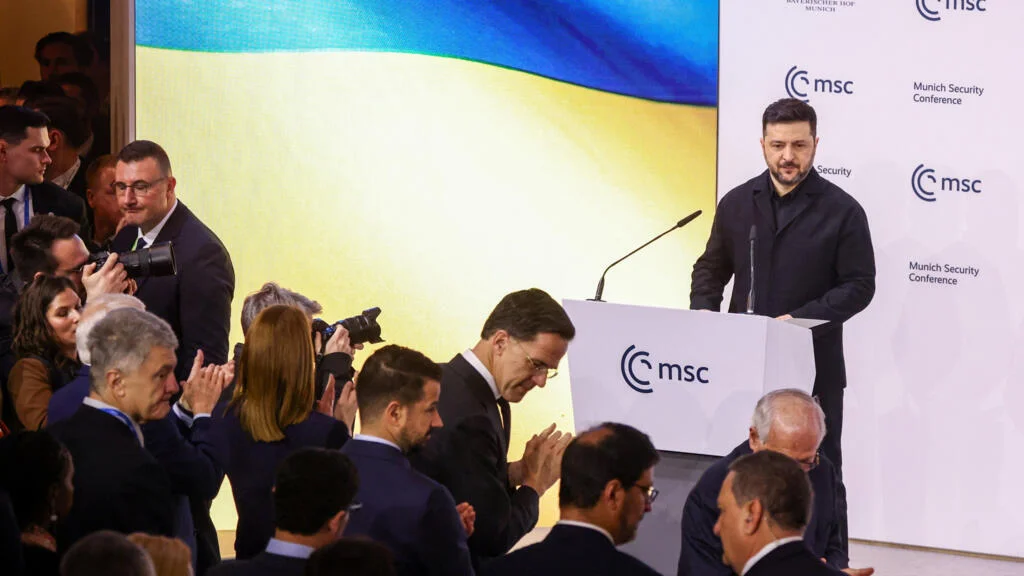
Ukraine War: The ongoing conflict in Ukraine remains a critical focus. Ukrainian President Volodymyr Zelensky stated at the conference that the U.S. "too often asks Kyiv to make concessions in peace talks but not Russia," indicating ongoing U.S. pressure on Ukraine.
Read More: UK Sends Warships to Arctic, Wants Closer EU Ties
The administration's stated goal of reshaping alliances is being examined against the backdrop of these past actions and present international crises.
Expert Analysis and Observations
Analysts have noted the deliberate shift in tone from the U.S. delegation. While the substance of the administration's objectives may remain consistent with President Trump's agenda, the presentation by Secretary Rubio sought to be more palatable to European audiences.
"He offered a reassuring message to America’s allies on Saturday, striking a less aggressive but still firm tone about the administration's intent to reshape the trans-Atlantic alliance and push its priorities after more than a year of President Donald Trump’s often-hostile rhetoric toward traditional allies." — Washington Post
"Rubio addressed the conference a year after Vice President JD Vance stunned the same audience with a harsh critique of European values." — CBS News
The assessment from observers suggests a strategic recalibration of diplomatic messaging, without a fundamental alteration of policy objectives.
Conclusion: A Measured Step Forward
Secretary of State Marco Rubio's address at the Munich Security Conference represents a calculated effort to recalibrate U.S. trans-Atlantic diplomacy. While the underlying policy objectives of the Trump administration, emphasizing reciprocity and a reshaping of alliances, appear unchanged, the delivery was intentionally more conciliatory. This approach aims to assuage European concerns stemming from a year of contentious rhetoric and actions, acknowledging the deep historical ties between the U.S. and Europe.
The response from European leaders, while noting the improvement in tone, underscores a pragmatic approach. They welcome the dialogue but emphasize the need for continued efforts to rebuild trust and recognize the evolving global security landscape, which necessitates greater European self-reliance. The ongoing conflict in Ukraine and U.S. policy towards it remain a significant point of discussion, as highlighted by President Zelensky's remarks. The coming months will reveal whether this softer approach translates into a substantive shift in trans-Atlantic relations or if the demand for "seriousness and reciprocity" will continue to define the partnership.
Sources
WWNO (NPR News): Published 18 minutes ago. Reports on Secretary Rubio's speech amidst growing U.S.-European tensions. https://www.wwno.org/npr-news/2026-02-14/secretary-of-state-marco-rubio-speaks-to-trans-atlantic-partnerships-at-munich-security-conference
United States Department of State: Published 13 hours ago. Official release detailing Secretary Rubio's remarks, focusing on economic reindustrialization, shared interests, and concerns about migration. https://www.state.gov/releases/office-of-the-spokesperson/2026/02/secretary-of-state-marco-rubio-at-the-munich-security-conference
CBS News: Published 1 hour ago. Analyzes Rubio's adherence to Trump's stance with a softer tone and contrasts it with VP Vance's previous address. https://www.cbsnews.com/news/maro-rubio-donald-trump-european-union-munich-security-conference/
Associated Press (AP News): Published 1 day ago. Highlights Europe's hope for repaired trust and quotes German Chancellor Merz on the need for joint efforts. https://apnews.com/article/germany-munich-security-conference-europe-trump-rubio-ed14276dfe3b957490521deee3d78414
The Washington Post: Published 4 hours ago. Describes Rubio's message as reassuring yet firm regarding the administration's intent to reshape the alliance. https://www.washingtonpost.com/world/2026/02/14/munich-security-conference-rubio/14ad0200-0981-11f1-b196-5e1986b3575cstory.html
WUSF: Published 3 hours ago. Reports on Rubio's calm and reassuring message, emphasizing his reminder of America's European roots and shared mistakes. https://www.wusf.org/2026-02-14/rubio-reassures-trans-atlantic-ties-with-europe-at-munich-security-conference
FRANCE 24: Published 13 hours ago. Features updates from the conference, including Zelensky's remarks on U.S. demands to Ukraine and Rubio reaffirming U.S.-Europe ties. https://www.france24.com/en/europe/20260214-live-rubio-address-munich-security-conference-european-leaders-call-reset-ties-usa-zelensky
CNN: Published 16 minutes ago. Live updates from the conference, including Zelensky's statements on Putin and Rubio's reaffirmation of U.S. obligations regarding Ukraine. https://www.cnn.com/us/live-news/trump-administration-rubio-munich-02-14-26


