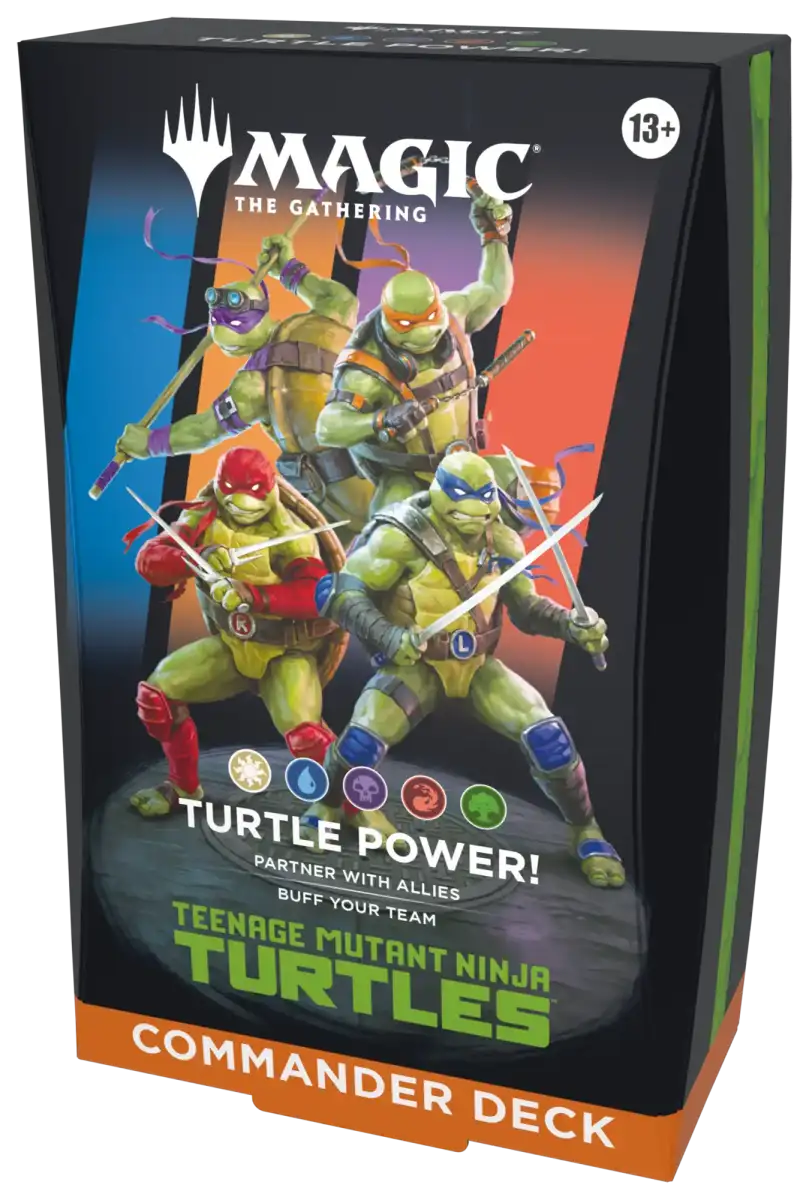
Wizards of the Coast has condensed the Teenage Mutant Ninja Turtles franchise into a single "Turtle Power" Commander deck, a departure from the typical four-deck release cycle for licensed properties. The product functions as a mechanical bundle containing six possible Legendary Commanders, including the four primary turtles, designed to leverage the Partner mechanic. This allows players to pair specific turtles to define the deck's color identity and strategic focus.
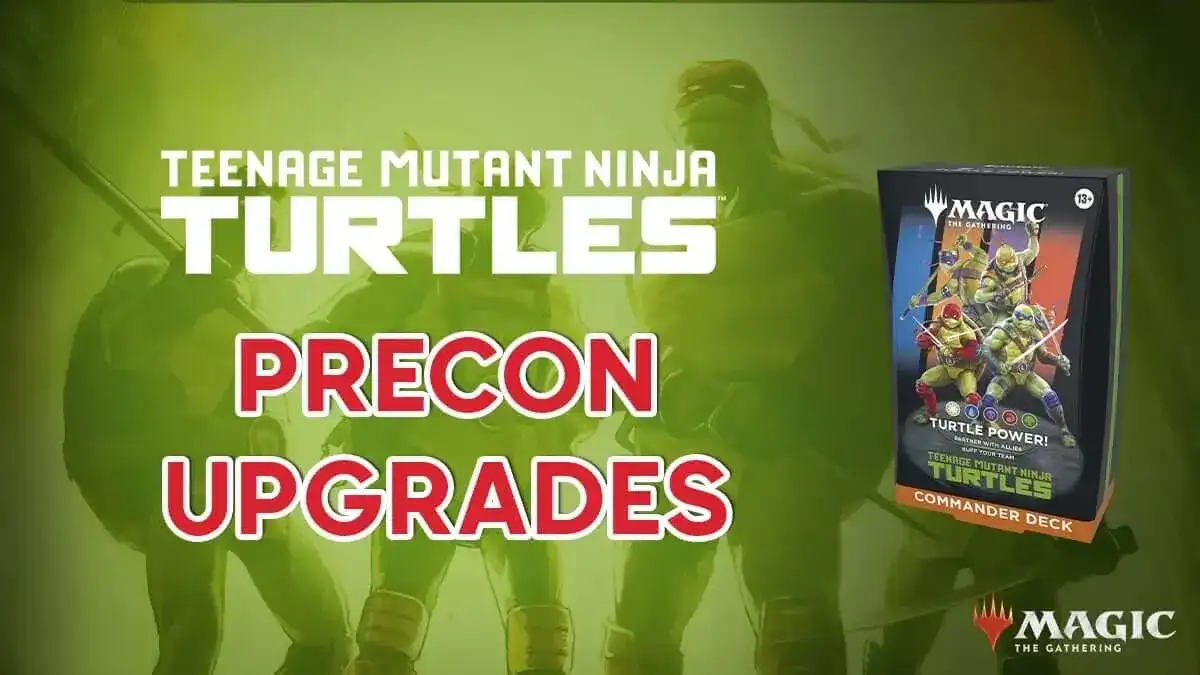
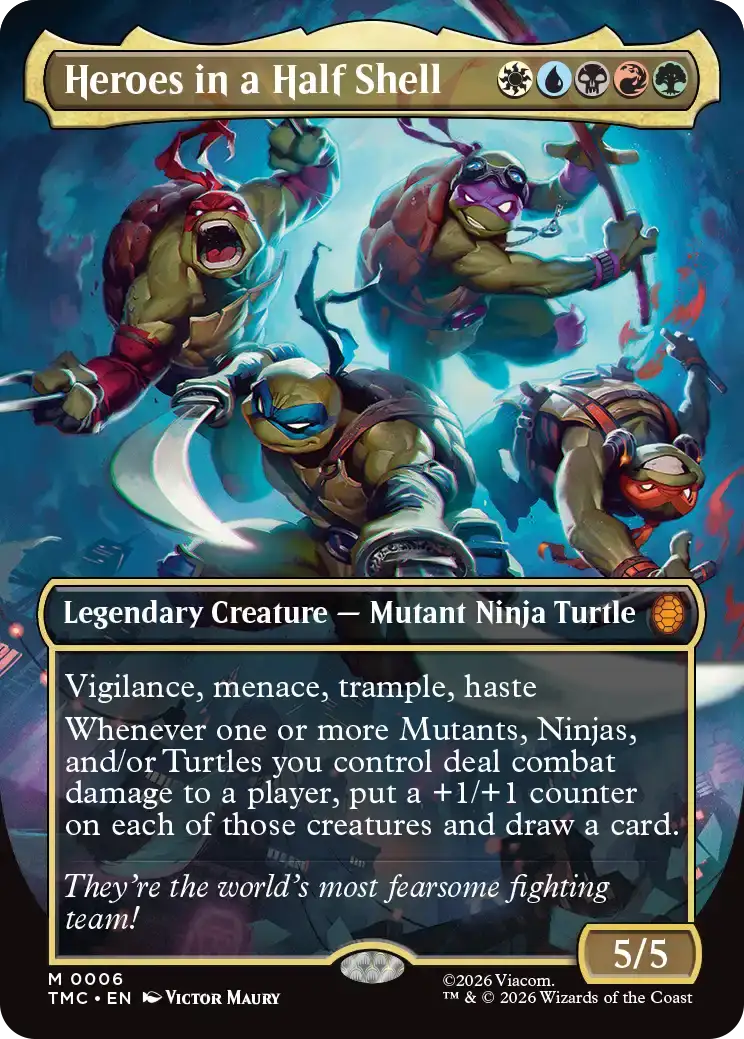
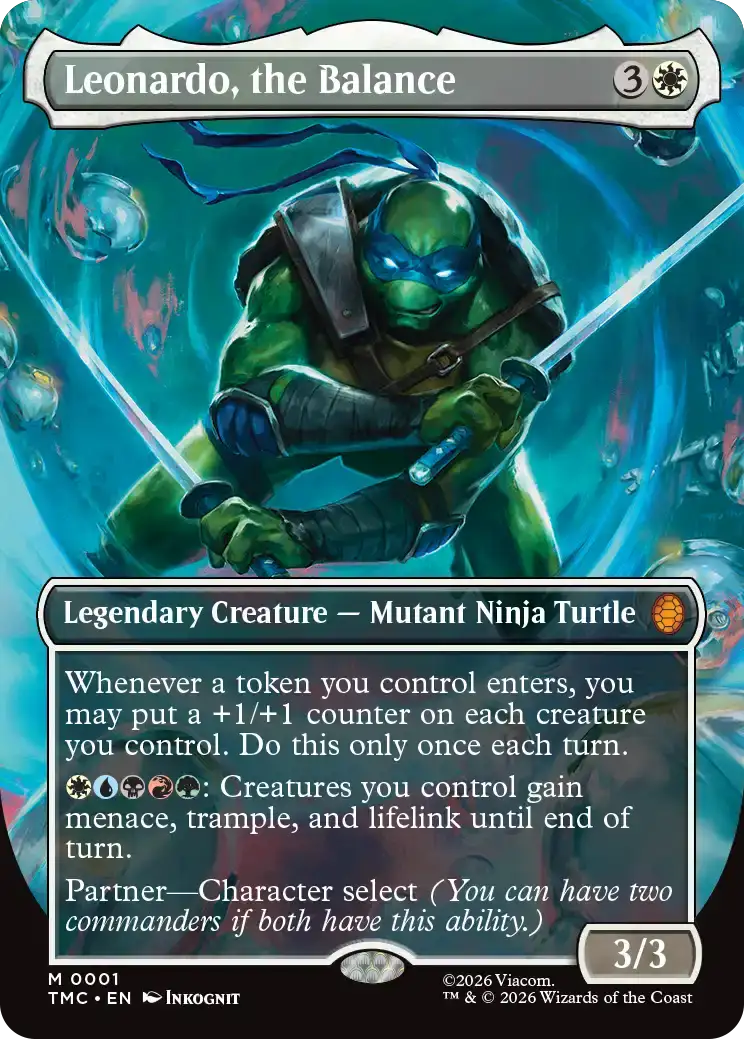
The deck's internal math centers on token generation and +1/+1 counters, specifically through ' Leonardo, the Balance '.
Leonardo triggers a growth effect—placing a +1/+1 counter on every creature you control—whenever a token enters the battlefield.
This effect is capped at once per turn but is fueled by Mutagen tokens created when turtles like Raphael enter the field.
The deck incorporates older, forgotten cardboard like ' Ooze Flux ' to convert these counters back into creatures, attempting a closed loop of plastic and ink.
| Character | Role / Title | Primary Function |
|---|---|---|
| Leonardo | The Balance | Global +1/+1 counter engine via tokens |
| Raphael | The Muscle | Generates Mutagen tokens on entry |
| Donatello | The Brains | Mechanical utility and artifacts |
| Michelangelo | The Heart | Resource generation and sustain |
The Friction of Consolidation
The decision to release one "stacked" deck instead of four separate products is framed by proponents as a mercy for the consumer's wallet, yet it forces a density of themes that usually struggle for air. By cramming six potential leads into 100 cards, the deck operates as a modular kit rather than a singular vision. Players must swap ' Commanders ' to find a functional rhythm, turning the act of play into a series of small experiments in optimization.
Read More: Street Fighter 6 Year 4 Pass adds Tifa and 3 new fighters in 2026
"We brainstormed tropes from the games that we thought were important to represent on cards… one aspect we lightly touched on was TMNT video games." — Wizards of the Coast Design Team
The core signal is the shift toward multi-choice pre-constructed products. Rather than selling a solved puzzle, the manufacturer is selling a box of parts. This mirrors a postmodern trend in tabletop gaming: the product is no longer the game itself, but the potential to build a game.
Legacy and Pixels
The design roots of this deck reach back to 1980s and 90s digital aesthetics. Designers looked at video game tropes to translate "turtle power" into combat math.
The "Mutagen" token acts as a recurring resource, mimicking power-ups from arcade cabinets.
The inclusion of the Partner mechanic attempts to simulate the "team-up" nature of the source material, though in practice, it often leads to a bottleneck where players only draw one card regardless of how many creatures attack, creating a ' resource gap ' that requires specific upgrades to bridge.
The ' Universes Beyond ' initiative continues to strip-mine nostalgia, layering it over the aging skeleton of Magic’s mechanics. Here, the turtles are not just characters; they are ' color identities ' and ' static abilities ' meant to keep the engine turning.
Read More: Jensen Huang's Signed Jacket Auctions for Over $60,000



/content/opengraph/MTG-Top-10-Best-Commander-Cards-From-Magic-The-Gathering-Marvel-Super-Heroes-MSC-MSH.png)