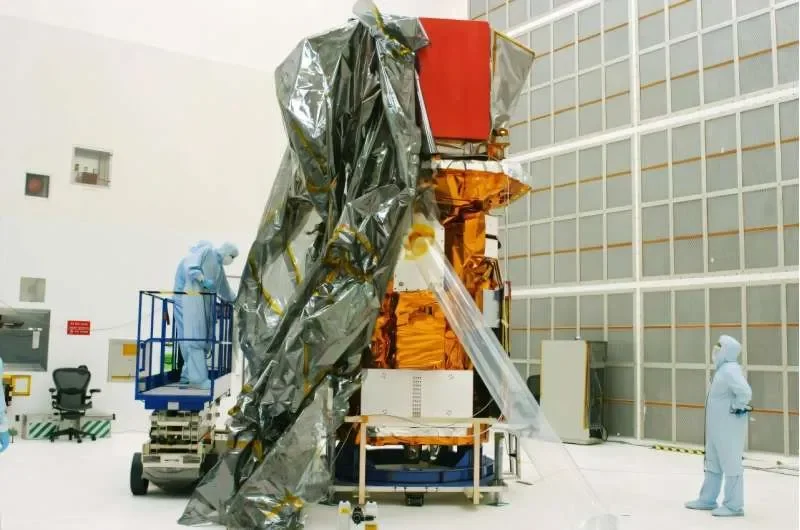
Exploration of the Moon is framed as a critical precursor to establishing human life on Mars. Evidence suggests that the lunar environment will serve as a crucial testing ground for technologies and human endurance required for a journey to the Red Planet.

Stakes and Ambitions
The prospect of humans living and working on the Moon, and subsequently on Mars, represents a significant undertaking for humanity. Missions like Artemis II are positioned not just as lunar expeditions but as fundamental steps towards a much larger goal: sustained human presence on Mars. The scientific and technical challenges are substantial, involving long-duration stays, reliance on local resources, and the need for robust life support systems. Success in these endeavors on the Moon is seen as directly paving the way for the complex requirements of Mars colonization.
Read More: NASA Robot Mission Launched to Raise Swift Telescope Orbit, Add 10 Years

Laying the Groundwork: The Moon as a Proving Ground
Current plans indicate that the Moon will function as a staging point and a testbed for technologies destined for Mars. A planned lunar gateway, a space station in orbit around the Moon, is intended to facilitate reusable missions, store fuel, and provide a hub for supplies. This approach aims to mirror the conditions and challenges anticipated for Mars missions.
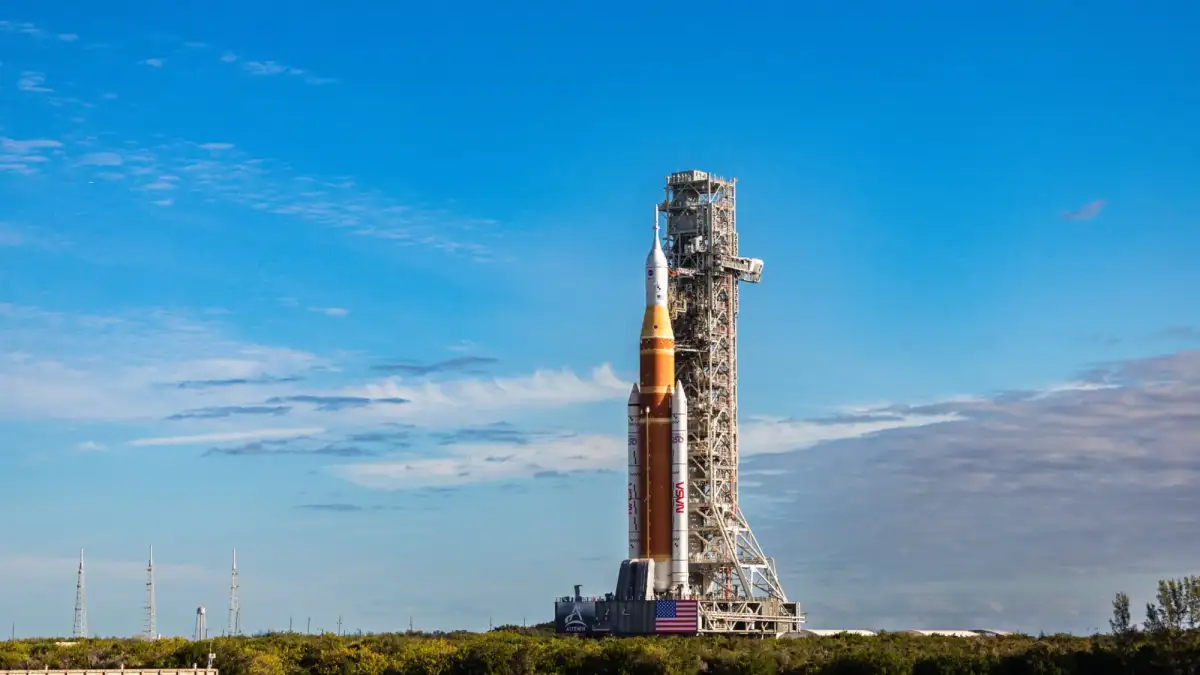
Rehearsal for Mars Operations: Lunar missions will allow for the simulation of Mars-like conditions, enabling astronauts to practice extravehicular activities (EVAs) over extended periods without real-time communication support from Earth. This is seen as essential preparation for the greater autonomy required on Mars.
Resource Utilization: A key aspect of lunar exploration is the focus on in-situ resource utilization (ISRU). The discovery of water on the Moon is particularly significant, as it is considered critical for enabling longer human stays and supporting future missions. This mirrors the necessity of finding and utilizing resources, such as water ice, on Mars.
Psychological and Physiological Adaptation: NASA plans to study how astronauts psychologically respond to extended periods of living on the Moon. Understanding these effects is vital for assessing the feasibility of long-term human habitation on Mars, where missions will necessitate staying for months.
Challenges Anticipated for Mars
Reaching and living on Mars presents a distinct set of formidable challenges.
Self-Sufficiency: Astronauts on a roundtrip mission to Mars will not have the benefit of regular resupply missions for essentials like food. They will need to rely on pre-staged assets and in-situ resource utilization to survive.
Environmental Extremes: Mars has a frigid temperature and a thin atmosphere, posing significant hurdles for habitability. While the presence of ice offers a potential water source, the conditions require robust shelter and life support.
Extended Mission Durations: The journey to Mars is lengthy, and astronauts will need to remain on or orbiting the planet for months at a time, demanding reliable power, food, and water systems.
Technological Development and Scientific Inquiry
The drive to explore the Moon and Mars is also linked to fundamental scientific questions.
Origin of Life: Understanding what we learn about the Red Planet may offer insights into Earth's past and future, and could help answer whether life exists beyond our home planet.
Technological Innovation: Engineers and scientists are actively developing new technologies to enable astronauts to live and work on Mars and return safely. The development of more versatile space stations is also considered a necessary step.
Conflicting Views and Nuances
While the path to Mars is often presented as a clear progression through lunar exploration, some perspectives highlight the inherent difficulties.
"Living on Mars would probably suck": This viewpoint suggests that despite technological advancements, the realities of Mars could be profoundly uncomfortable and challenging for human inhabitants.
Focus on Earth's Past: Some scientific inquiry into Mars is driven by a desire to understand Earth's past and future, suggesting that the exploration of Mars has implications beyond establishing a new human outpost.
Expert Insights
"The missions plan to make the moon the next Antarctica in terms of scientific exploration." - Mall (Source: theweek.in)
"Lunar exploration has always produced benefits far beyond space science." (Source: theweek.in)
"How Going Back to the Moon Helps: NASA hopes to learn how astronauts respond psychologically to living for extended periods on the moon." (Source: popularmechanics.com)
"First reliance on pre-staged assets and in-situ resource utilization: This will be the first time astronauts must survive using systems and supplies either delivered in advance or produced on Mars." (Source: spacenews.com)
Conclusion
The current trajectory of space exploration places a significant emphasis on the Moon as an essential intermediate step for future human missions to Mars. The lunar environment offers a unique opportunity to test and refine the technologies, operational strategies, and human resilience needed to overcome the challenges of living on the Red Planet. Key areas of focus include resource utilization, long-duration EVAs, and understanding the psychological impact of extended space habitation. While the ultimate goal of establishing a human presence on Mars is ambitious, the preparatory work on the Moon is viewed as a practical and necessary foundation for this endeavor.
Read More: Mars Rover Finds Rocks That Might Show Signs of Ancient Life
Sources
theweek.in:
"Why Artemis II mission is a stepping stone to living on moon, Mars" - https://www.theweek.in/theweek/specials/2026/02/07/why-artemis-ii-mission-is-a-stepping-stone-to-living-on-moon-mars.html
"Could humans actually live on Mars?" - https://www.theweek.in/articles/659355/could-humans-actually-live-mars
"Can humans live on the Moon?" - https://www.theweek.in/space/100126/can-humans-live-on-the-moon
theweek.com:
"How NASA is planning to get humans to Mars" - https://theweek.com/health-and-science/1022544/how-nasa-is-planning-to-get-humans-to-mars
spacenews.com:
"The best way to prepare humans for Mars? The moon." - https://spacenews.com/the-best-way-to-prepare-humans-for-mars-the-moon/
popularmechanics.com:
"6 Challenges We Need To Conquer on Our Way to Mars" - https://www.popularmechanics.com/space/moon-mars/a28367102/how-to-get-to-mars/
nasa.gov:
"Humans to Mars - NASA" - https://www.nasa.gov/humans-in-space/humans-to-mars/
"Living and Working on the Moon - NASA" - https://www.nasa.gov/feature/living-and-working-on-the-moon/
britannica.com:
Video: "Preparing for Life on Mars" - https://www.britannica.com/video/Preparing-for-Life-on-Mars-3D-printing/-246797
space.com:
"How to watch the 2025 Humans to the Moon & Mars Summit May 28 and 29 (video)" - https://www.space.com/astronomy/mars/how-to-watch-the-2025-humans-to-the-moon-and-mars-summit-may-28-and-29
learnenglish.britishcouncil.org:
"Life on Mars" - https://learnenglish.britishcouncil.org/skills/reading/c1-reading/life-mars
pmc.ncbi.nlm.nih.gov:
"Astrobiological Aspects of Mars and Human Presence: Pros and Cons" - https://pmc.ncbi.nlm.nih.gov/articles/PMC2577400/
nature.com:
"Living on Mars would probably suck — here's why" - https://www.nature.com/articles/d41586-024-01158-6
weforum.org:
"Why humans are heading back to the Moon - and on to Mars" - https://www.weforum.org/stories/2024/12/space-moon-mars-radio-davos/
rmg.co.uk:
"How could humans live on Mars?" - https://www.rmg.co.uk/stories/space-astronomy/how-could-humans-live-on-mars