The return of samples from the Moon's far side by the Chang'e-6 mission has provided new data that challenges long-held ideas about the history of impacts on the Moon. Scientists report that the rate of meteorite impacts appears to have been similar on both the near and far sides of the Moon. This suggests a more steady decline in impact events over time, rather than periods of intense bombardment previously proposed.

Understanding Lunar Bombardment
For decades, scientists have sought to understand the rate and pattern of impacts on the Moon. This knowledge is crucial not only for understanding the Moon's evolution but also for deciphering the history of the inner solar system, including early Earth.

The Late Heavy Bombardment (LHB) hypothesis suggests a period of intense meteorite impacts occurred roughly 4 to 3.8 billion years ago.
Until now, most lunar samples used to study this history came from the Moon's near side.
The Chang'e-6 mission aimed to collect samples from the far side, offering a new perspective.
Consistent Impact Rates Across Hemispheres
A key finding from the Chang'e-6 samples is the confirmation of consistent impact rates on both the near and far sides of the Moon. This observation helps lay a foundation for a more unified understanding of lunar chronology.
Read More: NASA Robot Mission Launched to Raise Swift Telescope Orbit, Add 10 Years
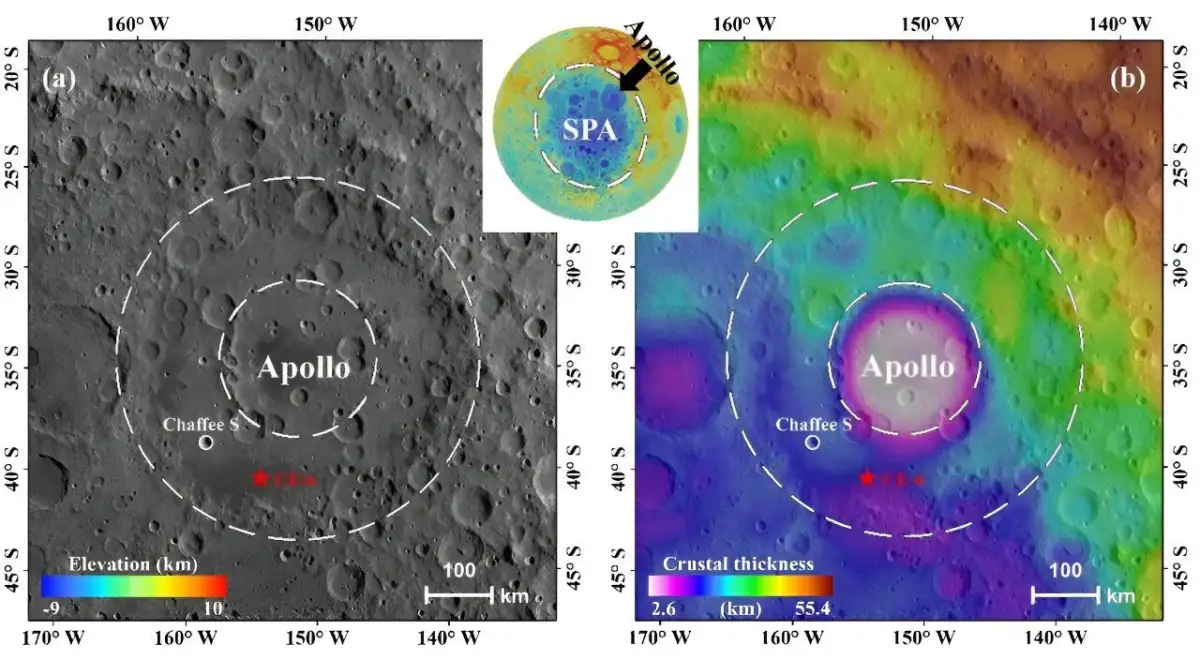
Scientists have confirmed that meteorite impact fluxes on the Moon's near and far sides are essentially consistent.
This suggests a uniform distribution of impacts across the lunar surface.
This uniformity is a significant step towards establishing a globally consistent timeline for lunar cratering.
Evidence Against the Late Heavy Bombardment Hypothesis
The analysis of the Chang'e-6 samples indicates a gradual decline in impact events over the Moon's early history. This finding appears to contradict the LHB hypothesis, which posits a more dramatic surge in impacts.
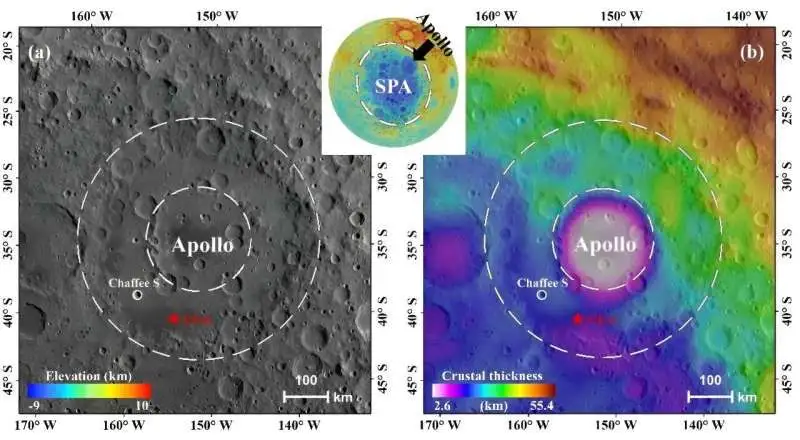
The early lunar impact flux declined steadily over time.
This steady decline offers no support for the Late Heavy Bombardment (LHB) hypothesis.
The evidence suggests that early lunar impact events followed a smooth trend of gradual decline, rather than sudden, dramatic fluctuations.
The Significance of Far-Side Samples
Collecting samples from the Moon's far side was a critical objective of the Chang'e-6 mission. These samples provide data points that were previously unavailable, enabling a more comprehensive view of lunar history.
Chang'e-6 collected the first surface samples from the Moon's far side.
Previously, all samples used to calibrate lunar cratering chronologies came exclusively from the near side.
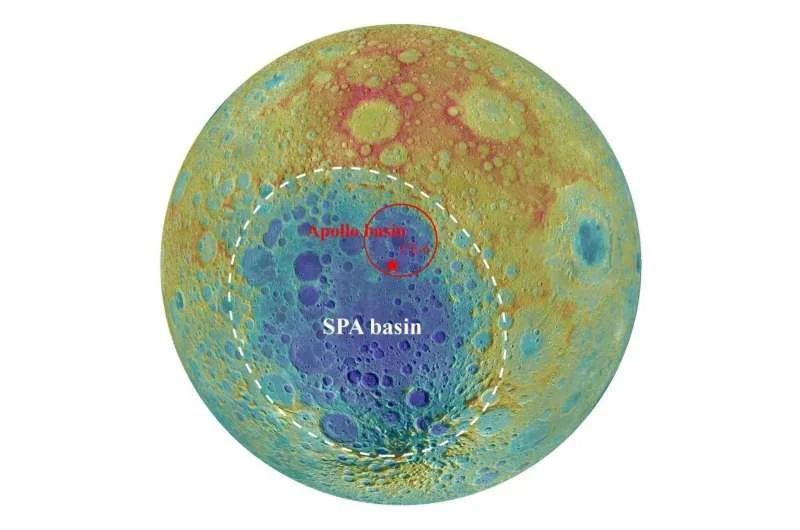
The samples, including a type of rock called norite, originated from magma that crystallized after the South Pole-Aitken Basin impact event. This basin is the Moon's largest and oldest impact structure.
The mission underscores the pivotal scientific value of the Chang'e-6 samples in advancing the understanding of lunar impact history.
Future Implications and Ongoing Research
The initial findings from the Chang'e-6 mission are expected to lead to a deeper understanding of lunar evolution and the early solar system. Further analysis of the returned samples will be crucial in refining these conclusions.
Researchers anticipate that the analysis will clarify the role of early lunar meteorite impacts on the Moon's evolution.
This work will also be significant for analyzing the early impact history of the inner solar system.
The data obtained will reveal how far ejecta from early collisions spread across the Moon and if there are differences compared to the near side.
Sources
Phys.org: "Chang'e-6 samples constrain lunar impact flux and illuminate early impact history"
Published: 6 minutes ago
Link: https://phys.org/news/2026-02-samples-constrain-lunar-impact-flux.html
CGTN: "Chinese scientists make lunar chronology breakthrough with Chang'e-6 samples from far side of moon"
Published: 2 days ago
Miragenews: "Chang'e-6 Samples Unveil Lunar Impact History"
Seen on: Brave
Link: https://www.miragenews.com/change-6-samples-unveil-lunar-impact-history-1616913/
China.org.cn: "Scientists make lunar chronology breakthrough with Chang'e-6 samples from far side of moon"
Seen on: Brave
Link: http://www.china.org.cn/2026-02/08/content118323521.shtml
Phys.org: "Geologists expect Chang'e-6 lunar surface samples to contain volcanic rock and impact ejecta"
Published: June 24, 2024
Link: https://phys.org/news/2024-06-geologists-lunar-surface-samples-volcanic.html
The Planetary Society: "Chang'e-6, collecting the first lunar farside samples"
Published: September 10, 2024
China Daily HK: "Scientists make breakthrough in lunar chronology with Chang'e-6's moon samples"
Seen on: Brave
Live Science: "China rover returns historic samples from far side of the moon — and they may contain secrets to Earth's deep past"
Published: June 25, 2024