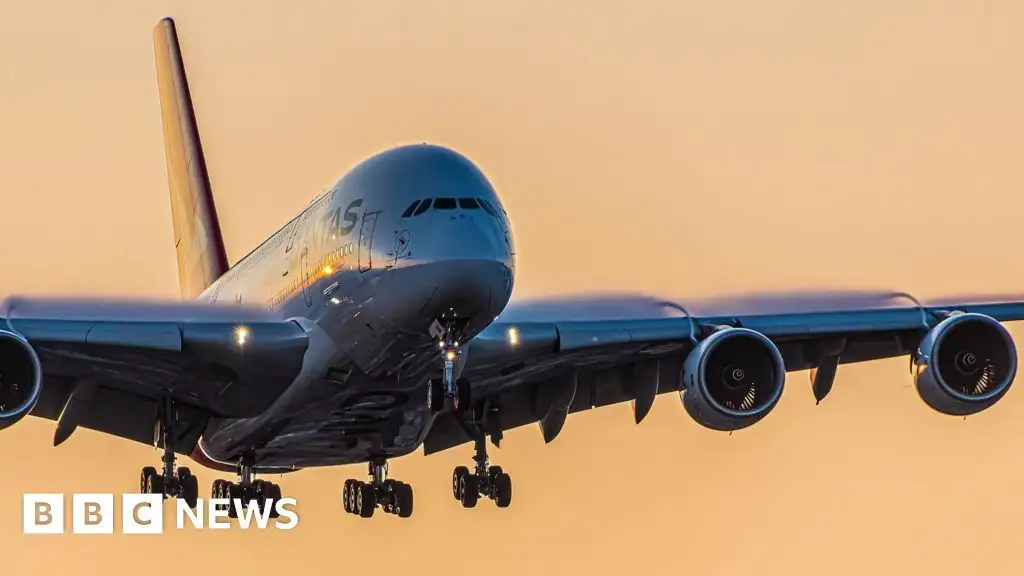
The escalating conflict in the Middle East, involving Iran, Iraq, and surrounding nations, has led to widespread airspace closures, forcing hundreds of thousands of travelers into lengthy delays and diversions. Major airlines have suspended or rerouted numerous flights, grappling with a significantly narrowed aerial corridor to circumvent the volatile zones. This dramatic reduction in available flight paths has jammed the skies, turning what were once direct routes into circuitous journeys.
Airlines Scramble for Sky Real Estate
Airlines worldwide are enacting substantial adjustments to their schedules. Flights to India, for instance, are predominantly taking longer routes south of the Persian Gulf. Several carriers, including Air France, Lufthansa, Transavia, and Pegasus, have entirely halted flights to Lebanon. American Airlines suspended its service from Philadelphia to Doha, while Turkish Airlines has suspended flights to a raft of countries including Lebanon, Syria, Iraq, Iran, and Jordan. Services to Qatar, Kuwait, Bahrain, the United Arab Emirates, and Oman by Turkish Airlines are also affected.
Read More: Ellen DeGeneres and Portia de Rossi Move to Mallorca for Yacht Trip

British Airways has suspended flights to Tel Aviv and Bahrain until at least next week, with flights to Amman, Jordan, canceled over the weekend. LOT Polish Airlines suspended its flights to Tel Aviv until March 15 and canceled services to Dubai and Riyadh until Monday. FlyDubai suspended its flights to and from Dubai until Monday afternoon. Qatar Airways has suspended most flights to Iran until June 30, though a limited daily service between Doha and Tehran's Imam Khomeini International Airport continues. United Airlines, which initially suspended service to Tel Aviv in January, has since resumed flights, though longer journeys are causing knock-on delays for connections.

A Squeezed Corridor and Lingering Disruption
The primary challenge stems from the closure of vast swathes of airspace over Iran and Iraq. This forces flights into a significantly narrower corridor, often north of Iran through the Caucasus region. While this corridor has previously absorbed increased traffic during past conflict-driven airspace closures, its capacity is strained by the current, broader restrictions. This has led to a squeeze, pushing flights into ever-tighter navigational windows.
Read More: Electric Planes Tested For Cargo Flights By Beta Technologies

The disruptions are not isolated to immediate flight cancellations. The need for longer routes translates directly into increased flight times. This, in turn, can lead to cascading delays affecting subsequent flights and passenger connections. Some airlines are rerouting aircraft along "significantly longer paths" to bypass conflict zones and restricted airspace, a measure driven by "volatile conditions on the ground" following retaliatory attacks.
Regional Hubs and Broader Implications
Normally, the Middle East serves as a significant hub for global air travel. The current conflict has fundamentally disrupted this normal functioning. Data from before recent attacks showed more direct flight paths across countries like Saudi Arabia, Kuwait, Iraq, and the UAE. While some flights were noted to be using UAE airspace again on Monday, the overall situation remains fluid. Carriers like Etihad Airways and Emirates have been operating a limited number of flights from the UAE.
Read More: Connecticut Residents Show High Interest in Ice Cream Shops
The implications extend beyond immediate travel chaos. The extensive cancellations and rerouting contribute to increased operational costs for airlines, which could eventually translate to higher ticket prices for consumers. The situation underscores the delicate interconnectedness of global travel with regional stability, where localized conflicts can rapidly cascade into worldwide aviation challenges.