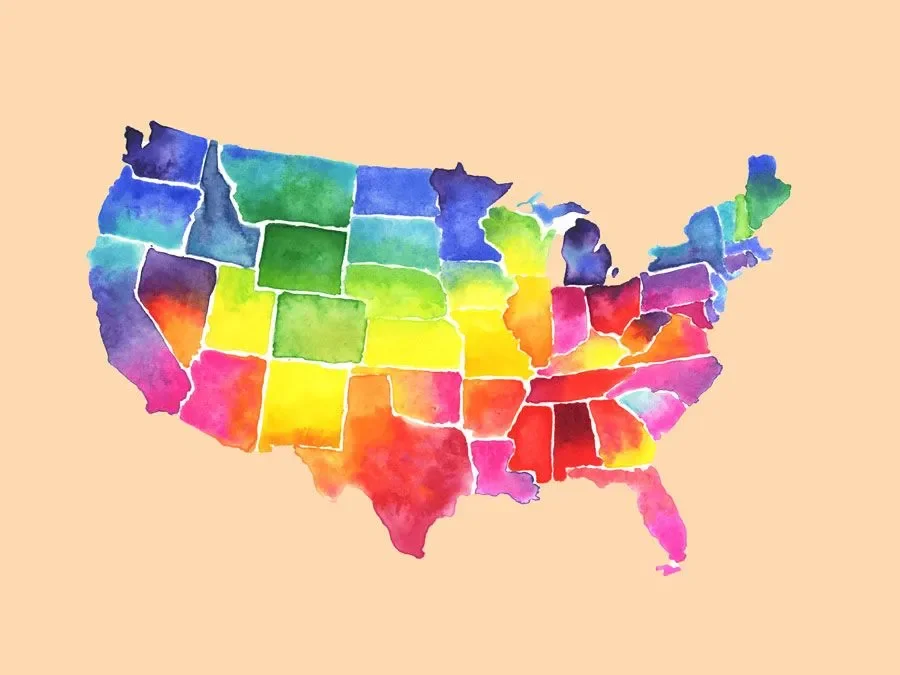
On this date, May 23, 2026, rural educational institutions across Michigan observed the annual tradition known as "Tractor Day." High school seniors opted to commute to their respective facilities operating agricultural equipment rather than standard motor vehicles. This performance marks a seasonal transition, coinciding with the region's broader economic and cultural ties to its Geographic identity.

The practice serves as a ritualized acknowledgment of the state's agricultural heritage, specifically in the southern Lower Peninsula where fertile loams support extensive farming.

Structural Context of the Region
The event occurs within a landscape defined by its hydrographic dominance. Michigan, often labeled the Great Lakes State, maintains a physical profile distinct from its midwestern neighbors.

| Feature | Data Point |
|---|---|
| Admission | January 26, 1837 |
| Land Area | 56,809 sq. mi |
| Water Area | 40,001 sq. mi |
| Primary Identifier | Great Lakes System |
The northern regions are characterized by dry sandy soils and wooded expanses.
Southern zones provide the heavy, fertile clays necessary for the state's fruit and crop production.
Transport infrastructure, including interstate and state highways, creates a dense web that contrasts with the localized, slow-moving nature of "Tractor Day" transit.
Cultural Signification
While the state markets itself via "Pure Michigan" initiatives—focusing on tourism and natural beauty—these student demonstrations highlight the lived reality of those residing outside metropolitan hubs like Detroit or Grand Rapids. The use of industrial-grade farming tools in a school parking lot functions as a subversion of typical graduation-period norms, prioritizing vocational or generational identity over the traditional automotive culture of the "Motor City."
Read More: Google Learn About AI Tool Released April 2026 For Simple Learning

"If you seek a pleasant peninsula, look about you." — Official State Motto.
The convergence of modern education and agrarian utility serves as a snapshot of a state balancing its reputation for manufacturing against a persistent, foundational commitment to the soil. As the semester concludes, the sight of heavy machinery occupying space typically reserved for consumer vehicles remains a recurring signal of the rural influence still embedded within the state's demographic social fabric.