

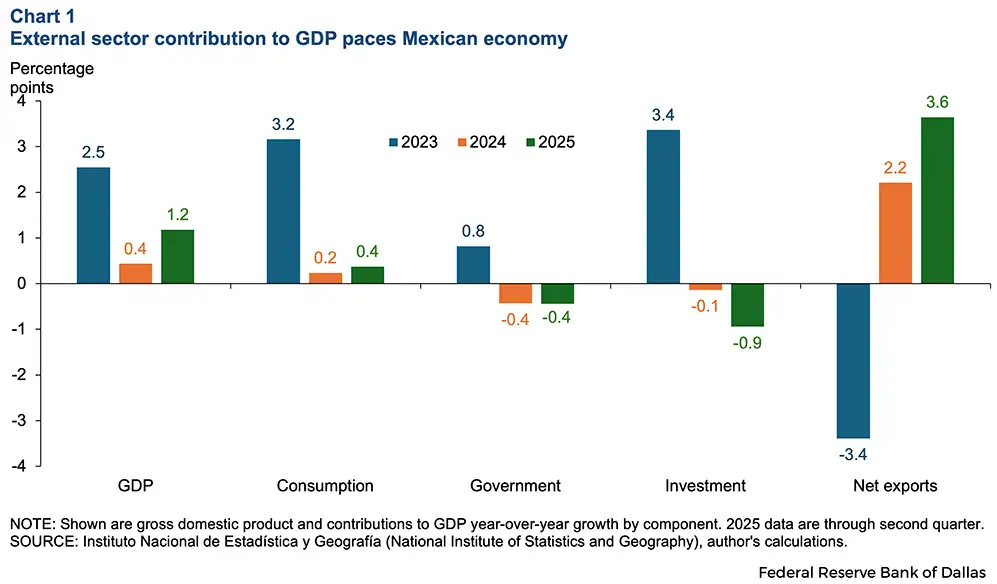
Recent economic figures for Mexico reveal a stuttering performance, with contraction reported to be far steeper than anticipated. This slowdown appears to be a complex interplay of external pressures and internal weaknesses, challenging pronouncements of robust local demand.
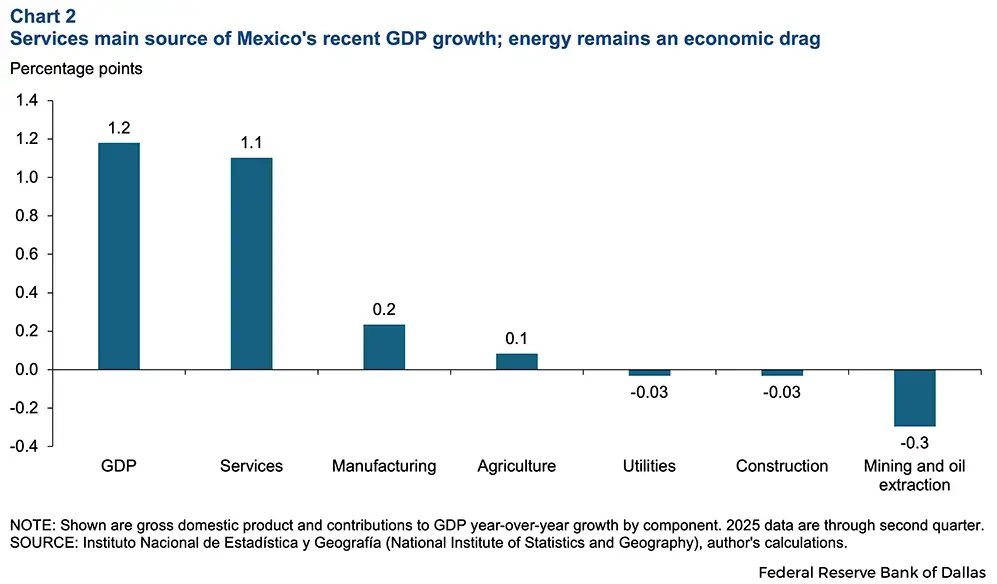
The nation's economic trajectory is being significantly impacted by global economic shifts and specific vulnerabilities within its own structure. Factors such as the performance of the energy sector and the broader impact of climate on agriculture are identified as notable drags on growth.
External Pressures Mount
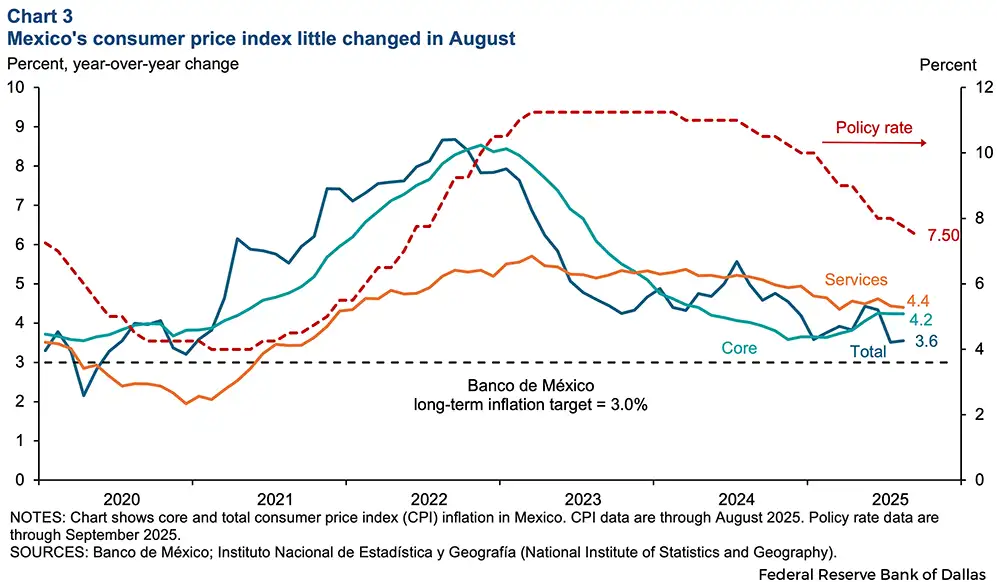
Mexico's status as a "small open economy" means its financial assets tend to mirror global risk sentiment. Despite positioning under the USMCA and a reportedly dovish stance from the central bank (Banxico), external factors loom large. The specter of tariffs, particularly from the United States, casts a long shadow, causing markets to waver and investment to freeze. This threat, coupled with rising global uncertainty, complicates any potential for an upswing.
Read More: Goldman Sachs predicts 15 million US jobs lost to AI by 2036
Internal Vulnerabilities Exposed
Beyond global tides, internal issues are also at play. The energy sector has been cited as a consistent impediment to economic expansion. Additionally, recent performance data shows a downturn in U.S. construction spending, a sector closely tied to Mexican economic activity. Climate change is also being identified as a significant factor, with drought conditions contributing to the agriculture sector's worst performance in a quarter-century.

Shifting Cycles and Lingering Questions
Analysis suggests that while some elements of private consumption have shown resilience, the current expansionary phase appears to be nearing its conclusion. Data from late 2024 hinted at imbalances that could signal a more protracted period of difficulty than a simple quarterly contraction. The country's significant reliance on the U.S. economy, coupled with concerns around corruption, infrastructure, inequality, and the prevalence of an informal economy, remain persistent areas of inquiry regarding Mexico's economic challenges.
Read More: Mexico Fan Zone Security Increased Due to Unrest
Policy Landscape and Future Outlook
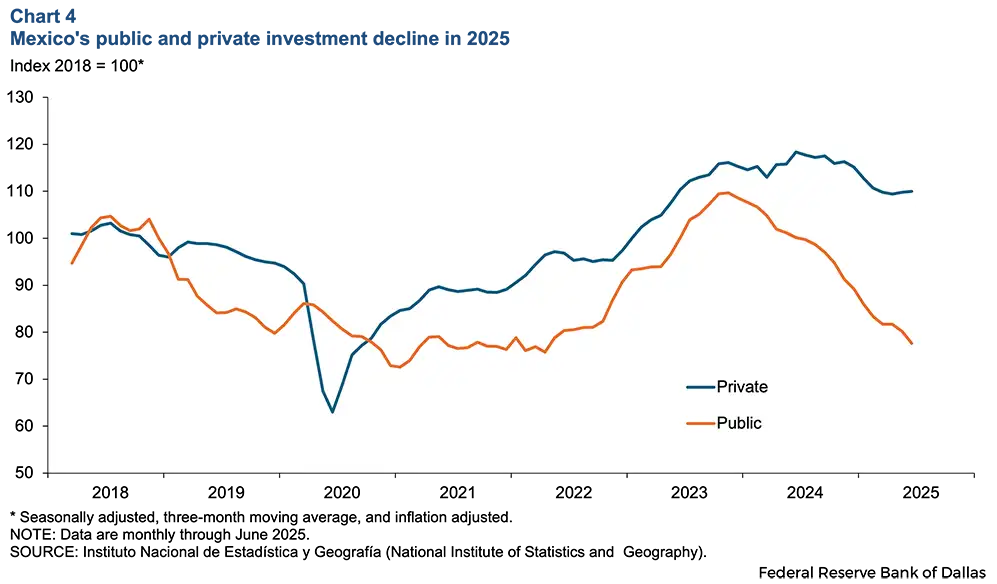
The current administration has pledged to support local demand, a narrative that contrasts with the unfolding economic reality. Previous administrations have utilized significant government spending and tax policies to stimulate growth, but the effects of such measures can take time to materialize and are not yet demonstrating a tangible pick-up. Future policy directions, including potential special incentives and development areas, are being considered to bolster the service sector, though their immediate impact on overall growth remains uncertain.
Background:
Recent economic assessments indicate that Mexico's economy is experiencing a significant slowdown, with a contraction in output surpassing earlier predictions. This situation is exacerbated by a complex web of global economic volatility and domestic structural issues.
Key Trade Linkages: The U.S. remains Mexico's paramount trading partner. Transportation equipment and computer and electronic products represent major categories for both U.S. exports to Mexico and Mexican imports from the U.S.
Sectoral Performance: The energy sector has been a persistent drag on economic performance. Furthermore, climate-related events, such as droughts, have severely impacted the agriculture sector.
Policy Environment: The current administration's focus on local demand faces headwinds from external threats, such as potential U.S. tariffs. Meanwhile, discussions continue regarding the effectiveness of past and future fiscal and tax policies in stimulating investment and growth.
Underlying Economic Factors: Broader questions persist regarding the impact of corruption, infrastructure deficits, economic inequality, and the significant role of the informal economy on Mexico's overall economic health and its substantial dependence on the U.S. market.






.png)