


Meta's plan to integrate its artificial intelligence offerings across its vast social media empire faces a significant hurdle with the prolonged delay of its Muse Spark API. This pause injects uncertainty into the company's strategy for turning its AI advancements into a revenue stream. The company's AI assistant, built on the Llama 3 models, has been touted for its utility, promising to assist users with a broad spectrum of tasks.
Initially positioned as a tool to enhance user experience on platforms like Facebook, Instagram, WhatsApp, and Messenger, Meta AI's commercial viability is now under scrutiny. The API, intended as a gateway for developers and businesses to leverage Meta's AI capabilities, has not yet materialized. This suggests a potential misalignment between Meta's technological progress and its financial objectives, particularly in the burgeoning field of AI monetization.
Read More: Chrome mimeHandler API lets extensions handle file types
The delayed API directly impacts Meta's ability to expand its AI ecosystem beyond its own platforms. While Meta AI is accessible within the company's messaging and social applications, offering features like image generation and conversational assistance, a robust API would unlock third-party integrations and new business models.
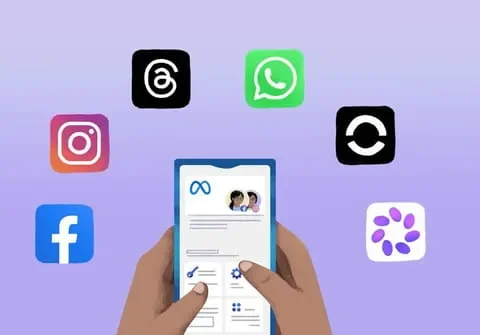
AI's Place in the Meta Ecosystem
Meta AI, powered by Llama 3, aims to provide a more helpful and engaging user experience. It is integrated into the search bar across Facebook, Instagram, WhatsApp, and Messenger. The assistant is designed to handle a wider array of requests, appealing to both casual social media users and professionals seeking virtual assistance.
"Meta AI is available to help you bring your ideas to life. Thanks to private processing, Meta AI can process your messages without Meta or WhatsApp being able to read them."
This integration emphasizes a focus on user interaction and content creation within Meta's established social networks. The company has also highlighted the privacy aspects of Meta AI's processing, stating that messages are handled privately, ensuring neither Meta nor WhatsApp can access their content. This is a crucial element, especially for a service integrated into messaging applications like WhatsApp.
Read More: FIFA World Cup 2026 Revenue Reaches $15 Billion With New Ticket Prices
Centralization and Unified Accounts
Coinciding with these AI developments is Meta's push towards account unification. The company has launched a single Meta account system designed to streamline access and settings management across Facebook, Instagram, WhatsApp, and Messenger. This move simplifies user logins and parameter management, consolidating control within a central dashboard. This unification strategy appears to be a foundational step, potentially paving the way for more integrated AI services and personalized experiences across the entire Meta portfolio.
The integration of Meta AI within WhatsApp, for instance, is presented as a tool to facilitate everyday tasks, from organizing meetups to generating images for group chats. The emphasis remains on user-friendliness and efficiency, coupled with the inherent security and privacy features of WhatsApp.





