Broad Indigenous Uprising Against Government Policy Engulfs New Zealand
Recent events reveal a concerted and escalating Indigenous Māori movement in New Zealand, characterized by widespread protests and legislative challenges. This mobilization appears to stem from a perceived reversal of policies aimed at addressing historical inequities and upholding Indigenous rights, particularly concerning the nation's founding treaty. The tension has manifested in both public demonstrations and parliamentary actions, underscoring a significant societal schism.
Context of Rising Tensions and Indigenous Grievances
The current climate of Indigenous Māori activism in New Zealand is a complex issue with roots in historical agreements and contemporary political shifts. A new right-wing government, led by Prime Minister Christopher Luxon, has initiated policies that Indigenous Māori groups and their supporters argue are detrimental to their rights and well-being.
Policy Reversals: The government has been criticized for proposing to abolish policies previously established to address socioeconomic disadvantages faced by Māori. This includes proposals like the abolition of a Maori academic quota for medical schools, as noted by legal experts.
Treaty Reinterpretation: A central point of contention is a proposed bill that seeks to redefine the country's founding agreement with Māori. Critics view this as an attempt to strip away long-agreed rights.
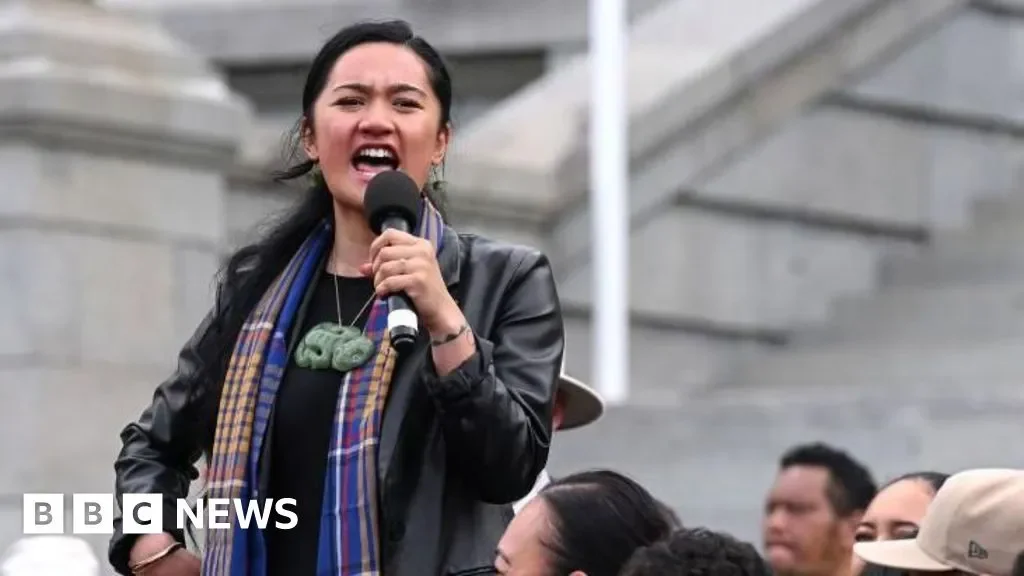
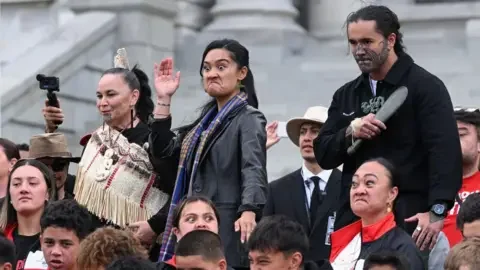
Parliamentary Action: The intensity of the protest reached Parliament, with three Māori MPs being suspended for performing a haka in opposition to a bill concerning the Treaty Principles. This action, intended as a protest, was deemed "intimidating" by some members.
Large-Scale Demonstrations: Tens of thousands of Māori and their supporters have participated in significant marches. A protest on November 19, 2024, drew an estimated 42,000 people to Parliament grounds in Wellington, marking one of the largest demonstrations in decades.
Waitangi Day Significance: Annual events like Waitangi Day have become focal points for protest. In February 2025, Māori protesters turned their backs on government ministers, including David Seymour, the architect of the controversial bill, during a significant commemoration.
Evidence of Widespread Indigenous Discontent
The Indigenous Māori movement's engagement is evident through various forms of public dissent and legislative opposition, supported by data from numerous sources.
Read More: AI and Indigenous Data Rights: New Laws Needed by April 2027
Mass Protests: Reports indicate that a new right-wing government's policy reversals have triggered "mass protests" across New Zealand.
Parliamentary Disruption: The suspension of three Māori MPs for performing a haka during a parliamentary sitting highlights a direct confrontation within the legislative body. This occurred after they were asked about their party's support for a bill to redefine the nation's founding treaty.
Record Turnout at Demonstrations: On November 19, 2024, approximately 42,000 individuals gathered outside New Zealand's Parliament. This event was described as one of the largest protests in decades supporting Māori rights. The protesters aimed to oppose a law that would reshape the nation's founding treaty.
Symbolic Acts of Defiance: At a Waitangi Day event in February 2025, Māori protesters demonstratively turned their backs on government ministers. This silent but potent gesture occurred when David Seymour spoke, with his microphone being taken away twice during his address. This action conveyed a "powerful message" to the government.
| Event Type | Date | Description | Key Actors/Groups Involved | Source |
|---|---|---|---|---|
| Mass Protest | Post Nov 2023 | Triggered by right-wing government's policy reversals impacting Māori rights. | Indigenous Māori, New Government | 2 |
| Parliamentary Suspension | Late 2024 | Three Māori MPs suspended for performing a haka during a debate on the Treaty Principles Bill. | Māori Party MPs, New Zealand Parliament | 3 |
| Large March | November 19, 2024 | Approximately 42,000 people protested at Parliament grounds in support of Māori rights and opposition to a treaty redefinition bill. | Māori Rights Advocates, General Public | 9, 10 |
| Waitangi Day Protest | February 5, 2025 | Protesters turned their backs on ministers, notably David Seymour, during speeches, signaling strong disapproval of government policies. | Māori Protesters, David Seymour | 5 |
Parliamentary Confrontation Over Treaty Principles
The legislative arena has become a battleground, with Indigenous Māori representatives engaging in direct protest against policies they deem harmful.

The Treaty Principles Bill: A proposed bill aiming to redefine New Zealand's founding treaty with Māori has been a primary catalyst for the current unrest. Critics argue this bill seeks to diminish the rights and status of Māori.
Haka as Protest: The performance of a haka by three Māori MPs in Parliament was a direct response to questions about their support for the aforementioned bill. This cultural expression was interpreted by some as a protest against the government's direction.
Parliamentary Response: Following the haka performance, the New Zealand Parliament voted to suspend the three Māori MPs. This disciplinary action underscores the gravity with which such protests are viewed within the legislative chamber.
Widespread Public Mobilization and Opposition
Beyond parliamentary chambers, broad sections of the Māori community and their allies have engaged in large-scale public demonstrations.
Mass Marches: On November 19, 2024, a significant demonstration saw an estimated 42,000 people congregate at Parliament grounds. This event was noted as one of the largest protests in New Zealand's history, focused on Indigenous rights.
Strategic Protests: Events like Waitangi Day have been utilized for pointed displays of opposition. In February 2025, the act of turning backs on government ministers, including David Seymour, served as a deliberate and highly visible rejection of their policies.
Community Organizing: The movement appears to involve organized efforts, with calls for people to "make submissions against the Treaty Principles Bill," indicating a coordinated campaign to influence policy through public engagement.
Historical Context and Indigenous Rights Movement
The current protests are situated within a broader, long-standing Indigenous rights movement in New Zealand, which seeks to assert and protect the rights of Māori people.

Indigenous Rights Movement: The Māori protest movement is described as a broad Indigenous rights movement in New Zealand, aiming to uphold the rights of the Māori people.
Socioeconomic Inequities: Historically, policies have been implemented to address socioeconomic disadvantages faced by Māori. Concerns have been raised that current government proposals may reverse these efforts, such as the potential abolition of Maori academic quotas in medical schools.
Treaty Foundations: The nation's founding treaty with Māori is fundamental to Indigenous rights and underpins efforts to foster partnership between Indigenous and non-Indigenous New Zealanders. Redefining its principles is a source of deep concern.
Expert Analysis on Deepening Societal Divides
Scholars and analysts observe that the current political climate in New Zealand is exacerbating existing societal tensions between the government and the Indigenous Māori population.
"Treaty issues are complex. That's led to legal acknowledgment of some Maori rights such as land rights, services that address Maori socioeconomic disadvantage, and official status for the Maori language." - Christopher Luxon, Prime Minister of New Zealand.
"Get people signing up to make submissions against the Treaty Principles Bill. But as Ali Rogin reports, a new right-wing government has reversed many of those policies and triggered mass protests in the Pacific nation." - Kassie Hartendorp.
Legal experts have expressed significant concerns, with some describing the proposed legislation as an attempt "to strip long-agreed rights from the country’s 900,000-strong Maori population." The government, however, defends its record, citing plans for improvements in areas such as literacy and housing for the Māori community.
Read More: Tohorā Diet Study Boosted by New Zealand Beach Find

Conclusion: Unsettled Treaty Issues Fueling Indigenous Activism
The evidence gathered indicates a substantial and multifaceted Indigenous Māori protest movement actively engaging with the New Zealand government. The core of this discontent appears to revolve around perceived government actions that undermine Indigenous rights, particularly those stemming from the nation's founding treaty.
Policy Challenges: The government's proposed redefinition of the founding treaty and the potential dismantling of programs designed to address Māori socioeconomic disparities are central to the protests.
Escalated Dissent: The mobilization has involved large-scale public marches, significant parliamentary protests, and symbolic acts of defiance at key national events.
Societal Schism: The scale of these events suggests a deep and widening divide regarding the recognition and implementation of Indigenous rights within New Zealand society.
Future observations will need to track the government's response to these demands and the ongoing evolution of the Indigenous Māori rights movement as it continues to assert its position within the nation's political and social landscape.
Sources Used:
Article 2: PBS News Hour - "New Zealand's rightward shift ignites mass protests from Indigenous Māori people" (Published date not specified, but contextually current)🔗 https://www.pbs.org/newshour/show/new-zealands-rightward-shift-ignites-mass-protests-from-indigenous-maori-people
Article 3: BBC News - "New Zealand: Three Maori MPs suspended over 'intimidating' haka" (Published date not specified, but contextually recent)🔗 https://www.bbc.com/news/articles/c5yg9k8x8pwo
Article 5: The Guardian - "Māori protesters turn their backs on government ministers at Waitangi Day event" (Published February 5, 2025)🔗 https://www.theguardian.com/world/2025/feb/05/maori-protesters-turn-backs-waitangi-day-event-act-party-david-seymour-ntwnfb
Article 8: NPR - "A breakdown of the issues at the center of Maori protests in New Zealand" (Published December 8, 2023)🔗 https://www.npr.org/2023/12/08/1218317109/a-breakdown-of-the-issues-at-the-center-of-maori-protests-in-new-zealand
Article 9: Al Jazeera - "Photos: Tens of thousands march in New Zealand Maori rights protest" (Published November 19, 2024)🔗 https://www.aljazeera.com/gallery/2024/11/19/tens-of-thousands-march-in-new-zealand-maori-rights-protest
Article 10: NPR - "42,000 crowd New Zealand's Parliament grounds in support of Māori rights" (Published November 19, 2024)🔗 https://www.npr.org/2024/11/19/nx-s1-5196056/new-zealand-maori-indigenous