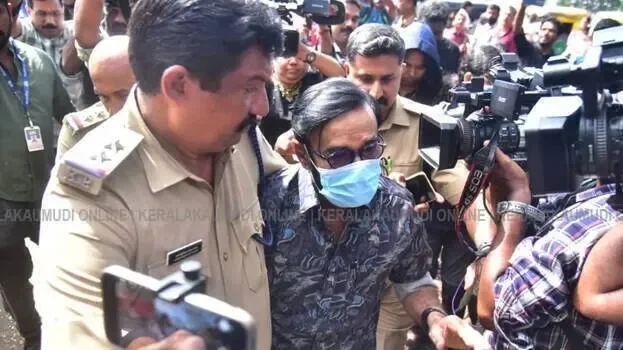
The flashing lights of media cameras, usually reserved for red carpets, now illuminate a darker scene for veteran Malayalam actor Maniyanpilla Raju. Accused of a hit-and-run incident that left two young men seriously injured, Raju's subsequent surrender to police and release on station bail have ignited a firestorm of questions. While the actor claims panic and personal health issues drove his actions, a free-thinking journalist must probe deeper, asking if the narrative presented is the whole truth, or if privilege played a role in how this case is unfolding.
The core of the incident, as pieced together from multiple reports, revolves around an accident late Thursday night near the Trivandrum Club in Vazhuthacaud, Thiruvananthapuram. According to police and witness accounts, Maniyanpilla Raju's car allegedly collided with a motorcycle carrying two youths, Nivedith Krishna and Suraj. Crucially, Raju is accused of fleeing the scene without stopping to assist the injured. The youths reportedly sustained significant injuries, including fractures and head trauma, and were hospitalized.
Read More: Australian Footballers Dylan Moore and Connor Macdonald Arrested for Trespassing in Arizona

The events that followed paint a complex picture:
Delayed Appearance: Raju did not immediately report to the police. He appeared at the Museum Police Station nearly 12 hours after the incident, around 9:30 a.m. on Friday.
Arrest and Bail: His arrest was formally recorded, followed by a mandatory medical examination. He was then released on station bail.
Conflicting Narratives: Raju's explanation for leaving the scene centers on "panic", claims of his car being hit from behind by the motorcycle, and personal reasons such as feeling unwell, suffering from chikungunya, and his wife being alone at home. He also stated he informed others to help the injured and had informed the police he would report the next morning due to his health.
Police Criticism: Allegations of preferential treatment have surfaced, with some questioning the swiftness of his release on bail and the delay in his surrender.
This isn't just a story about a celebrity involved in a road accident; it's a story that forces us to examine accountability, the perceived differences in how the law is applied, and the immediate aftermath of a potentially life-altering event for the victims.
A Night of Collision and Contradictions
The timeline of events, while seemingly straightforward on the surface, is riddled with nuances that demand closer scrutiny. The accident, reportedly occurring around 10 p.m. on Thursday night, marks the beginning of a chain reaction that culminated in Raju's arrest the following morning.

The Exit Strategy: Raju was exiting the Trivandrum Club when the collision with the motorcycle took place. Police sources indicate the car was driven "rashly and negligently" while exiting.
The Motorcycle's Perspective: Conversely, Raju claims the motorcycle hit his car from behind, suggesting the two-wheeler was the aggressor. This directly contradicts the initial police assessment and witness statements captured on CCTV.
The Vanishing Act: The most damning accusation is that Raju fled the scene. Evidence, including a dislodged number plate found at the accident site and CCTV footage, supports this. Police initially had difficulty contacting him, with one report stating they were unable to reach him Thursday night.
| Actor's Claim | Police/Witness Accounts |
|---|---|
| Motorcycle hit car from behind | Car hit motorcycle; CCTV footage shows car fleeing the scene |
| Left due to panic and ill health | Fled the scene, leaving injured victims unattended |
| Informed police he'd report in morning | Police stated they were unable to contact him Thursday night |
This discrepancy between the actor's account and the initial findings is the bedrock of public concern. Was it truly panic, or a calculated decision to avoid immediate legal consequences? And if he did inform police he would report the next morning, why couldn't they reach him, as they claim? These are not minor details; they speak to the integrity of the investigative process.
Read More: Kerala Congress MP K. Sudhakaran to contest Kannur assembly seat, sparking debate
The Shadow of Privilege: Preferential Treatment or Procedural Norms?
The most immediate and potent criticism leveled against the authorities is the alleged preferential treatment afforded to Maniyanpilla Raju, a prominent figure in Malayalam cinema for nearly five decades. His release on station bail, so soon after his arrest, has fueled this perception.

Station Bail vs. Judicial Bail: Station bail, granted at the police station, is typically for less serious offenses or when immediate judicial review is not feasible. For a hit-and-run case with serious injuries, the process often involves appearance before a magistrate.
The 12-Hour Gap: The fact that Raju presented himself at the station after nearly 12 hours, rather than being apprehended or voluntarily surrendering immediately, raises questions. Was this a grace period granted due to his celebrity status?
Media Frenzy vs. Victim's Plight: While Raju addressed reporters outside the station, detailing his reasons for leaving, the injured youths, Nivedith Krishna and Suraj, were in a hospital bed. The focus, for many, shifted to the actor's narrative, overshadowing the victims' ordeal.
The core question remains: would a common citizen, involved in a similar hit-and-run incident, have been afforded the same path of immediate surrender and station bail? The optics are undeniably concerning, suggesting that fame might offer a shield, or at least a softer landing, when facing legal repercussions.
Raju's Explanations: Health, Fear, and a Car's Dislodged Plate
Maniyanpilla Raju has offered several reasons for his actions following the accident. Each needs to be examined with a critical eye, not to dismiss them outright, but to understand the full context and potential validity.
Read More: Newborn Baby Found Alone in Melbourne Yard Early This Week

The "Panic" Defense: Raju's repeated assertion that he "panicked" is a common human reaction, but in the context of a legal obligation to stop and assist, it raises questions. Does panic absolve one of responsibility for the immediate aftermath of a collision?
Health Concerns: The actor cited suffering from chikungunya and a general feeling of being unwell. He also mentioned his wife being alone at home. While genuine health issues are understandable, did these preclude him from making an immediate call to emergency services or informing authorities from the scene? He claims he did inform others to help.
The Motorcycle as the Culprit: His consistent claim that the motorcycle was speeding and hit his car directly challenges the visual evidence. This could be an attempt to shift blame, or a genuine misperception of the incident from within the car.
The Dislodged Number Plate: The police reportedly identified Raju's car through a dislodged number plate. This is a critical piece of evidence indicating the force of the impact and the likely trajectory of the fleeing vehicle. How did the plate become dislodged if, as Raju suggests, the motorcycle hit his car from behind and he was merely exiting?
The actor's explanations, while offering a narrative, must be rigorously cross-referenced with forensic evidence and independent witness testimony to ascertain their veracity.
The Injured: A Stark Reminder of the Stakes
Beyond the celebrity narrative, the human cost of this incident cannot be overlooked. Nivedith Krishna and Suraj, the two young men on the motorcycle, bore the brunt of the collision. Their injuries, as reported, are significant:
Sooraj: Fractures to his left leg and shoulder.
Nivedith: Head and leg injuries.
These are not minor inconveniences. These are life-altering injuries that will likely require extensive medical treatment, rehabilitation, and could have long-term consequences for their physical well-being and livelihoods.
The priority of any justice system, especially in such cases, must be the welfare and swift recovery of the victims. Their experience is the central tragedy, and their path to justice should be as clear and unobstructed as Raju's path to the police station was, apparently, convenient. We must ask:
Read More: Kerala Plantation Workers Get ₹48 Daily Pay Rise Starting November 2023
What is the current condition of Nivedith and Suraj?
What medical care are they receiving, and who is bearing the costs?
Are they receiving any support or compensation from Raju or his representatives?
How will their testimony be gathered and integrated into the investigation, especially given Raju's delay in reporting?
Unanswered Questions and the Road Ahead
This incident, like many involving public figures, leaves a trail of unanswered questions and significant implications for how justice is perceived and administered in Kerala.
CCTV's Silent Witness: The CCTV footage is a crucial piece of evidence. What exactly does it show? Does it definitively prove Raju fled the scene, or does it capture nuances that support his "panic" narrative? Why has the full footage not been made public?
The "Informed Police" Claim: If Raju indeed informed the police he would report the next morning, and they were unable to contact him, this points to a breakdown in communication. Who was he trying to contact? And why couldn't the police reach him if they had his contact details?
The Nature of the Charges: What specific legal provisions have been invoked against Raju? Are they commensurate with the severity of the injuries and the act of fleeing the scene?
Police Accountability: The criticism regarding preferential treatment needs a formal response. Was due process followed without bias? If not, what steps will be taken to address these allegations and ensure public trust?
Long-Term Justice for Victims: Beyond the immediate arrest and bail, what is the long-term outlook for justice for Nivedith and Suraj? Will the legal process be swift and fair, ensuring accountability for the harm caused?
The arrest of Maniyanpilla Raju is merely the first chapter in what could be a lengthy and complex legal narrative. As critical observers, it is our duty to remain vigilant, to dissect every claim, and to ensure that the pursuit of truth and justice does not get obscured by the glare of celebrity. The public deserves to know if the scales of justice are balanced, or if privilege still tips them in favour of the powerful.