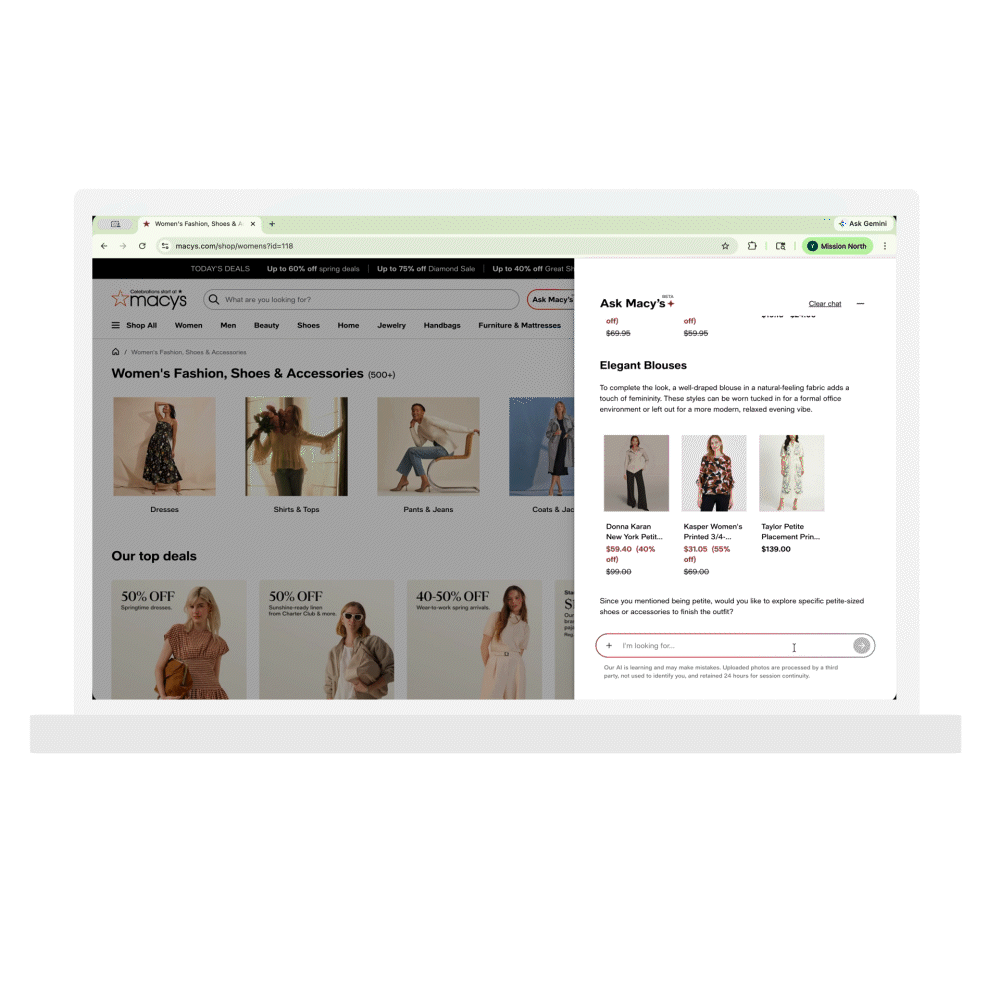
Macy's AI-powered shopping assistant, "Ask Macy's," has demonstrated a significant increase in revenue per visit, with users reportedly spending 4.75 times more than those who do not engage with the tool. This accelerated adoption and notable impact on consumer spending comes after a swift development cycle, initiated in February of this year and going live to the public in March. The department store chain, which also oversees Bloomingdale's and Bluemercury, implemented the chatbot as part of an effort to navigate a decade of fluctuating sales figures and enhance its omnichannel strategy.
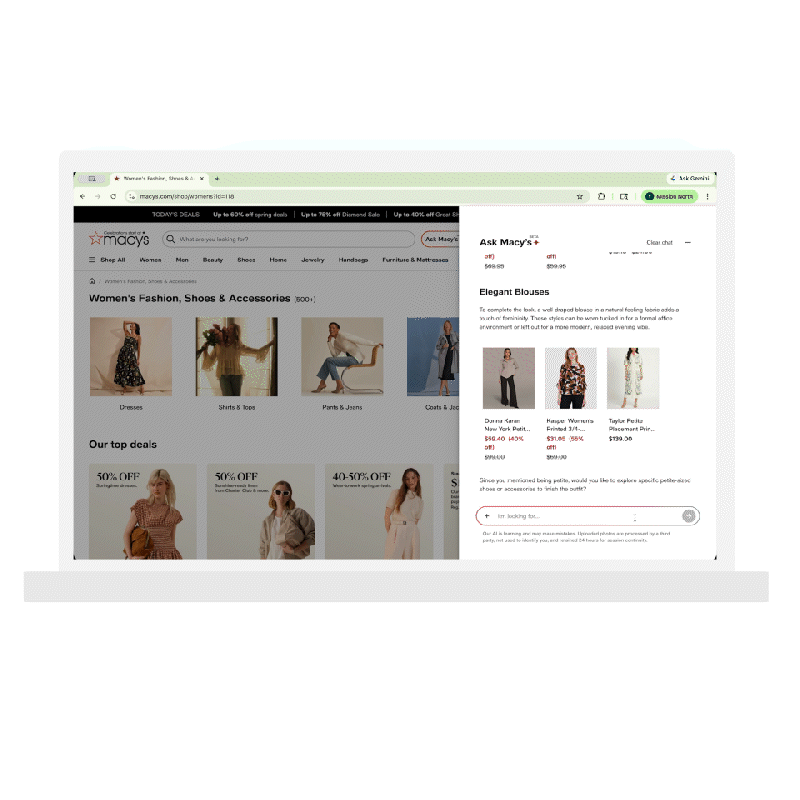
The "Ask Macy's" assistant, built on Google's Gemini Enterprise for Customer Experience, was developed in a condensed timeframe. Originally, Macy's internal development for a similar AI agent had been underway for approximately six months, but the company pivoted to expedite the process. This move, according to reports, involved forgoing some standard development procedures to meet the perceived rapid pace of AI innovation. The beta version was available to test shoppers and employees within four weeks of the project's early February commencement.
Read More: Sephora shampoo recall April 2026 Oribe and Amika safety update
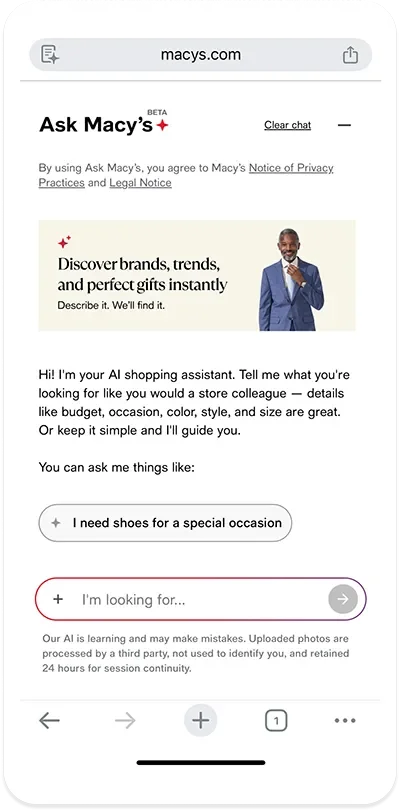
Macy's states the chatbot is now accessible across its website and mobile applications. The company has positioned "Ask Macy's" as a tool to bridge digital discovery with customer support, aiming to complement the physical store experience. Reports indicate the assistant can handle the retailer's extensive inventory, estimated at 2.5 million stock-keeping units, by leveraging multimodal capabilities to guide sales and streamline product selection.

While the immediate financial upturn is a primary talking point, there are underlying narratives concerning the technology's broader implications for retail. The swift deployment and the substantial revenue uplift suggest a strategic pivot for Macy's, moving beyond what some accounts describe as "abstract curiosity" towards a tangible solution for improving top-line performance. The success of "Ask Macy's" is presented as an instance of how AI, when applied to specific retail challenges, can yield measurable business outcomes.
Read More: Chrome mimeHandler API lets extensions handle file types

The integration of "Ask Macy's" is seen as an example of how AI agents function by connecting disparate systems and data. The retailer acknowledges that the assistant's evolution is ongoing, requiring continuous testing and refinement to optimize its effectiveness. Some observers speculate that the tool might also be attracting a younger customer demographic, though this remains a point of observation rather than confirmed data. The company's broader retail portfolio, including Bloomingdale's and Bluemercury, may eventually see similar AI integrations.