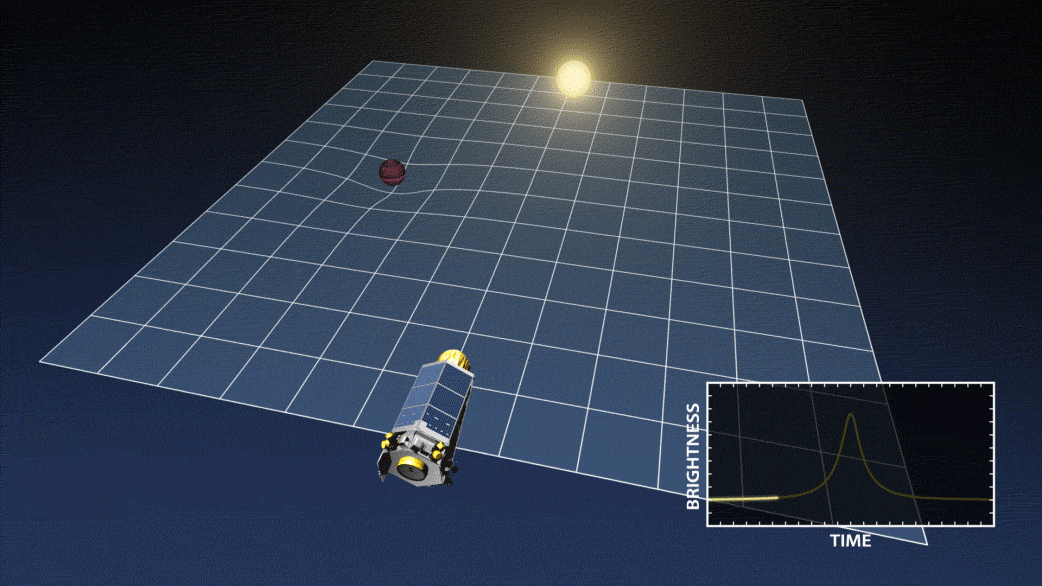
Recent scientific considerations are shifting the locus of potential extraterrestrial life from planets to the orbiting moons around them, both within and beyond our solar system. The core of this re-evaluation hinges on the idea that moons, particularly those of giant planets, might harbor conditions conducive to life, even without direct solar influence. This pivot challenges established paradigms, which primarily focus on planetary habitability tied to stellar proximity and stable climates.
Unseen Worlds, Unforeseen Possibilities
The hypothesis gains traction from observations and theoretical models suggesting moons can possess internal heat sources and subsurface oceans, mimicking conditions that might have fostered life on early Earth.
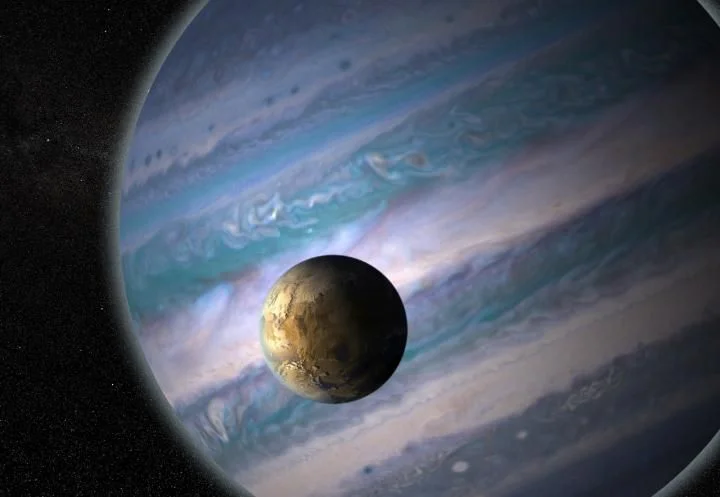
Alternative Energy Sources: Unlike Earth, where solar energy is paramount, moons like Europa and Enceladus are posited to derive warmth and energy from tidal forces exerted by their parent planets and geological activity, such as hydrothermal vents on their seafloor. This suggests life could emerge and persist independent of a star's light.
Atmospheric Potential: Research has explored moons with atmospheres comparable to or exceeding Earth's, simulating their potential to retain heat and support liquid water – a fundamental requirement for life as we understand it.
Hydrogen's Role: Some findings draw a connection between early Earth's conditions and these distant moons, pointing to high concentrations of hydrogen, potentially generated by asteroid impacts or internal processes, as a key factor in creating life-supporting environments.
Beyond the Familiar Orbit
The scope of this inquiry extends even to 'orphaned' planets – those that wander through space without a parent star. These celestial wanderers, if they possess moons, might offer surprisingly hospitable environments.
Read More: ISS Experiment Shows How Particles Change Turbulent Flows
Habitable Configurations: Scientists are investigating atmospheric compositions and their stability, seeking to understand if they can trap sufficient heat, thereby creating zones where life could potentially take hold.
Complex Life Considerations: While the emergence of simple microbial life is a primary focus, the long-term potential for more complex life forms on exomoons is also being contemplated, albeit with greater theoretical hurdles.
The Quest for Evidence
The challenges in studying exomoons are considerable. Detecting and analyzing the atmospheres of these distant bodies is a task far more complex than scrutinizing smaller rocky planets like Earth.
Technological Demands: Future scientific endeavors will likely involve advanced spacecraft missions to gather direct data from moons within our own solar system, such as Europa, to test these hypotheses.
Modeling and Simulation: Currently, much of the work relies on complex simulations and models that assess factors like the fraction of stars hosting giant planets, the average number of moons per planet, and the probability of life arising on such celestial bodies.
The current scientific discourse indicates a widening net in the search for life, embracing the notion that life’s genesis might be a more ubiquitous phenomenon, potentially occurring in the shadows of gas giants and even in the cold expanse of interstellar space.Keywords | Habitable Exomoon | Life on Moons | Europa