
The scarcity of affordable climate control technology in France has manifested as public disorder. On Thursday, July 2, 2026, police intervened at multiple Lidl locations across France as hundreds of residents jostled for access to a limited supply of 200,000 discounted fans and portable air conditioning units. With retail market prices for similar devices often exceeding 1,200 euros, the 179-euro price point offered by the chain served as a primary catalyst for the confrontations.
| Incident Aspect | Detail |
|---|---|
| Trigger Event | Nationwide sale of 200,000 cooling units |
| Retailer | Lidl |
| Public Reaction | Long queues, scuffles, and police deployment |
| Economic Context | Market cooling units (1,200€) vs. Promo units (179€) |
The Mechanics of the Scramble
At a site in the 19th arrondissement of Paris, approximately 200 people formed a line two hours prior to the store's opening. Reports from participants indicate a deep imbalance between supply and demand: some stores were reported to have only two units in stock, leading to intense frustration when doors finally opened. In Chambourcy and Chambray-les-Tours, the opening of doors resulted in physical pushing and shouting as crowds vied for inventory that, in some cases, was non-existent.
Read More: Stockport Merseyway Wins 3 Awards for Safety, Green Efforts, and Community Help
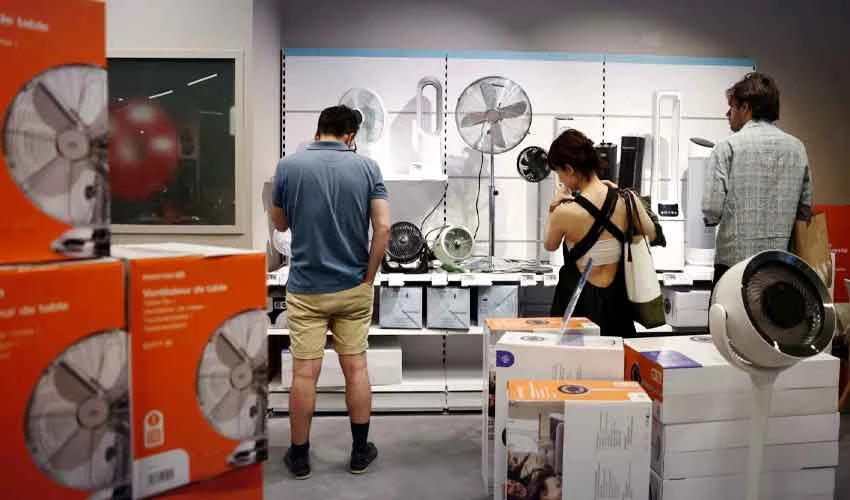
"I had been waiting for more than an hour along with some 200 other customers at a small Lidl store… I had been told there were only two units on sale." — Mousa Traore, shopper.
A Fractured Infrastructure
The disruption underscores a widening divide in urban resilience regarding climate adaptation. Unlike regions built for extreme heat, much of the French housing stock—particularly high-rise apartments—was developed with the assumption of milder summers, leaving residents vulnerable to rising temperatures.
Infrastructure Gap: Most schools and residential buildings in France lack integrated air conditioning.
Market Volatility: The demand is not limited to discounters; Carrefour reported sales volume spikes of 1,000 times their typical daily average, while Amazon observed a near-doubling of cooling appliance orders over the last week.
Political Friction: The scramble for cooling units has transitioned from a logistical retail issue into a broader political debate concerning social equity, infrastructure upgrades, and the state’s role in protecting vulnerable populations from intensifying heatwaves.
The situation remains fluid as current temperatures force a collision between limited retail supply and the physical necessity of cooling in a built environment not designed for the present climate reality.