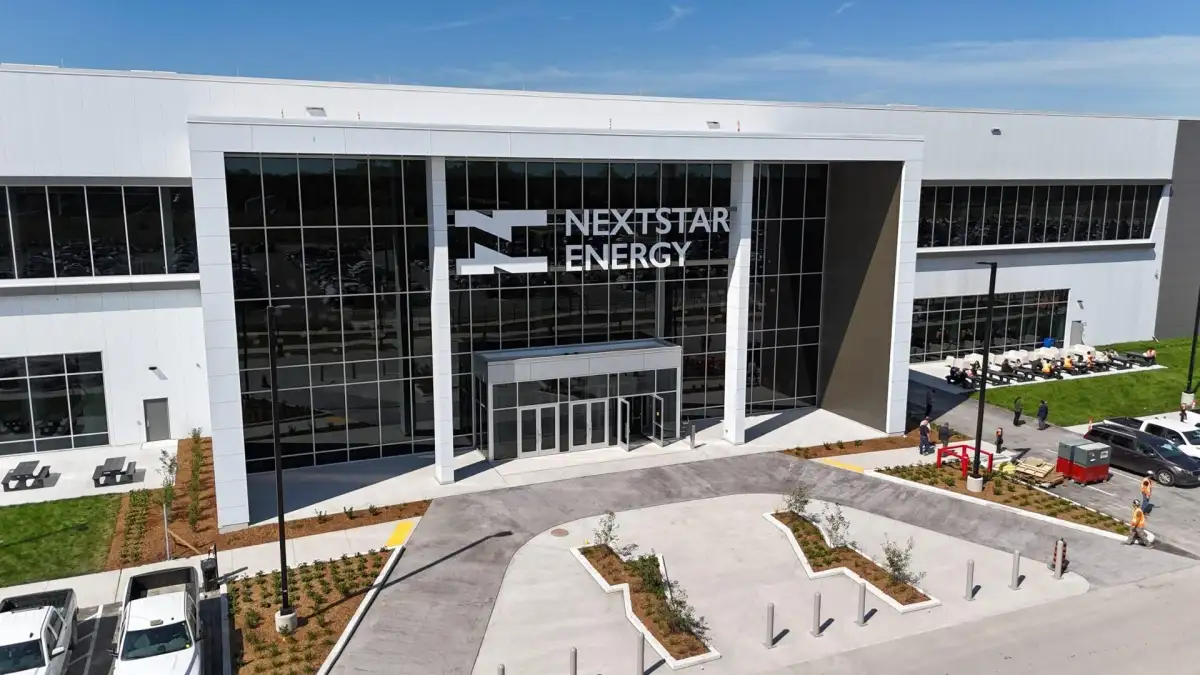
The once-vaunted joint venture to build electric vehicle batteries in Ontario, Canada, has dramatically shifted hands. LG Energy Solution is now the sole owner of NextStar Energy, a move that signifies a stark pivot away from the electric vehicle frenzy that once dominated headlines. Stellantis, the automaker behind brands like Jeep and Fiat, has shed its 49% stake for a symbolic $100, a mere fraction of the over $5 billion invested, amidst its own public admission of overestimating the EV market’s speed. This seismic shift raises critical questions about the future of EV production, the reliability of long-term corporate promises, and the true cost of chasing an idealized green future.
The story of NextStar Energy, a $5 billion project hailed as Canada’s first large-scale battery manufacturing facility, has taken a sharp turn. Originally a partnership between Stellantis and South Korea’s LG Energy Solution (LGES), the joint venture was a cornerstone of the companies' ambitious EV strategies. However, recent developments reveal a hasty retreat by Stellantis, leaving LGES in complete control. This dramatic unraveling echoes a broader disillusionment with the rapid adoption of electric vehicles, a trend that appears to be cooling faster than many industry giants predicted.
Read More: Louisiana Ends Vehicle Inspection Stickers for Most Drivers
The Crumbling EV Dream: A Timeline of Shifting Fortunes
The genesis of NextStar Energy lies in the global push towards electrification, heavily incentivized by governments and automakers alike. This particular venture was officially established in 2022, a period when the electric vehicle market seemed poised for exponential growth. The $5 billion investment was a testament to this optimism, with the plant, located in Windsor, Ontario, slated to become a critical node in North America’s burgeoning EV supply chain.

The narrative began to fracture more recently, as indicated by reports in November, suggesting a shift in the plant's immediate production focus. While initially conceived for EV batteries, there were strong indications that NextStar would first churn out batteries for stationary energy storage systems (ESS), a sector Stellantis does not directly serve. This foreshadowed a broader strategic recalibration.
Read More: Palantir CEO: LLM companies care more about money than users
The official announcements on February 6th, 2026, confirm this seismic shift:
Stellantis is selling its 49% equity stake in NextStar Energy to LG Energy Solution. (Article 1, 5)
The transaction price for Stellantis's stake is reported to be a nominal $100. (Article 3, 7)
LG Energy Solution is acquiring full ownership, making NextStar Energy a wholly owned subsidiary. (Article 5, 7, 10, 11)
Stellantis acknowledges overestimating the pace of the EV transition, booking charges of around €22.2 billion ($35.81 billion) in the second half of last year due to this miscalculation. (Article 3, 9)
Nearly €15 billion of Stellantis’s charges are related to "realigning product plans with customer preferences and new emission regulations in the US, largely reflecting significantly reduced expectations for battery electric vehicles (BEVs)". (Article 9)
LGES plans to leverage the NextStar facility for energy storage systems (ESS), targeting the growing North American market for these products, a move that enhances investment efficiency and profitability by allowing direct receipt of Canadian government subsidies. (Article 7, 11)
Despite the ownership change, Stellantis remains a committed customer, continuing to source battery products from NextStar Energy. (Article 1, 4, 5, 10)
LGES views this acquisition as a move to reduce its dependence on the automotive sector. (Article 6)
The context is stark: LGES is grappling with the fallout from cancelled major battery contracts, including a significant deal with Ford. (Article 3) This comes after the Trump administration scrapped a consumer tax credit for EV purchases, a move that, along with other factors, has led to stagnating demand for EVs and sluggish EV demand overall. (Article 3, 8) This situation is forcing global EV battery makers to adjust production and diversify their customer base beyond the automotive sector. (Article 8)
What’s Behind the $100 Price Tag? A Deep Dive into the Deal's Economics

The headline-grabbing detail is Stellantis exiting its nearly half-stake in a multi-billion dollar facility for a mere $100. While presented as a "joint strategic decision," the financial implications for Stellantis are anything but trivial. The company is simultaneously booking a colossal €22.2 billion charge, partly reflecting its "poor operational execution" and an admission that it "overestimated the pace of the energy transition." (Article 9)
Read More: MAN Starts Electric Truck Production, 3000 E-Buses Now in Europe
Why such a symbolic price for a factory representing a $5 billion investment?
Shifting Market Realities: The EV market has cooled significantly. High prices, limited charging infrastructure, and evolving consumer preferences have tempered initial explosive growth forecasts. Stellantis, like others, seems to have bet too heavily on a rapid acceleration that hasn't materialized.
Operational Strain: LGES itself is facing financial headwinds, including posting a loss amidst the EV slowdown and dealing with cancelled contracts. (Article 3, 4) This might suggest a desire for a clean break rather than a prolonged, potentially contentious, disentanglement.
Subsidies and Future Investment: LGES will now be able to receive Canadian government investment and production subsidies directly, as it becomes the sole entity benefiting from the plant's operations. (Article 7) This direct financial incentive likely outweighs any residual value Stellantis might have extracted through a more complex divestment.
Strategic Realignment: For Stellantis, shedding this stake, regardless of the book value, allows them to redirect capital and focus away from a sector where they admit to misjudging the market trajectory. It's a painful but perhaps necessary course correction.
Stellantis's Continued Role: The fact that Stellantis will still source batteries from NextStar is crucial. This isn't a complete severing of ties, but a change in the nature of the relationship. They are no longer a partner in production but a significant customer, a less capital-intensive role.
The Pivot to Energy Storage: A New Dawn or a Fallback Position?
LG Energy Solution’s clear strategic pivot towards energy storage systems (ESS) is perhaps the most telling aspect of this acquisition. While the NextStar facility was conceived for EV batteries, its capabilities are adaptable. The growing demand for ESS – to store renewable energy from solar and wind, stabilize grids, and power homes and businesses – presents a substantial market opportunity.
| Feature | Original EV Focus | New ESS Focus |
|---|---|---|
| Primary Market | Electric Vehicles (Stellantis & others) | Energy Storage Systems (grid, commercial, residential) |
| Stellantis Role | Joint venture partner, future customer | Current customer (for EV batteries) |
| LGES Strategy | Diversification from auto sector | Diversification from auto sector |
| Government Incentives | Initially sought for EV production | Now directly accessible for ESS production |
| Market Growth Potential | Significant, but slowing for some segments | Rapidly expanding, driven by renewables |
Why is this pivot significant?
Market Volatility Mitigation: The ESS market, while growing, may offer more stable demand than the increasingly volatile EV sector, especially in light of recent demand slowdowns and policy shifts.
Technological Overlap: Battery technology for EVs and ESS shares significant common ground, allowing LGES to leverage existing expertise and infrastructure.
Government Support: The push for renewable energy and grid modernization globally means substantial government support and incentives are often available for ESS projects, which LGES can now directly access for the NextStar facility.
Reduced Automotive Dependence: This move explicitly aligns with LGES's stated goal of reducing its reliance on the automotive industry, a strategy likely accelerated by the recent contract cancellations.
Did Governments Over-Promise and Over-Incentivize the EV Boom?
The narrative surrounding the rapid EV transition has been heavily influenced by government policies, subsidies, and mandates. In the US, the Biden administration’s promotion of EV adoption and the now-scrapped tax credits played a significant role. In Canada, similar incentives were in place. Was this an artificial inflation of demand, masking underlying consumer reluctance or economic realities?
Read More: Harper Beckham's Business Expansion Aims to Surpass Parents' Wealth
Biden Administration’s EV Push: The push for EV adoption under President Biden, while aimed at environmental goals, may have accelerated investment timelines beyond what the market could sustainably support. (Article 3)
Trump Administration's Policy Shift: The termination of US tax credits by the Trump administration is cited as a direct contributor to the slowing demand. (Article 3, 8) This highlights the fragility of market growth when tied to fluctuating political landscapes.
"Overestimating the Pace": Stellantis’s own admission of "overestimating the pace of the energy transition" and how it "distanced us from many car buyers’ real-world needs, means and desires" is a profound indictment of the industry’s aggressive, perhaps detached, planning. (Article 9)
What does this say about the reliability of long-term industrial strategies that are heavily subsidized or mandated?
The Danger of Political Windfalls: When market growth is significantly driven by political will and subsidies rather than pure organic demand, it creates a risk of boom-and-bust cycles when those political winds shift.
Consumer Affordability and Practicality: The articles point to consumer needs, means, and desires being a critical factor. EV adoption hinges not just on environmental ideals but on affordability, charging convenience, and range, issues that still present barriers for many.
Global Economic Headwinds: Broader economic factors, including inflation and the cost of living, can significantly impact consumer willingness to invest in expensive new technologies like EVs, regardless of government incentives.
Conclusion: A Harsh Reality Check for the Electric Revolution

The sale of Stellantis's stake in NextStar Energy is more than just a corporate transaction; it's a potent symbol of the sobering reality confronting the electric vehicle industry. The dream of a swift, ubiquitous EV future appears to have been oversold, leaving major players like Stellantis scrambling to recalibrate their strategies and absorb significant financial losses.
For LG Energy Solution, this acquisition offers a strategic lifeline, allowing them to consolidate control over a key North American manufacturing hub and pivot towards the more robust energy storage market. However, it also underscores the volatile nature of the EV battery sector and the need for diversification.
Read More: AstroAI S8 Jump Starter Price Drops to Under $20 for Father's Day
The question that lingers is: what happens to the promises made to the Canadian workforce and the economic benefits touted for Ontario? LGES states its intention to "continue investing in our Canadian workforce and our manufacturing capacity," providing "sustained economic benefits." (Article 6) However, the shift in production focus and the precarious financial health of major players inevitably casts a shadow of uncertainty over the long-term viability and employment guarantees associated with such large-scale industrial projects.
This episode serves as a critical reminder that industrial transformations are complex, subject to market forces, technological realities, and political influences that can shift dramatically. The era of unquestioned EV optimism is over, replaced by a more pragmatic, and perhaps more challenging, approach to building the future of transportation and energy. The $100 sale is not an endpoint, but a stark marker of a profound reckoning in the global auto and energy industries.
Read More: Stanley Tumbler Sales Rise During Stanley Cup Playoffs
Sources:
Article 1: LG Energy Solution to Acquire Full Ownership of NextStar Energy in Joint Strategic Decision with Stellantis - Stocktitan (Published 6 hours ago) https://www.stocktitan.net/news/STLA/lg-energy-solution-to-acquire-full-ownership-of-nextstar-energy-in-aoh7jvr6fjd0.html
Article 2: Stellantis selling stake in battery plant joint venture in Ontario to partner - TheSpec (Published 33 minutes ago) https://www.thespec.com/business/stellantis-selling-stake-in-battery-plant-joint-venture-in-ontario-to-partner/article9dc33474-6ed3-51c8-9da3-6a2b66801980.html
Article 3: LG Energy Solution to buy Stellantis’s stake in Canadian EV battery joint venture for just $100 - The Globe and Mail (Published 32 minutes ago) https://www.theglobeandmail.com/business/industry-news/article-lg-energy-solution-stellantis-ev-battery-nextstar-energy/
Article 4: LG ES buys Stellantis Canada stake, posts loss amid EV slowdown - EV Infrastructure News (Published 2 hours ago) https://www.evinfrastructurenews.com/ev-battery/lg-energy-solution-buys-stellantis-canada-plant-stake-posts-2025-loss-amid-ev-slowdown
Article 5: LG Energy Solution to Acquire Full Ownership of NextStar Energy in Joint Strategic Decision with Stellantis - Cantech Letter (Published 5 hours ago) https://www.cantechletter.com/newswires/lg-energy-solution-to-acquire-full-ownership-of-nextstar-energy-in-joint-strategic-decision-with-stellantis/
Article 6: LG Energy Solution acquires Stellantis’ stake in NextStar Energy - electrive.com (Published 2 hours ago) https://www.electrive.com/2026/02/06/lg-energy-solution-acquires-stellantis-stake-in-nextstar-energy/
Article 7: LG Energy Solution to take full control of Canadian battery JV with Stellantis - The Korea Times (Published 1 hour ago) https://www.koreatimes.co.kr/business/companies/20260206/lg-energy-solution-to-take-full-control-of-canadian-battery-jv-with-stellantis
Article 8: LG Energy to Take Full Ownership of Battery JV With Stellantis - Marketscreener (Published 3 hours ago) https://www.marketscreener.com/news/lg-energy-to-take-full-ownership-of-battery-jv-with-stellantis-ce7e5ad9d88bf327
Article 9: Stellantis takes €22bn hit after ‘overestimating’ pace of shift to EVs - The Guardian (Published 3 hours ago) https://www.theguardian.com/business/2026/feb/06/stellantis-finances-hit-after-overestimating-pace-ev-uptake
Article 10: LG Energy Solution to take full ownership of NextStar Energy - Evertiq (Published 2 hours ago) https://evertiq.com/news/2026-02-06-lg-energy-solution-to-take-full-ownership-of-nextstar-energy
Article 11: LG Energy Solution takes full control of Canada JV with Stellantis buyout - The Korea Herald (Published 4 hours ago) https://www.koreaherald.com/article/10671585