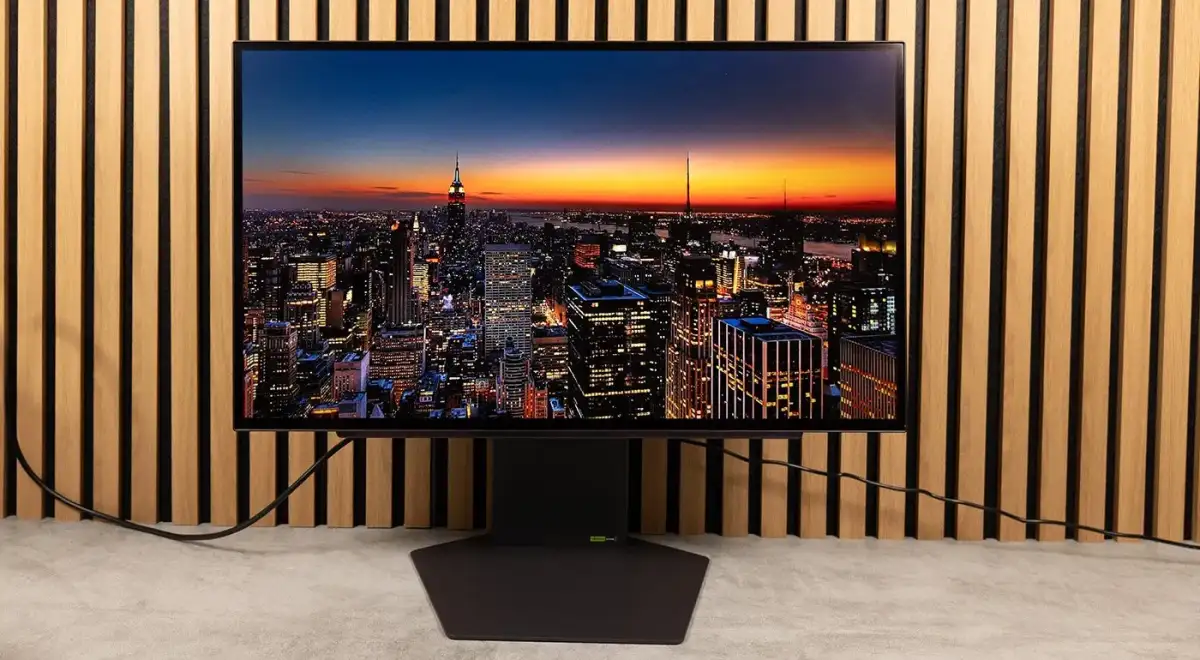
OLED Technology Hits New Price Point for High-Speed Gaming
The LG 27-inch Ultragear QHD 280Hz OLED Gaming Monitor is currently available for $399.99, a price point described as a "record low" and limited to this weekend only. This display features LG's fourth-generation OLED technology, promising a 280Hz refresh rate and an ultra-fast 0.03ms response time. Such specifications, previously commanding prices well over a thousand dollars, now signal a potential shift in the accessibility of premium gaming hardware.
The monitor boasts a 2560 x 1440 QHD resolution and utilizes what LG refers to as 'Primary RGB Tandem' technology, layering four OLED substacks to improve brightness. This addresses previous criticisms of OLED monitors struggling in bright environments and the need to limit peak brightness to preserve panel longevity. For connectivity, it includes HDMI 2.1, ensuring compatibility with current and future gaming consoles.
High Refresh Rate and Responsiveness Under Scrutiny
While the monitor is advertised with specifications such as a 480 Hz refresh rate and a 0.03 ms gray-to-gray response time in some technical descriptions, other sources indicate 280Hz. This discrepancy warrants attention. Even at 280Hz, the fluidity is considered extremely high, though some assessments suggest the perceivable difference becomes marginal beyond 240Hz for the average user.
Read More: Even Realities Launches G2 Smart Glasses App Store for New Features
The display supports 'Nvidia G-Sync' and 'FreeSync Premium Pro', aiming for tear-free, smooth gameplay. Its HDR performance is noted as being more accurate in color reproduction, although its peak brightness in SDR is described as "weak" by some.
A New Benchmark in Gaming Displays?
The technology integrated into this LG monitor, particularly its OLED panel, represents a significant area of competition among tech companies vying for the serious gamer market. The combination of rapid refresh rates and near-instantaneous response times positions it as a contender for those prioritizing extreme fluidity and minimal input lag.
Read More: Marathon Rook Class Encourages Player Alliances in Extraction Shooter
Background: The Evolution of OLED in Gaming
OLED technology has steadily advanced, moving from niche applications to becoming a premium offering in the gaming monitor space. Early iterations faced challenges with brightness and burn-in concerns, issues that manufacturers are actively working to mitigate through improved panel structures and specialized care features accessible via the monitor's on-screen display. The ongoing price reductions suggest a maturing market and a push for wider adoption of these advanced display technologies.