

Israel and Lebanon have entered a 10-day ceasefire, a move President Donald Trump hailed as a sign of potential progress toward ending the wider conflict with Iran. Trump suggested a meeting between U.S. and Iranian officials could occur this weekend, fueling optimism that a broader resolution might be within reach. This fragile accord follows a prior two-week truce that, according to a senior Iranian official, has not resolved core issues surrounding Iran's nuclear program.
The conflict, which erupted on February 28 with U.S.-Israeli attacks on Iran, subsequently saw Iran retaliate against Gulf neighbors and reignited the Israel-Hezbollah conflict. As diplomatic channels appear to reopen, the economic pressure on Iran has intensified. The U.S. has expanded its blockade of Iranian shipping, now encompassing items classified as "contraband," which include weapons, ammunition, and crucially, nuclear materials, alongside crude oil, refined products, iron, steel, and aluminum.
Read More: Pope Condemns Tyrants, Clashes with Trump Over Iran War
UNRESOLVED NUCLEAR QUESTIONS LOOM
Despite the apparent de-escalation on the Lebanese front, the specter of Iran's nuclear capabilities remains a significant sticking point. A senior Iranian official indicated that substantial disagreements persist regarding the nation's nuclear program, even as a two-week truce has passed its midpoint. President Trump, however, has indicated that Iran has proposed a commitment to not possess nuclear weapons for over 20 years, a claim not immediately corroborated by other statements.
ECONOMIC WARFARE CONTINUES
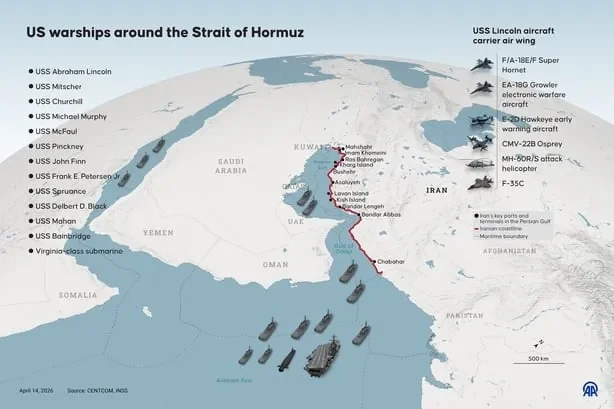
The U.S. administration, under President Trump, has escalated its economic offensive. The widening blockade on Iranian shipping signifies a hardening stance, targeting not only potential military supplies but also vital industrial and energy resources. This move comes as global markets show signs of stabilization, with Wall Street indexes reaching record highs and crude oil prices steadying, suggesting an international economic resilience that might embolden further sanctions.
Read More: Lebanon Israel 10-Day Truce Starts April 16 2026 for Peace Talks
"The U.S. widened its blockade on Iranian shipping to include what it called contraband, including weapons, weapons systems, ammunition, nuclear materials, crude and refined oil products, as well as iron, steel and aluminium."
DIPLOMATIC EFFORTS AND CONDITIONS
The path to peace is fraught with conditions. Iran has stated that it will only reopen the Strait of Hormuz if a permanent ceasefire is secured and backed by United Nations guarantees against future U.S. and Israeli aggression. Meanwhile, U.S. Defense Secretary Pete Hegseth has warned that troops are prepared to resume combat operations should negotiations falter, underscoring the precarious nature of the current lull. Pakistan's foreign ministry has acknowledged willingness from both sides to resume talks, though no specific timeline has been established.
BACKGROUND OF THE CONFLICT
The current hostilities trace their origins to a pivotal moment on February 28, when coordinated U.S.-Israeli strikes targeted Iran. This action precipitated a cascade of retaliatory measures from Iran, impacting its Gulf neighbors, and simultaneously rekindled the long-simmering conflict between Israel and Hezbollah in Lebanon. Reports from southern Lebanon indicate that fighting, at least in some areas, continued even as the ceasefire in Israel took hold, highlighting the fragmented nature of the ongoing hostilities.Iran war nuclear issues ceasefire US-Israel attacks
Read More: Israel-Lebanon ceasefire starts April 16, 2026, bringing calm


