

FRAYED INTERNATIONAL ORDER AND PERCEIVED EXISTENTIAL THREATS FRAME OFFICIAL RUSSIAN RHETORIC
"There have been worse things in human history… but we weren't alive then, so it seems to us that the end of the world is upon us." – Dmitry Peskov, spokesperson for the Russian presidency.
The Kremlin, through its spokesman Dmitry Peskov, has articulated a stark view of the current global landscape, suggesting an impending existential crisis. This declaration comes against a backdrop of escalating tensions, including substantial Israeli and American strikes on Iran, which Moscow has characterized as a "perfect storm." Peskov pointed to a perceived breakdown in 'international law,' lamenting an inability to define its replacement or its current state. This sentiment underscores a sense of disorientation and a challenge to established global governance structures.
The core of the Kremlin's current pronouncements hinges on the assertion that the present global situation, marked by extensive military actions in the Middle East and a perceived erosion of international legal frameworks, feels unprecedented in lived human experience. Peskov's statement implies that historical calamities are distant, making current perceived threats uniquely overwhelming to those currently experiencing them.
Read More: Starmer's UK avoids Iran attack role, remembers Iraq war mistakes
SECURITY CONCERNS AND MILITARY INCIDENTS INTERTWINED
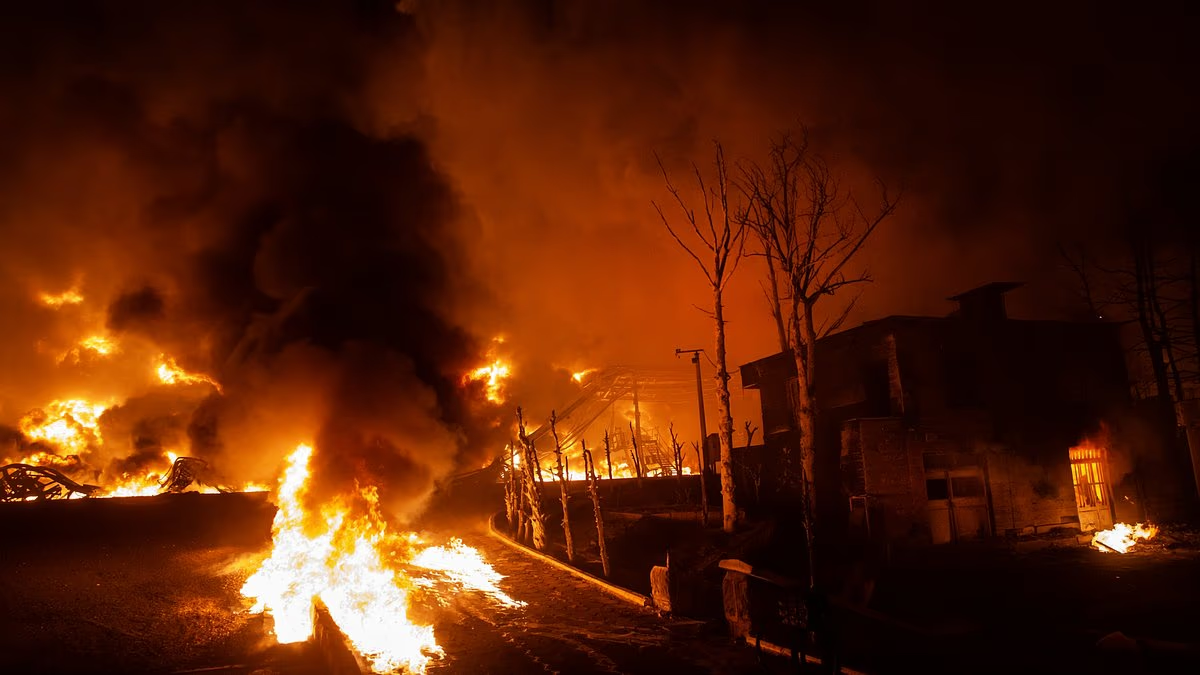
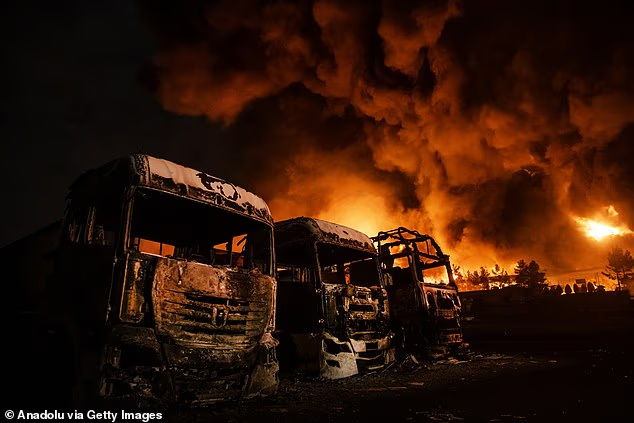
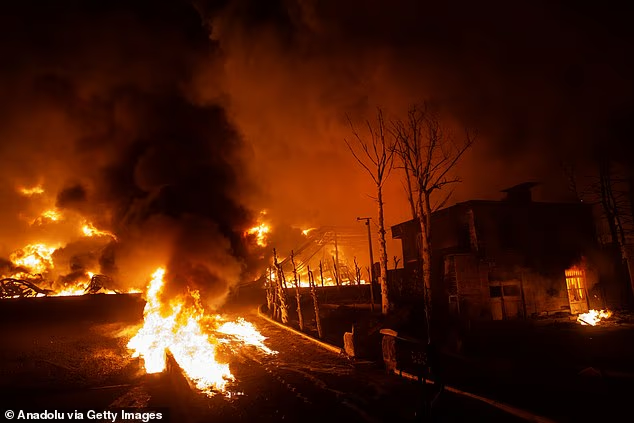
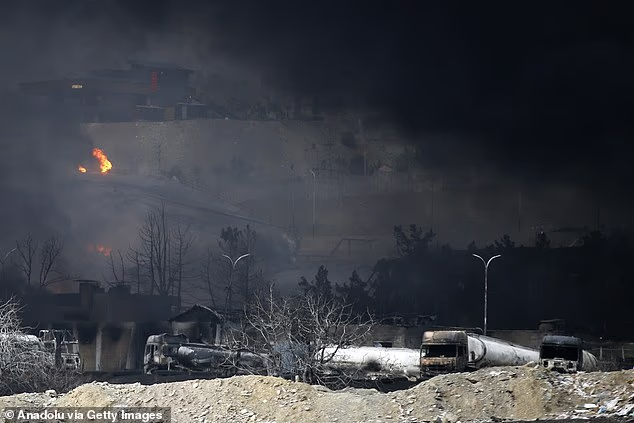
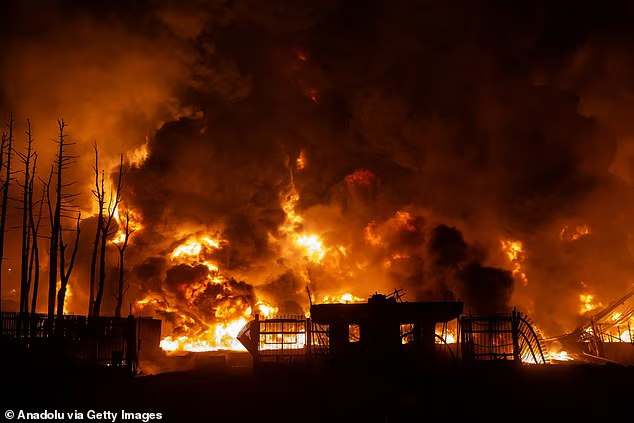
Concurrently, Russian territory has seen a series of drone incursions. Explosions were reported at the Akron chemicals plant in Veliky Novgorod, a facility described as critical for Russian explosives manufacture. This plant is situated approximately 85 miles from Valdai, a location noted for its association with Vladimir Putin's residences. Drone activity also targeted Sochi, a Black Sea resort city where Putin reportedly maintains another property.
The reports link these domestic security events to the broader geopolitical context, suggesting a potential exchange of capabilities or intelligence between Russia and Iran, particularly concerning drone technology.
GLOBAL INSTABILITY AND DOMESTIC FOCUS
Peskov's statements also conveyed a message of self-reliance and national interest amidst this perceived global instability. "Against the backdrop of this perfect storm that has now begun, we need to focus on ourselves, our interests, and our potential," he stated. This suggests a strategic pivot towards internal consolidation, with external alliances and capabilities appearing limited, particularly concerning direct support for allies like Iran. Russia's capacity to assist Tehran is framed as potentially confined to intelligence sharing regarding American and Israeli military positions.
Read More: West Bengal parties want shorter election schedule to stop violence
HISTORICAL PARALLELS AND BROADER CONTEXT
The language employed by the Kremlin draws a heavy parallel between current events and potentially catastrophic historical periods, framing the present as uniquely dire. This rhetoric emerges within a context of protracted conflict in Ukraine, now entering its fourth year, and the widening of military engagements in the Middle East. The specter of a global conflict, or 'WW3,' has been invoked in various media interpretations surrounding these developments. The rationale behind Western military engagement, specifically the prevention of Iran acquiring nuclear weapons, has been noted as a significant factor not explicitly addressed in the Kremlin's framing of the "perfect storm."