Heated Exchange Surrounds Proposal for Enhanced Social Media Management
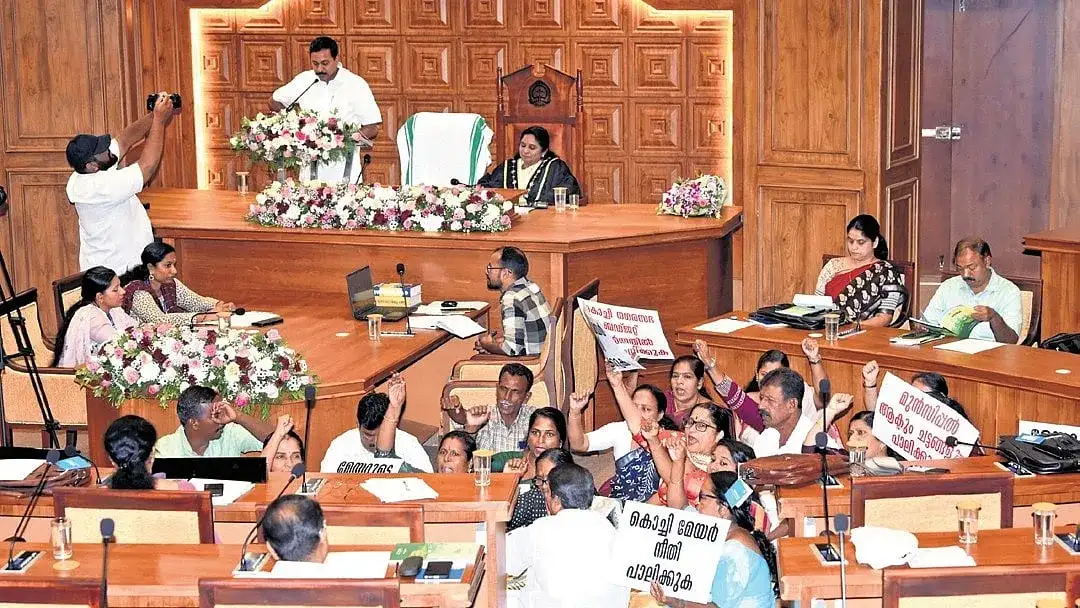
Kochi Corporation Council sees fiery debate over a monthly ₹55,000 outlay for the Mayor's social media, with concerns about government spending limits and the blurring lines between public and private online personas. The council meeting on Thursday became a stage for sharp words between ruling and opposition members concerning a proposal to allocate funds for managing the Mayor's official social media and digital platforms. This push for increased digital outreach arrives as government regulations permit corporations to spend up to ₹5 lakh annually on such operations, with other local bodies capped at ₹3 lakh.
The crux of the dispute centered on the monthly cost of ₹55,000, translating to an annual expenditure of ₹6.60 lakh. This figure significantly exceeds the stipulated government ceiling for local bodies. BJP councillor Priya Prashanth flagged this discrepancy, advocating for the retention of the Mayor's existing official Facebook page and cautioning against exceeding the mandated spending cap.
Read More: Taiwan Holds Nantou County Drills to Prepare for State Collapse
A pointed observation came from LDF councillor Ambika Sudarshan, who recalled a past instance where UDF councillors intensely debated a similar social media proposal for the Mayor during the LDF's previous tenure. She contrasted this with the current UDF's swift passage of their own proposal. In a move towards broader digital inclusion, Sudarshan also indicated that a letter would be dispatched to the government, requesting an extension of social media operational benefits to all councillors.
Navigating the Murky Waters of Official Online Presence
The controversy in Kochi is not an isolated incident, but rather a ripple in a larger, ongoing discourse about how public officials engage online. Questions surrounding government responsibility for elected officials' personal social media use, and the potential for regulating such activity, remain points of contention. Cases elsewhere highlight the delicate balance required.
In Monroe, North Carolina, the local 'NAACP' pushed for the removal of Mayor Robert Burns following accusations of 'online attacks' after the death of Charlie Kirk. The organization alleged that Burns used social media to target residents. This incident followed a vigil Burns organized for Kirk, leading to debate about whether his pronouncements were made as a private citizen or a public official.
Read More: Kochi Drones Spray Mosquito Larva Faster in 25 Minutes
Similarly, suspended Australian Mayor Troy Thompson continued to publicly criticize council matters via social media, asserting his right to speak while suspended. This led to council spokesperson comments about adherence to conduct standards, even during a suspension, underscoring the persistent challenges in policing online behavior for those in public office. The shift in Thompson's Facebook handle to 'Troy Thompson Our Community Matters' further illustrates the deliberate crafting and positioning of online identities by public figures.
The fundamental question remains: where does the official capacity end and the personal begin in the digital realm, and who bears the responsibility when the two inevitably intertwine? This ongoing interrogation is critical as government agencies increasingly rely on social media, grappling with both the potential for enhanced communication and the inherent legal and ethical risks.
Read More: FBI Analysts Review Georgia 2020 Election Data in Fulton County