


THE CLUTTER IN OUR KITCHENS is reaching a boiling point. We're bombarded with glossy images of perfectly prepped meals and effortless baking, all thanks to a bewildering array of gadgets. But a deep dive into the actual utility of some of these star players – the blender, the food processor, and the stand mixer – reveals a confusing overlap and a potential for consumer confusion. Are we being sold a dream, or are these kitchen titans truly indispensable for the modern home cook? The narrative suggests we need them all, but the reality might be a lot simpler, and cheaper, than the manufacturers want us to believe.
The Rise of the Countertop Conquerors
For decades, kitchens have been gradually populated by specialized appliances, each promising to revolutionize our cooking. The blender, a staple for smoothies and sauces, and the food processor, a champion of chopping and shredding, have long coexisted. More recently, the stand mixer has cemented its place as the go-to for serious bakers. But as new models emerge and manufacturers tout their multi-functionality, the lines between these tools blur.
Read More: Air Fryer Popularity: Is This Kitchen Gadget a Fad or Here to Stay?
The Blender's Reign: Originally designed for liquefying and pureeing, blenders excel at creating smooth textures. Think velvety soups, silky sauces, and, of course, icy cocktails and fruit smoothies.
The Food Processor's Power: This workhorse is built for "prep." Its primary function is to rapidly chop, slice, dice, shred, and even knead dough. It's about taking solid ingredients and transforming them into the components for a meal.
The Stand Mixer's Specialty: With its powerful motor and rotating beaters, the stand mixer is the undisputed king of baking. It's designed for aerating batters, whipping cream, and developing gluten in bread doughs through prolonged mixing.
The question that gnaws at the back of every consumer's mind, amidst the allure of convenience, is: Do I really need all three? The marketing machinery suggests yes, but a critical examination of their core functions, and the increasing overlap, demands a closer look.
Functionality: Where Do They Shine, and Where Do They Stumble?
Let's break down what each appliance actually does best, according to the experts and our own investigations. It becomes clear that while each has its forte, there's a significant amount of overlap, leading to redundancy for many households.
Food Processor's Versatility:
Handles solid or tough ingredients with ease. (Kitchen Cookware Guide)
Ideal for chopping, slicing, shredding, and making doughs. (Bon Appétit, Kitchen Cookware Guide)
Can turn cubed potatoes into mashed potatoes with just a few pulses. (CNET)
Excels at precise control over consistency and coarseness. (CNET)
A blender cannot tackle half the kitchen tasks a food processor can. (Bon Appétit)
Blender's Liquid Prowess:
Designed to handle liquids and soft ingredients. (Kitchen Cookware Guide)
Best for smoothies, frozen drinks, and pureed sauces. (CNET, ElevatingKitchen)
A blender cannot perform tasks like chopping firm vegetables or kneading dough effectively. (ElevatingKitchen)
Stand Mixer's Baking Backbone:
Specialized for aerating and mixing batters and doughs over extended periods.
Cannot match the speed and precision of a food processor for chopping, slicing, and pureeing. (ChipperChef)
This table, derived from the reports, highlights the core differences and overlaps:

| Task | Blender | Food Processor | Stand Mixer |
|---|---|---|---|
| Liquefying | ★★★★★ | ★★☆☆☆ | ☆☆☆☆☆ |
| Pureeing | ★★★★☆ | ★★★☆☆ | ★★☆☆☆ |
| Chopping | ★★☆☆☆ | ★★★★★ | ☆☆☆☆☆ |
| Slicing | ☆☆☆☆☆ | ★★★★☆ | ☆☆☆☆☆ |
| Shredding | ☆☆☆☆☆ | ★★★★☆ | ☆☆☆☆☆ |
| Dough Making | ☆☆☆☆☆ | ★★★☆☆ | ★★★★☆ |
| Batters (Light) | ★★☆☆☆ | ★★★☆☆ | ★★★☆☆ |
| Batters (Heavy) | ☆☆☆☆☆ | ★☆☆☆☆ | ★★★★★ |
| Ice Crushing | ★★★☆☆ | ☆☆☆☆☆ | ☆☆☆☆☆ |
Note: ★ denotes suitability; more stars mean better performance.
The crucial insight here is that the food processor can often mimic some blender functions, particularly for less-than-perfectly smooth results, while the reverse is rarely true. The stand mixer, however, remains a distinct entity for its core baking strengths.
Read More: Cheap Phones: How to Avoid Bad Deals on Used and New Phones
The "Do I Really Need Both?" Conundrum
This question echoes through every report. Consumers are left grappling with the idea of duplicate functionality and the precious real estate these appliances occupy on their countertops.
When a Food Processor Reigns Supreme (Even with a Stand Mixer)
The food processor is presented as the ultimate prep machine. Its ability to rapidly chop, slice, and shred is unmatched for tasks that would otherwise consume significant time and effort.
The Case for the Food Processor: If your culinary routine involves a lot of chopping vegetables for salads, slicing potatoes for gratins, shredding cheese, or making doughs for pizza or bread, then a food processor is practically indispensable. (Bon Appétit, Kitchen Cookware Guide, The Spruce Eats) It can even handle tasks like making pesto or hummus that a blender might struggle with due to texture.
Efficiency Over Volume: For batch prepping, where speed and uniformity are key, the food processor is the clear winner. (Bon Appétit) Imagine dicing onions for a large batch of chili in seconds versus minutes by hand.
The Limitations of Stand Mixer Attachments: While stand mixers can be outfitted with attachments that mimic some food processor functions (like grating or spiralizing), they are often less efficient, more cumbersome to set up, and don't replace the core chopping and pureeing capabilities of a dedicated food processor. (Tasting Table)
Storage Space is a Factor: For those with limited kitchen space, the decision to acquire a food processor becomes even more critical. (NYT Wirecutter) If a stand mixer already occupies prime real estate, the added bulk of a full-size food processor needs serious justification.
The recurring theme is that if your cooking style leans heavily on chopping, slicing, and general prep work with solid ingredients, a food processor is a game-changer, even if you own a stand mixer.
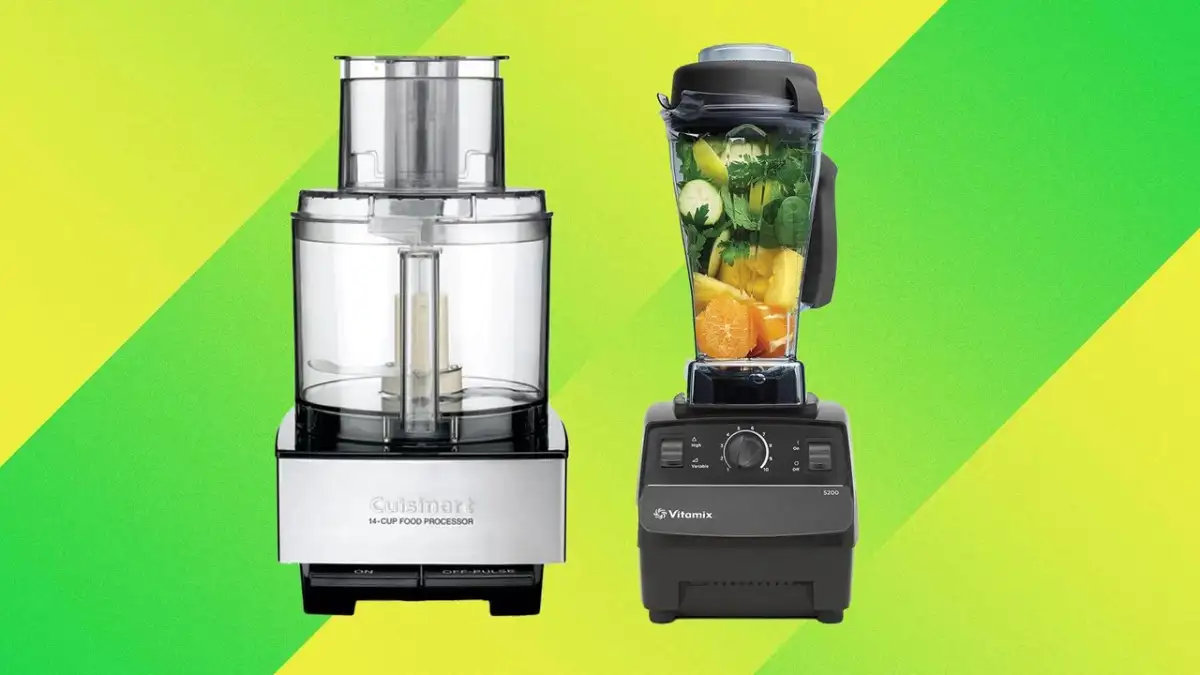
The Blender's Place in the Ecosystem
While the food processor boasts broader utility, the blender still holds its ground for specific applications, particularly those involving liquids and achieving ultra-smooth textures.
The Smooth Operator: For anyone who regularly makes smoothies, milkshakes, frozen cocktails, or ultra-smooth pureed soups and sauces, a blender is the dedicated tool. (CNET, Kitchen Cookware Guide) A food processor can make sauces, but a blender often achieves a more refined, silky consistency.
The Ice Crusher Conundrum: If crushing ice for drinks is a high priority, a blender is generally preferred, though some food processors might manage it with added liquid. (NYT Wirecutter)
When to Avoid the Food Processor for Liquids: Attempting to make a delicate sauce or a large batch of smoothies in a food processor might result in inconsistent texture or require more liquid than desired. The vortex action of a blender is crucial for emulsifying and homogenizing liquids.
The "Can I Use a Blender as a Food Processor?" Question: The consensus is a resounding no. While a blender can chop soft ingredients, it's not designed for the precision or consistency required for tasks like shredding carrots or slicing cucumbers. It tends to pulverize rather than chop uniformly. (ElevatingKitchen, Kitchendemy)
The blender’s niche is clear: liquefying and achieving silky-smooth textures that other appliances simply cannot replicate efficiently or effectively.
Read More: Making Great Coffee at Home is Easier Now
The Stand Mixer: A Baker's Best Friend, But Not a Prep Machine
The stand mixer occupies a different category, primarily serving the needs of those who engage in more intensive baking projects. Its fundamental difference from a food processor lies in its intended action: prolonged, consistent mixing and aeration.
The Art of Aeration: Stand mixers are designed to whip air into ingredients, which is essential for cakes, meringues, and light batters. This is something a food processor simply cannot do.
Kneading Power: For bakers who regularly make bread, the stand mixer's dough hook and powerful motor are invaluable for developing gluten properly and efficiently. While some food processors can knead dough, it's often a more limited capacity and less refined process. (The Spruce Eats)
The Efficiency Trade-off: A food processor cannot replace the stand mixer for tasks requiring extended mixing or whipping. Conversely, using a stand mixer for chopping onions or shredding cheese would be absurdly inefficient and messy.
Attachments vs. Dedicated Machines: As mentioned, stand mixers can have attachments for various tasks. However, "attachments for stand mixers to make them perform like food processors" often come with compromises in speed, power, and ease of use compared to a dedicated food processor. (Tasting Table)
The stand mixer's value is tied directly to the user's engagement with baking. If your kitchen adventures are more about whipped cream and sourdough than diced vegetables, the stand mixer is likely your priority over a food processor for those specific tasks.
Conclusion: Unscramble the Kitchen Chaos
The market often pushes a narrative of needing every gadget, but the reality for most home cooks is far more nuanced. The data strongly suggests that a significant portion of consumers can likely manage their kitchen needs with fewer appliances than they might assume.
For the Everyday Cook: If your primary needs involve making smoothies, pureeing soups, and the occasional sauce, a blender is likely sufficient.
For the Prep Master: If you frequently chop, slice, shred, or make doughs, and enjoy more involved meal preparation, a food processor becomes invaluable. Crucially, it can often handle many "blender-like" tasks for less refined results.
For the Dedicated Baker: If baking is your passion, with a focus on cakes, meringues, and bread, then a stand mixer is a worthwhile investment.
The question of "Do I need both?" boils down to your specific cooking habits and frequency. For many, the overlap means choosing the appliance that best suits their most common tasks. A food processor can often be a more versatile single purchase than a blender if prep work is prioritized. The stand mixer remains largely distinct for serious bakers.
Read More: Carrot Extract Tricks Fake Ghee Tests in New Study
Are manufacturers intentionally creating confusion? The marketing of multi-functionality, while sometimes accurate, often downplays the limitations and suggests a need for upgrades when existing tools might suffice.
What about the "mini" versions? Mini food processors and smaller blenders exist, offering a compromise for space-constrained kitchens or less frequent use, but they come with limitations in capacity and power.
The "cost-benefit" analysis: Is the investment in three high-end appliances justified for the average home cook who uses each only occasionally? For most, the answer is likely no.
Ultimately, the most critical step for consumers is to honestly assess their own cooking habits before succumbing to the allure of countertop clutter. A well-chosen blender OR food processor, potentially supplemented by a stand mixer for dedicated bakers, is likely the most practical and budget-conscious approach for the vast majority of kitchens.
Sources
CNET: https://www.cnet.com/home/kitchen-and-household/difference-between-blender-food-processor-and-stand-mixer/ (Published: Jan 29, 2026)
NYT Wirecutter: https://www.nytimes.com/wirecutter/reviews/food-processor-vs-blender/ (Published: May 1, 2025)
Bon Appétit: https://www.bonappetit.com/story/food-processor-vs-blender (Published: Jul 18, 2025)
ChipperChef: https://chipperchef.com/do-i-need-a-stand-mixer-if-i-have-a-food-processor/ (Published: Aug 30, 2025)
KitchenPearls: https://kitchenpearls.com/do-i-need-a-food-processor-and-a-stand-mixer/ (Published: Dec 11, 2025)
Kitchendemy: https://kitchendemy.com/do-i-need-a-blender-or-food-processor/ (Published: Aug 15, 2025)
The Spruce Eats: https://www.thespruceeats.com/food-processor-vs-blender-6823655 (Published: Sep 7, 2023)
ElevatingKitchen: https://elevatingkitchen.com/do-i-need-both-a-food-processor-and-blender/ (Published: Aug 6, 2025)
Tasting Table: https://www.tastingtable.com/1989350/stand-mixer-vs-food-processor-difference/ (Published: Oct 11, 2025)
Kitchen Cookware Guide: https://kitchencookwareguide.com/blender-vs-food-processor-which-one-do-you-really-need/ (Published: Sep 18, 2025)




:max_bytes(150000):strip_icc()/Simply-Recipes-Slow-Cooker-Tip-LEAD-OPTION-01-or-02-6641fb4d4bcf4be1b1338da43cac2b49.jpg)

