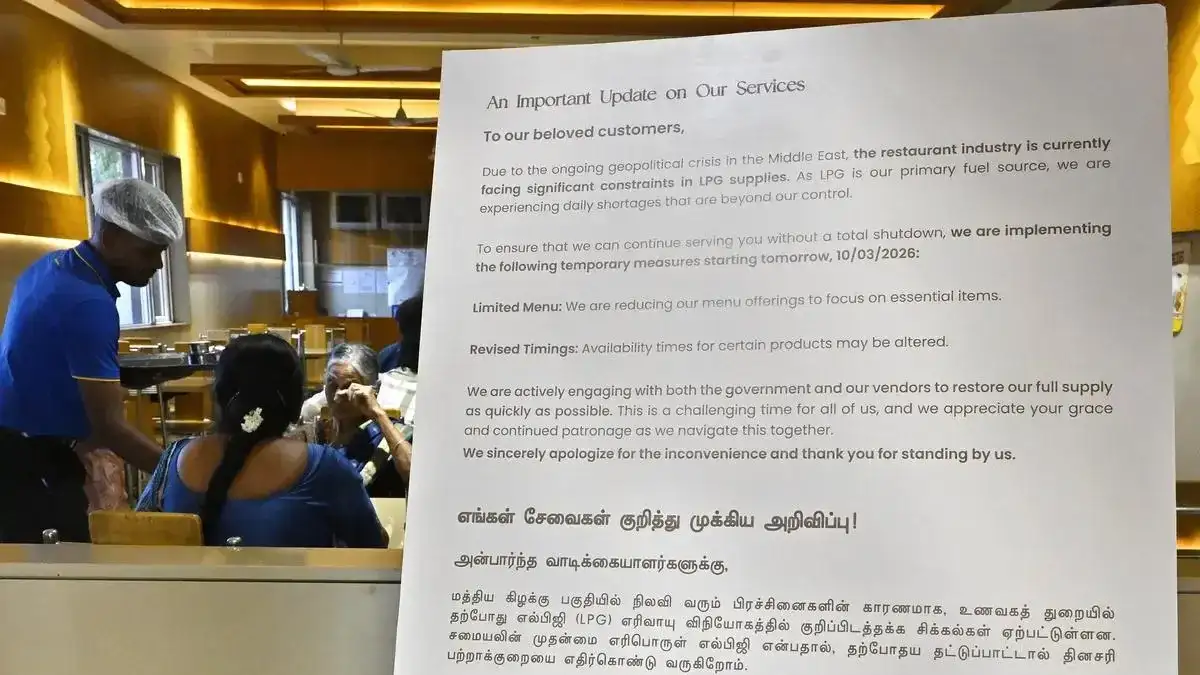
North Karnataka hotels and eateries face an immediate scarcity of LPG cylinders, with some businesses already halting operations. The disruption is not isolated; major cities like Bengaluru and Mumbai are experiencing significant impacts on their hospitality sectors. The supply of commercial LPG cylinders has reportedly come to an abrupt halt since Monday, leaving establishments without the necessary fuel to prepare food. Industry bodies warn of widespread closures if the situation persists, affecting not only the businesses themselves but also those who rely on them for daily meals, including students and medical professionals.

The abrupt halt in commercial LPG supply since Monday is forcing eateries across Karnataka and Tamil Nadu to curtail operations or shut down entirely. The shortage stems from a reported suspension of non-domestic LPG cylinder distribution by the Union ministry of petroleum and natural gas, effective from March 5. While larger establishments with piped gas supply remain unaffected, smaller hotels, roadside vendors, and even larger ones reliant on commercial cylinders are now scrambling for alternatives.
Read More: FIFA World Cup 2026 Revenue Reaches $15 Billion With New Ticket Prices
"Without gas, it will not be possible to prepare food, so the government should respond immediately."
Escalating Disruptions and Calls for Intervention
Across Tamil Nadu, restaurant owners report a near-complete cessation of commercial LPG supplies from oil marketing companies. The Tamil Nadu Hotels Association (TNHA) has appealed to the central government for immediate intervention to avert what they describe as severe damage to the hospitality sector. Similar alarms have been sounded in Maharashtra, where the Mumbai Hotels and Restaurant Association (AHAR) states that approximately 20 percent of hotels and restaurants have already closed due to supply disruptions.

Karnataka Chief Minister Siddaramaiah has penned a letter to Petroleum Minister Hardeep Singh Puri, highlighting the precarious situation. He noted that choultries, hostels, and event venues, which depend on commercial LPG for large-scale food preparation, are also facing uncertainty, particularly with scheduled social and community events.
Read More: McDonald's Stops Self-Serve Soda Machines Across US Restaurants

"The CM said the shortage could have serious consequences for the city’s food services ecosystem…"
Shifting Priorities and Wider Implications
Government sources indicate that oil marketing companies have been directed to prioritize domestic household cooking gas supply amid the current crunch. A committee comprising three executive directors from oil marketing companies has been formed to review requests from various sectors seeking commercial LPG. However, this prioritization of domestic users comes as the minimum waiting period for a domestic LPG cylinder refill has reportedly increased from 21 to 25 days, a measure ostensibly aimed at preventing hoarding and black market activity.
The Federation of Hotel & Restaurant Associations of India (FHRAI) warns of potentially "catastrophic closures" if the supply chain disruption continues. Businesses are already resorting to shrinking menus and operating hours. Some establishments in Gurugram have reported considering switching to domestic cylinders or electric cooking equipment. The crisis is compounded by global factors, with the West Asia conflict cited as a potential contributor to the commercial LPG shortages. India consumes approximately 31.3 million tonnes of LPG annually, with about 87 percent allocated for domestic use and the remainder for commercial purposes.
Read More: Hunter Region Gets $12 Billion Train Factory
Background: A Sector Under Pressure
The current LPG shortage arrives at a time when the hospitality and food service sector is still navigating the complexities of economic recovery. While associations acknowledge the necessity of ensuring uninterrupted domestic LPG for households, they emphasize the critical role of commercial LPG for the survival of their businesses. The situation highlights a tension between meeting domestic needs and sustaining commercial operations that are integral to the broader economy. The ripple effects of these closures extend beyond the immediate businesses, impacting employment and the availability of affordable food options for a significant portion of the population.