


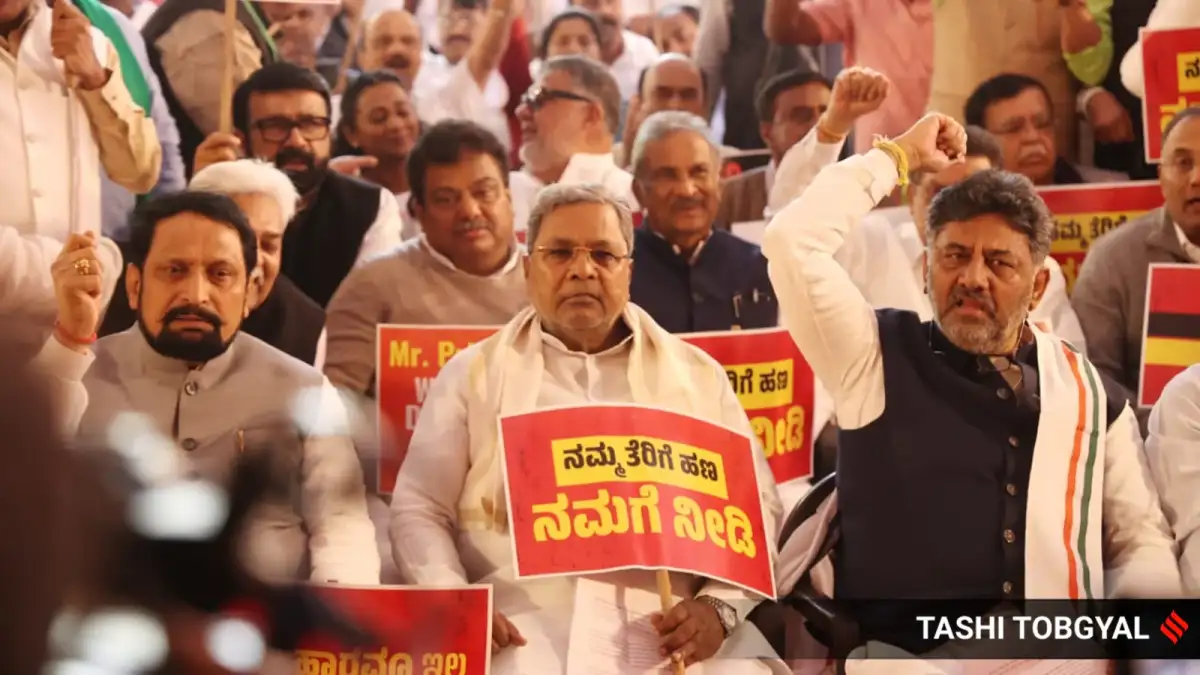
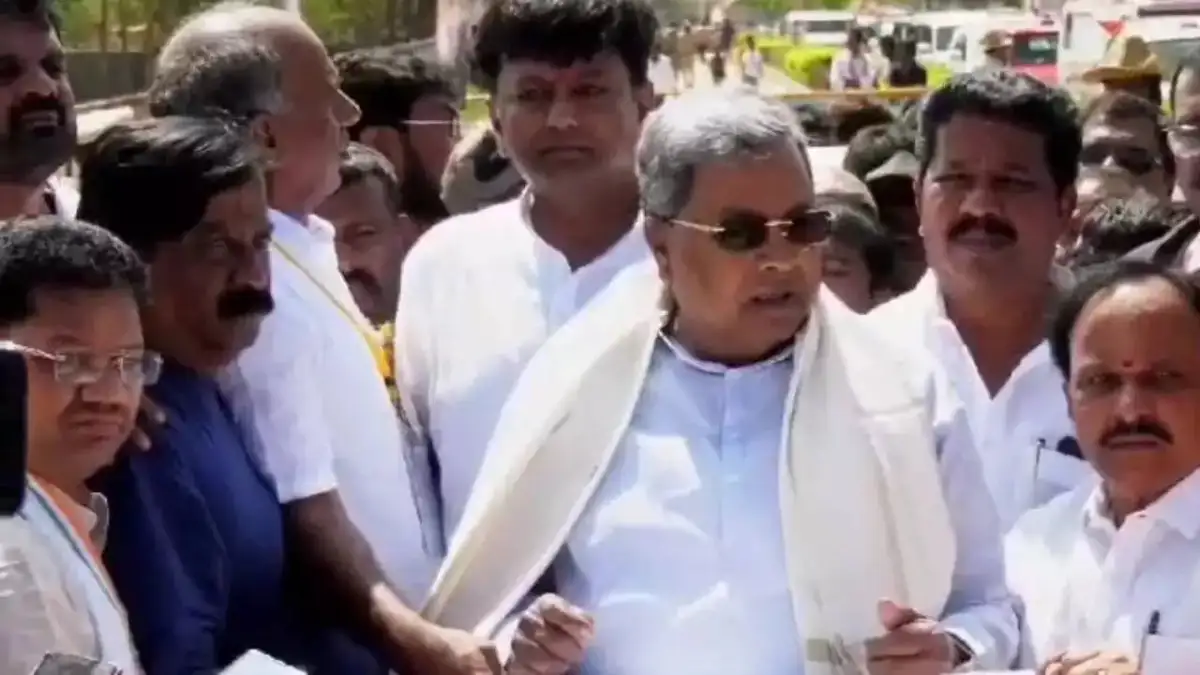
The government of Karnataka is preparing to sue the Union Government over a perceived collapse in fiscal fairness. Chief Minister Siddaramaiah stated on Monday that the state yields roughly ₹4.50 lakh crore in revenue to the center—ranking second in the nation for GST collection—but receives only ₹73,000 crore in return. This follows a previous successful Supreme Court intervention where the state pried ₹3,000 crore in drought relief from a reluctant federal treasury.
"We give 100 rupees and get back 13. This is not a partnership; it is an extraction," the Chief Minister suggested during protests.
The Math of Friction
The dispute is a raw struggle over balance sheets. While the Center accuses states of sloppy spending, the states point to a lopsided debt-to-GDP ratio where the federal government carries a heavier burden than the local administrations it seeks to discipline.

| Entity | Debt % of GDP/GSDP | Contribution vs. Return |
|---|---|---|
| Karnataka | 25% (Within norms) | Returns ₹13 for every ₹100 paid |
| Uttar Pradesh | - | Returns ₹273 for every ₹100 paid |
| Union Gov | 55.6% (Over norm) | Retains majority of GST/Direct Tax |
Karnataka’s total loan burden of ₹8.24 lakh crore remains within legal fiscal limits, while the Center's ₹2.18 lakh crore debt accounts for over half of the national GDP.
Read More: Sonam Wangchuk stops Ladakh protest in Delhi after police release on 2 October 2024
The Branding Stalemate and Withheld Funds
The friction has moved beyond pure math into a war of aesthetics and Names.
The Union government has frozen loan assistance for five major schemes.
The reason: Karnataka refused to use federal branding/naming conventions on these projects.
Drought relief remains a primary trigger; the state argues the Center ignores southern climate disasters while "promptly" funding northern states like Uttar Pradesh.
This mechanical withholding of funds based on signage suggests the federal structure is shifting from cooperation to a rigid, top-down franchise model.
The Cesses and Surcharges Trap
The systemic gap grows because of how the Center collects money. While the Finance Commission mandates sharing certain taxes, the Union government increasingly uses cesses and surcharges.
These specific taxes are not shareable with states.
Some officials claim states now receive only about 30% of total revenue instead of the nominal 41% promised, as the Center funnels more wealth into these non-divisible pools.
With the loss of VAT after the GST rollout, states have lost their primary lever for independent revenue, leaving them with "inelastic" sources like liquor excise and property stamps.
The Southern Bloc
This is no longer a localized Karnataka grievance. A loose coalition of southern states—Kerala, Tamil Nadu, and Telangana—has voiced identical complaints.
"Punishing states for controlling population and improving socio-economic indices is not sustainable," noted observers during the Delhi 'Chalo' protests.
The Sixteenth Finance Commission now faces a volatile atmosphere. The South argues that their success in health and education has resulted in a "success tax," where their wealth is redistributed to northern states that have failed to meet similar developmental milestones.
Read More: UK Households Face Higher Costs as Iran Conflict and Oil Prices Rise
Background: The tension is rooted in the 2017 GST implementation, which stripped states of fiscal sovereignty in exchange for a promised "harmonized" tax regime. That harmony has dissolved into a series of litigations and street protests as the promised "devolution" of funds fails to keep pace with state-level inflation and debt.