STATE FUNDING INSUFFICIENT FOR PROJECT'S AMBITIONS
The recent Karnataka state budget has earmarked ₹75 crore for the development of the PM-MITRA textile park in Kalaburagi, a project seen as pivotal for the industrial advancement of the Kalyana Karnataka region. This allocation, while a step forward, has drawn scrutiny, with stakeholders emphasizing that the announced sum falls significantly short of the project's estimated ₹390 crore outlay. The Kalyana Karnataka Chamber of Commerce and Industry (KKCCI) has explicitly called for the release of the full sanctioned amount at once to ensure prompt execution.

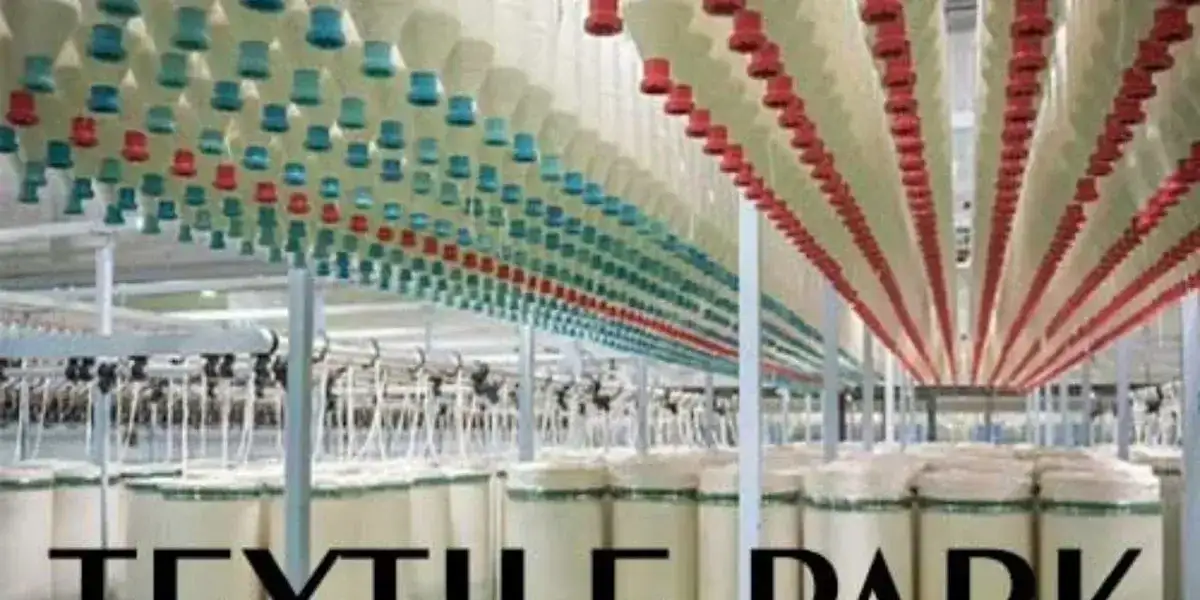
The park, one of seven planned nationwide under a Union government initiative, aims to consolidate the entire textile value chain—from raw material to finished goods—within a single industrial zone. This integrated approach is intended to foster strong linkages between agriculture, particularly cotton and sericulture, and the downstream processing and manufacturing sectors. The region's designation as a cotton-growing belt and the Geographical Indication (GI) tag for its 'tur' variety further underscore the potential for value addition and export. However, progress appears to be hampered by ongoing infrastructure development and pending state-level formalities.
Read More: Goldman Sachs predicts 15 million US jobs lost to AI by 2036
INFRASTRUCTURE DEVELOPMENT AND DELAYS
Reports indicate that essential infrastructure works, including road development, tenders for KPTCL (Karnataka Power Transmission Corporation Limited) operations, and the construction of a water barrage, are underway. State Minister for Textiles and Agricultural Marketing, Shivanand Patil, has assured stakeholders of "early execution" and has reportedly sought necessary clearances at the state level. However, these assurances are juxtaposed against concerns that the Kalaburagi project is lagging behind similar initiatives elsewhere in India.

"The Union Government cannot move forward with the park without adequate infrastructure."
The Public Works Department has presented proposals for road construction, and alternative water management strategies, including lake revival and rainwater harvesting, have been suggested. The project is envisioned as a joint venture between the Government of India and the Karnataka government, with an empowered committee established for fast-track approvals within the park.
Read More: Karnataka requests higher Totapuri mango limit for farmers in April 2026
UNMET EXPECTATIONS AND BROADER REGIONAL CONCERNS
While the textile park receives attention, the KKCCI has also voiced disappointment regarding the failure to establish a dedicated 'tur' park in Kalaburagi, despite the region's GI-tagged tur variety. The KKCCI chairman, Sharanabasappa M Pappa, highlighted that such a facility would be instrumental in supporting value addition, processing, branding, and exports for the dal-milling sector. The allocation of ₹75 crore in the budget, combined with the ₹150 crore sanctioned through the Kalyana Karnataka Region Development Board (KKRDB), leaves a substantial funding gap that requires state government intervention.
"The state's focus on the PM Mitra Mega Textile Park was encouraging… However, Pappa expressed disappointment over the state's failure to establish the much-anticipated tur park in Kalaburagi."
The PM-MITRA scheme itself represents a national strategy to boost the textile industry by creating integrated manufacturing hubs. Kalaburagi, selected as one of seven such locations, is poised to benefit from this initiative, with expectations of significant employment generation for local youth and skilled workers. The project's success hinges on the effective completion of state-level infrastructure and administrative processes, which appear to be the current bottleneck.
Read More: New ways to measure AI's impact on jobs and economy
BACKGROUND
The PM-MITRA (Pradhan Mantri Mega Integrated Textile Region and Apparel) Parks scheme was launched by the Union government to establish large, integrated textile clusters capable of covering the entire textile value chain. The aim is to attract significant investment and create employment. Kalaburagi, located in the Kalyana Karnataka region, was chosen as one of the seven sites for these mega parks across India. The region has historically faced industrial underdevelopment compared to other parts of Karnataka, making such initiatives critical for its economic upliftment. The land for the Kalaburagi park was reportedly identified and allocated, with the Karnataka Industrial Development Board tasked with developing the necessary infrastructure.