
At 77 years old, Joe Royle occupies a distinct, almost mythic space in the landscape of English football. His career, stretching from a record-breaking Everton debut at 16 to his recent recognition by the Merseyside club, serves as a prism for the structural shifts in the professional game since the 1970s.

Core Insight: Royle’s professional trajectory highlights the transition from the era of gritty, spirit-led football management to the contemporary age of institutional dynasties, best illustrated by his tenure at Manchester City and Everton.

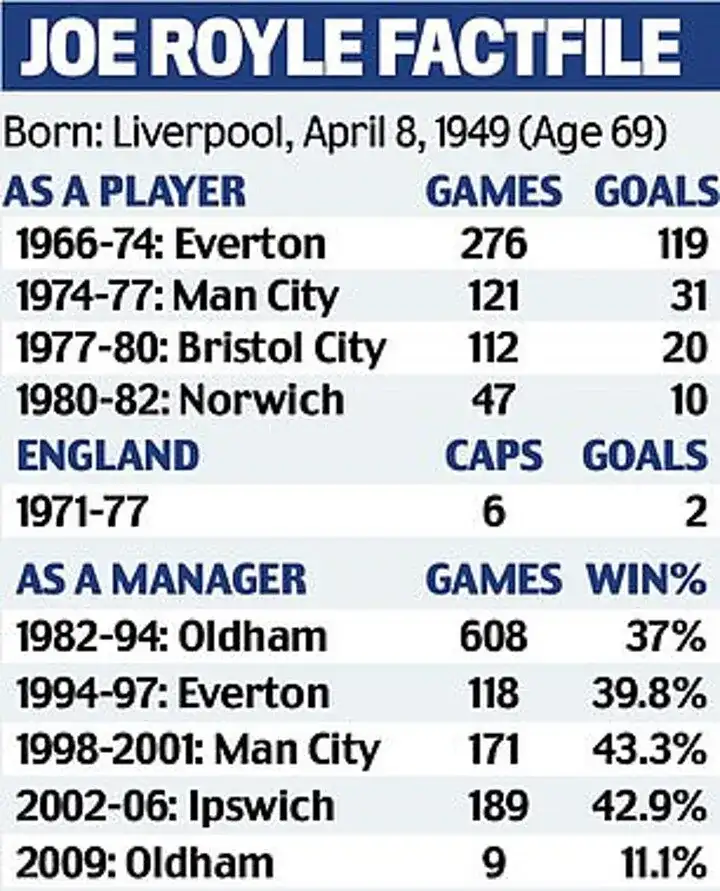
Career Chronology and Club Tenures
The movement of personnel across clubs during the late 20th century defines Royle’s tactical footprint. His path remains a ledger of both success and deep-seated turbulence:

| Role | Club | Significance |
|---|---|---|
| Player | Everton | Record youngest debutant (16); club legend. |
| Player | Manchester City | Key figure in the 1970s. |
| Manager | Oldham Athletic | Sustained period of tactical development. |
| Manager | Everton | Famous 'Dogs of War' revival; FA Cup winner. |
| Manager | Manchester City | Navigated the 'City-itis' era in the third tier. |
The Mechanics of "City-itis" and Survival
Royle is remembered in Manchester for managing during a nadir—a time when the club’s existence felt fragile. His term at Manchester City (1998–2001) is often cited alongside his coining of the phrase 'City-itis', a term capturing the cyclical anxiety of the supporter base during the club’s relegation-plagued late 90s.
Read More: Grand National Betting Tips: Expert Advice for 2026 Race
His managerial philosophy leaned on instinct and localized knowledge of what made a club "tick."
His later reflection on the current era emphasizes a move away from such internal, existential chaos toward the high-resource, stable dominance currently seen at the top of the league.
Contextualizing the Legacy
Royle’s career spans the transformation of football into a global, high-stakes industry. While he achieved individual accolades—such as the FA Cup and recognition in Hall of Fame records—his narrative is anchored by his ability to step into precarious situations.
The Merseyside Connection: As of late 2024, the acknowledgement of his contributions to Everton through the naming of "Joe Royle Lane" cements his status as a permanent fixture of that institution.
Tactical Perspective: Whether as an English Internationalist (6 caps) or a club leader, Royle’s historical value lies in his role as a bridge between the pragmatic, survival-focused football of the 1990s and the modern, capital-heavy structure of today's game.
He remains, fundamentally, an artifact of an age where managers were defined by their ability to foster grit and confidence under immediate, often overwhelming, pressure.