
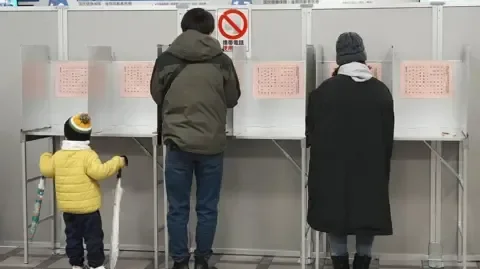
Japan's Prime Minister Sanae Takaichi's Liberal Democratic Party (LDP) is widely projected to secure a strong majority in a snap legislative election. This outcome is seen as a significant validation for Takaichi, the nation's first female prime minister, who called the vote just four months after taking office. The election results would mark a stark departure from the recent performance of her predecessors, who saw the party lose its majority amidst scandals and rising costs. Voters across Japan braved wintry conditions to cast their ballots, signaling a potentially decisive moment for the LDP's direction and Takaichi's ambitious agenda.

Political Landscape and Electoral Gamble
Prime Minister Takaichi, a conservative figure, gambled on a snap election to seek a clear public mandate for her administration. This move comes as the LDP, which has governed Japan for most of its post-war history, faced a more unified opposition than in previous elections. Takaichi had previously stated she would step down if her ruling coalition failed to maintain its majority, a scenario that now appears unlikely.
Read More: Taiwan Holds Nantou County Drills to Prepare for State Collapse
LDP's Dominance: The Liberal Democratic Party (LDP) has historically been the dominant political force in Japan.
Takaichi's Mandate: The snap election was Takaichi's strategy to solidify her position and gain public backing for her policies.
Opposition Dynamics: The opposition appeared more united, presenting a potentially stronger challenge to the LDP.
Weather Conditions: Voters participated in the first mid-winter poll in 36 years, enduring snow to cast their votes.
Projected Outcomes and Seat Projections
Exit polls and media projections overwhelmingly indicate a significant victory for Takaichi's LDP and its coalition partners. According to a Nihon Keizai poll conducted from February 3 to 5, the LDP alone was projected to win 261 seats, a substantial increase from its previous 198 seats. This projection far surpasses the 233 seats needed for a simple majority in the 465-seat Lower House.
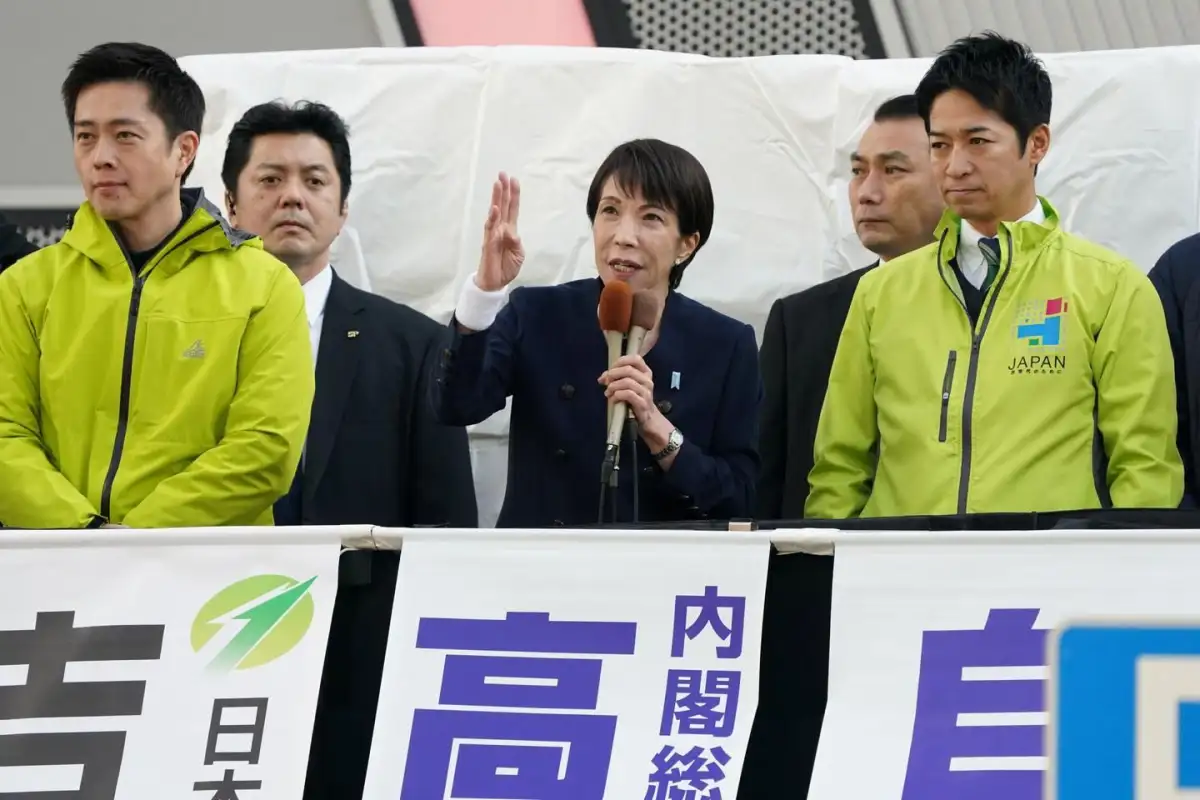
Other projections suggest the LDP and its coalition partner, the Japan Innovation Party (JIP), could secure a combined total exceeding 300 seats, and potentially even a two-thirds majority. NHK reported that the LDP was expected to win between 274 and 328 seats.
| Party/Coalition | Projected Seats (Range) | Previous Seats | Majority Threshold |
|---|---|---|---|
| LDP (alone) | 261 | 198 | 233 |
| LDP + JIP Coalition | >300 | N/A | 233 |
| LDP (NHK projection) | 274-328 | 198 | 233 |
| LDP-led Coalition | Two-thirds majority | N/A | ~310 |
Key Policy Drivers and International Relations
Prime Minister Takaichi's platform focused on several key areas, including economic stability, immigration policy, and bolstering Japan's defense capabilities. Her stance on increasing defense spending aligns with pressure from the United States, particularly from President Donald Trump.
Read More: Junji Ito Live-Action TV Shows Replace Anime on April 7 2026
Economic Concerns: The election takes place amidst persistent economic challenges, including inflation above the Bank of Japan's target for 45 months, declining real wages, and a weak yen, which has amplified imported inflation.
Defense and Security: Takaichi has expressed a desire to increase defense spending. Her remarks regarding a potential Japanese military response to a Chinese attack on Taiwan have heightened tensions with Beijing.
U.S. Relations: Takaichi appears to maintain a positive relationship with U.S. President Donald Trump. He invited her to Washington D.C. and has publicly supported her coalition. Her visit to the USS George Washington with Trump during his visit to Japan garnered significant attention.
Comparison with Predecessors
Takaichi's projected success stands in stark contrast to her immediate predecessors. Under their leadership, the LDP lost its parliamentary majority due to corruption scandals and the burden of rising costs. Takaichi's ability to consolidate support and project personal popularity seems to have reversed this trend. Her focus on economic issues and a more assertive foreign policy, coupled with her personal appeal, may have resonated more effectively with the electorate.
Expert Analysis and Observations
Analysts note that Takaichi's strategy of emphasizing economic recovery and national security appears to have resonated with voters. Her direct appeal and willingness to engage with international leaders, including President Trump, have been observed as key factors in her campaign. The lack of a strong, unified opposition has also historically benefited the LDP, and this election appears to follow that pattern.
Read More: FBI Analysts Review Georgia 2020 Election Data in Fulton County
"Her upbeat image has earned her strong approval ratings. Can Japan's first female PM, ultra conservative Sanae Takaichi, tighten her grip on power?" - Sky News
Conclusion and Implications
The projected landslide victory for Prime Minister Sanae Takaichi and her LDP-led coalition signifies a decisive mandate for her government. This outcome is expected to empower her to pursue her conservative agenda, including increases in defense spending and potential shifts in foreign policy. The election's results would reinforce the LDP's long-standing dominance in Japanese politics and provide Takaichi with a strong foundation to navigate complex domestic and international challenges. The potential for a two-thirds majority could grant her coalition the power to override an Upper House veto, further consolidating their legislative power.
Sources
BBC News: "Japan's governing party projected to win snap election majority" - https://www.bbc.com/news/articles/cx2y7d2z29xo
Le Monde: "Japan's PM Sanae Takaichi set to win big in snap legislative elections" - https://www.lemonde.fr/en/international/article/2026/02/07/japan-s-pm-sanae-takaichi-set-to-win-big-in-snap-legislative-elections67502534.html
NBC News: "Japan's Sanae Takaichi wins a landslide in snap election, exit polls project" - https://www.nbcnews.com/world/japan/japans-sanae-takaichi-wins-landslide-snap-election-exit-polls-project-rcna257887
CNBC: "Japanese Prime Minister Takaichi's ruling LDP seen winning outright majority in snap election: NHK" - https://www.cnbc.com/2026/02/08/japans-ruling-ldp-seen-winning-outright-majority-in-snap-poll-nhk.html
Channel News Asia: "Japan election: PM Sanae Takaichi's ruling coalition projected to win two-thirds majority" - https://www.channelnewsasia.com/east-asia/japan-election-results-sanae-takaichi-ldp-snow-live-5909141
BBC News: "Will Sunday's snap election gamble pay off for Japan's first female premier?" - https://www.bbc.com/news/articles/ckgl53zll3jo
CNBC: "Japan’s Takaichi eyes decisive mandate as polls point to snap election landslide" - https://www.cnbc.com/2026/02/06/japan-election-takaichi-ldp-landslide-polls-ldp-trump-innovation-party-nikkei.html
CNBC: "Japanese Prime Minister Sanae Takaichi hopes for big win as polls open in national elections" - https://www.cnbc.com/2026/02/07/sanae-takaichi-japan-snap-election.html
Sky News: "Can Japan's first female PM, ultra conservative Sanae Takaichi, tighten her grip on power?" - https://news.sky.com/story/can-japans-first-female-pm-ultra-conservative-sanae-takaichi-tighten-her-grip-on-power-13504192
DW: "Japan PM Sanae Takaichi set for big win as Japan holds snap election" - https://www.dw.com/en/japan-pm-sanae-takaichi-set-for-big-win-as-japan-holds-snap-election/a-75858163
Hindustan Times: "Japan election live updates: Japan PM Sanae Takaichi's party projected for big win in general election" - https://www.hindustantimes.com/world-news/japan-election-2026-live-updates-pm-sanae-takaichi-ldp-ishin-snap-polls-result-latest-news-101770519476654.html