
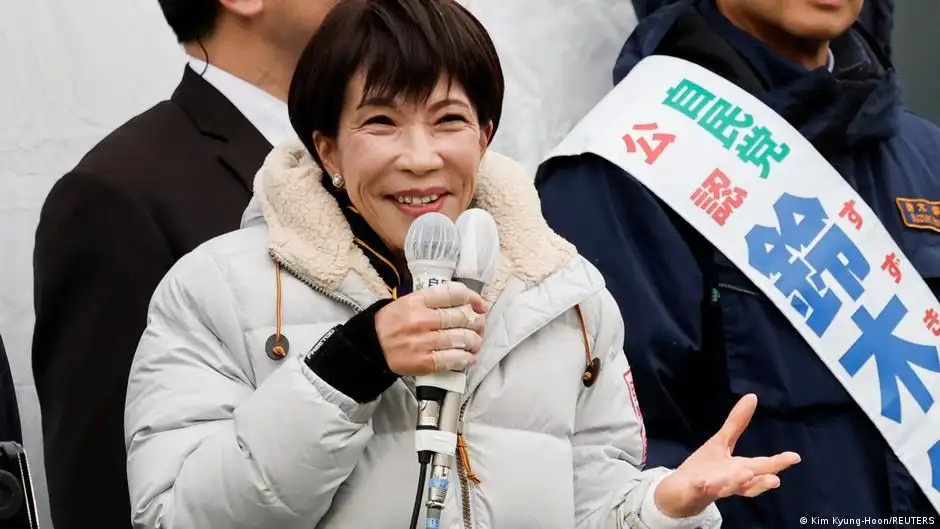
Prime Minister Sanae Takaichi's Liberal Democratic Party (LDP) appears poised to secure a majority in Japan's snap general election, according to initial projections. This outcome marks a notable shift from the performance of her immediate predecessors, under whom the party faced significant challenges related to corruption and rising living costs. The election, held amidst challenging winter conditions, will provide Takaichi with a public mandate as she leads the LDP just four months after assuming its leadership. The results contrast with earlier predictions of a more unified opposition challenging the LDP's long-standing dominance.
Background and Election Context
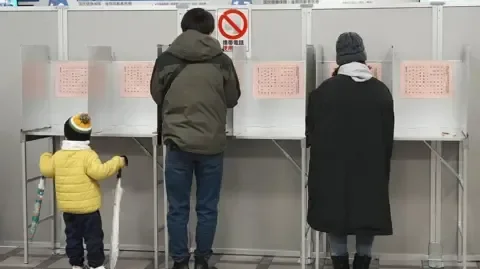
The snap election was called by Prime Minister Sanae Takaichi, the LDP's leader, with the stated aim of obtaining a clear public endorsement of her government's direction. This move comes shortly after her ascent to party leadership four months prior. The election process unfolded during Japan's first mid-winter poll in 36 years, with voters braving snow to cast their ballots. Takaichi had publicly stated her intention to resign if the LDP failed to achieve a majority, framing the election as a significant gamble.
Read More: Taiwan Holds Nantou County Drills to Prepare for State Collapse

Key Actors and Parties
Liberal Democratic Party (LDP): The governing party, led by Prime Minister Sanae Takaichi. Projected to win a majority.
Centrist Reform Alliance (CRA): A coalition of opposition parties, formerly including the Constitutional Democratic Party of Japan (CDP) and Komeito. Expected to experience significant losses.
Japan Innovation Party: Another party involved in the election, with projections indicating a moderate seat gain.
Japan Communist Party: A smaller political force with limited seat projections.
Reiwa Shinsengumi, Yuukoku Union, Sanseito, Conservative Party, Social Democratic Party, Team Mirai: Other parties participating in the election, with minimal or no seat projections.
Economic and Political Landscape
Japan has been navigating a complex economic environment, including inflation exceeding the Bank of Japan's target for an extended period (45 consecutive months), a decline in real wages, and a weakening yen. These factors have likely influenced voter sentiment leading up to the election. The LDP's performance in this election stands in contrast to the struggles of Takaichi's two predecessors, who saw the party lose its parliamentary majority amid corruption scandals and economic pressures.
Election Projections and Results
Exit polls indicate a strong performance by the LDP. Exit polls conducted by NHK projected the LDP securing between 274 and 328 seats in the Lower House. These figures would grant the LDP a single-party majority, surpassing the 233 seats threshold required for such a majority. The LDP's coalition, which includes the Japan Innovation Party, was projected to win as many as 366 seats according to NHK.
Read More: Junji Ito Live-Action TV Shows Replace Anime on April 7 2026
Opposition Performance
The main opposition, the Centrist Reform Alliance (CRA), was anticipated to suffer considerable losses. Before the election, the CRA comprised parties that held a substantial number of seats (the CDP alone held 148, and Komeito 24). Projections suggested the CRA would win between 37 and 91 seats. This represents a significant reduction from their pre-election standing.
Voter Turnout
The national average voter turnout as of 6 p.m. was recorded at 26.01%. This figure is noted as being 2.97 points lower than the turnout for the previous lower house election held in 2024.

International Reactions
Leaders from other nations have begun to offer congratulations. Following the projections, leaders from Taiwan and Italy extended their felicitations to Prime Minister Takaichi. The U.S. Ambassador to Japan also posted a message of congratulation on X.
Analysis of Factors
Public Mandate and Party Leadership
Prime Minister Takaichi's decision to call a snap election just four months into her leadership of the LDP was a strategic move intended to solidify her position and gain a direct public endorsement. Her willingness to step down if a majority was not achieved underscored the high stakes of the election. The projected success suggests that her leadership and the LDP's platform resonated with a significant portion of the electorate, despite the challenges faced by her predecessors.
Read More: FBI Analysts Review Georgia 2020 Election Data in Fulton County
Economic Conditions and Voter Concerns
The persistent economic issues in Japan—inflation above target, declining real wages, and yen weakness—likely played a role in shaping voter priorities. The LDP's ability to secure a majority despite these headwinds suggests that either voters found the party's proposed solutions compelling, or that other factors, such as the perceived weaknesses of the opposition, were more influential.
Opposition Fragmentation and Unity
The pre-election landscape indicated a more unified opposition than in previous contests, with the formation of the Centrist Reform Alliance. However, the projected seat losses for the CRA suggest that this unity was not sufficient to unseat the LDP. The extent to which the merger of former major opposition parties translated into effective electoral performance remains a key question.
Contrast with Predecessors
The projected LDP victory, led by Takaichi, offers a stark contrast to the electoral fortunes of her immediate predecessors. Their terms were marked by significant scandals and economic difficulties that eroded public trust and led to the party losing its majority. Takaichi's projected success indicates a potential restoration of confidence in the LDP's governance, or at least a preference for the incumbent party over the alternatives.
Read More: Scopely invests in Japan Studio AuKnow to grow mobile game business
Conclusion and Implications
The preliminary results of Japan's snap general election point towards a clear victory for Prime Minister Sanae Takaichi's Liberal Democratic Party, with projections indicating a secure majority in the Lower House. This outcome would provide Takaichi with a strong mandate to pursue her policy agenda, contrasting sharply with the recent challenges faced by her predecessors. The anticipated decline in seats for the main opposition, the Centrist Reform Alliance, suggests that the LDP has successfully navigated a complex economic environment and overcome previous political difficulties. The election results will shape Japan's political direction and its approach to ongoing economic and international issues.
Sources
BBC News: "Japan's governing party projected to win snap election majority" - Published: 14 hours ago. Link: https://www.bbc.com/news/articles/cx2y7d2z29xo
Nikkei Asia: "Japan election live: LDP set for majority, Nikkei exit poll shows" - Published: 5 hours ago. Link: https://asia.nikkei.com/politics/japan-election/japan-election-live-ldp-set-for-majority-nikkei-exit-poll-shows
CNBC: "Japanese Prime Minister Takaichi's ruling LDP seen winning outright majority in snap election: NHK" - Published: 2 hours ago. Link: https://www.cnbc.com/2026/02/08/japans-ruling-ldp-seen-winning-outright-majority-in-snap-poll-nhk.html?msockid=26e6859f01f864f60b2b936500bf6520
DW News: "Japan election: Sanae Takaichi's LDP set for majority" - Status: Low Priority. Link: https://www.dw.com/en/japan-pm-sanae-takaichi-set-for-big-win-as-japan-holds-snap-election/a-75858163
The Economic Times: "Japan's Prime Minister Sanae Takaichi wins big in election, media projections show" - Published: 3 hours ago. Link: https://economictimes.indiatimes.com/news/international/world-news/japans-prime-minister-sanae-takaichi-wins-big-in-election-media-projections-show/articleshow/128069282.cms