The political landscape of Bangladesh has shifted following a general election, with the Jamaat-e-Islami party, under the leadership of Ameer Shafiqur Rahman, declaring its intention to serve as a vigilant opposition. However, reports of disputed outcomes and calls for continued public scrutiny suggest a complex aftermath to the voting process.
Ameer Shafiqur Rahman, a key figure in Bangladesh's political sphere, has publicly acknowledged the election results, signaling a commitment to a principled and peaceful opposition role. Despite an outcome that saw his party, Jamaat-e-Islami, secure significantly more seats than in previous elections, Rahman emphasized that the journey is not over and that their efforts are foundational for future democratic engagement. This stance comes amidst broader concerns about the transparency and fairness of the electoral process, with some parties refusing to accept the results and urging continued public vigilance.
Read More: Taiwan Holds Nantou County Drills to Prepare for State Collapse
Election Context and Outcomes
The recent national election in Bangladesh has brought the Jamaat-e-Islami party, led by Ameer Shafiqur Rahman, into a more prominent parliamentary position. Rahman himself cast a vote, expressing confidence in his party's prospects. The election was notable as it was the first national vote in decades without the direct participation of the two dominant political figures, Hasina and Zia.
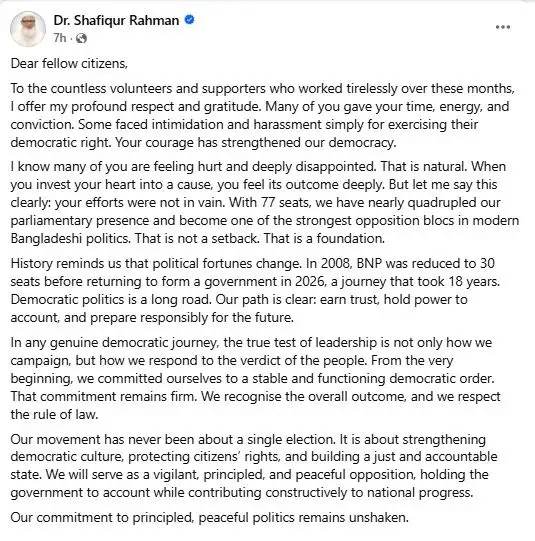
Parliamentary Representation: Jamaat-e-Islami, through its electoral alliance, has reportedly "nearly quadrupled" its presence in Parliament, securing 77 seats. This increase is viewed by Rahman not as a setback but as a significant "foundation."
Opposition Stance: Following the announcement of preliminary results, Ameer Shafiqur Rahman has pledged that his party will serve as a "vigilant, principled, and peaceful opposition," committed to holding the government accountable and contributing to national progress.
Electoral Integrity Concerns: While Jamaat-e-Islami, alongside the BNP, has expressed its acceptance of certain outcomes, another report indicates that Jamaat-e-Islami would "refuse to accept" results, citing perceived manipulation and emerging disputes.
Voter Engagement: A strong emphasis has been placed on post-voting vigilance, with calls for voters to remain alert to ensure the integrity of the election results and to counter potential misinformation or intimidation.
Jamaat-e-Islami's Evolving Role
Ameer Shafiqur Rahman's public statements outline a strategic approach to the party's new parliamentary standing. He frames the increased seat count as a significant step, emphasizing a commitment to democratic principles and constructive engagement.

From Defeat to Foundation: Rahman described the electoral outcome as "not a setback" but a "foundation," drawing a parallel to past political shifts where parties, like the BNP in 2008, experienced significant losses before regaining power. This suggests a long-term perspective on political influence.
Principled Opposition: The commitment to being a "vigilant, principled, and peaceful opposition" indicates a strategy focused on oversight and constructive participation, rather than immediate confrontation.
Merit-Based Politics: Rahman has articulated a vision for politics based on "merit, competence and proven patriotism," contrasting this with "party-based or family-centric government." This aligns with his stated aim for "development for all" citizens.
Public Scrutiny and Allegations
Beyond official pronouncements, there are indications of public and party-level concerns regarding the fairness of the election. These concerns highlight the need for continued observation of the electoral process.
Voter Responsibility: Jamaat-e-Islami has urged voters not to consider their duty complete after casting a ballot, but to remain "vigilant" to ensure results are secured and properly tallied.
Fear of Intimidation: Warnings have been issued about potential tactics by those "fearful of defeat," including the spread of "false allegations," "intimidation," and "panic."
Refusal to Accept Results: Reports suggest that Jamaat-e-Islami, or factions within it, may not accept the election outcome, citing a "manipulated outcome" and disputes over counting, even as other reports suggest acceptance of the BNP's victory.
Expert Analysis and Context
The current situation in Bangladesh follows a period of political flux, marked by significant shifts in electoral dynamics. The increased representation of Jamaat-e-Islami is a notable development within this context.
Read More: Measles Deaths Rise to 495 Amidst Many New Cases

"Politics in Bangladesh is not static, and political fortunes change. In 2008, BNP was reduced to 30 seats before returning to form government in 2026, a journey that took 18 years." – Ameer Shafiqur Rahman
This statement from Rahman underscores the unpredictable nature of Bangladeshi politics and sets a precedent for long-term strategic engagement. It frames the current gains not as an endpoint but as a phase in a longer political trajectory.
"We will serve as a vigilant, principled, and peaceful opposition, holding the government to account while contributing constructively to national progress." – Ameer Shafiqur Rahman
This declaration articulates the intended posture of Jamaat-e-Islami within the new parliamentary composition. It signals a focus on accountability and development, aiming to build credibility through a responsible opposition role.
Conclusion and Implications
The election results in Bangladesh have positioned Jamaat-e-Islami for a more significant role in parliamentary opposition, as stated by Ameer Shafiqur Rahman. His calls for vigilance and constructive engagement, coupled with his emphasis on the party's increased representation as a foundational step, suggest a long-term strategy. However, conflicting reports regarding the acceptance of results and ongoing concerns about electoral integrity indicate that the situation remains under scrutiny.
Read More: FBI Analysts Review Georgia 2020 Election Data in Fulton County
The future implications hinge on several factors:
The degree to which opposition parties will collectively monitor and challenge government actions.
The official resolution of any reported vote counting disputes.
The ability of Jamaat-e-Islami to maintain its stated commitment to principled and peaceful opposition.
Sources Used
The Hindu: Published on February 14, 2026, this article details Ameer Shafiqur Rahman's perspective on the election outcome, his party's increased parliamentary presence, and their commitment to serving as a vigilant opposition. https://www.thehindu.com/news/international/quadrupled-seats-in-parliament-will-be-vigilant-opposition-ameer-shafiqur-rahman/article70631266.ece
The Business Standard (TBS News): Published four days prior to the main report, this article highlights Jamaat-e-Islami Ameer Shafiqur Rahman's call to voters to remain vigilant even after casting their ballots, cautioning against potential intimidation and misinformation. https://www.tbsnews.net/bangladesh-election-2026/your-duty-doesnt-end-after-voting-jamaat-ameer-urges-voters-stay-vigilant
Dhaka Tribune: This article is part of a live minute-by-minute coverage of the national election, noting Jamaat-e-Islami Ameer Dr. Shafiqur Rahman casting his vote and expressing confidence. https://www.dhakatribune.com/lives/403112/bangladesh-election-2026-live-news
BD24Live: Published three hours prior to the main report, this article states Jamaat-e-Islami Ameer Shafiqur Rahman's acceptance of the BNP's victory and his pledge for the party to act as a responsible opposition. https://www.bd24live.com/jamaat-ameer-accepts-bnps-victory-pledges-responsible-opposition-role/
The South Asia Times (via AOL): This report, seen on AOL, indicates that the BNP declared victory while Jamaat-e-Islami refused to accept the results due to emerging counting disputes, noting the absence of Hasina and Zia from the ballot. https://www.thesouthasiatimes.com/story/Dhaka-Bandladesh-feb13
The Daily Star: Published on February 5, 2026, this article features Shafiqur Rahman discussing his party's vision, emphasizing merit-based politics and development for all citizens, contrasting it with "family-based politics." https://www.thedailystar.net/news/national-election-2026/news/family-based-politics-wont-continue-if-jamaat-voted-power-shafiqur-rahman-4099041