
A state-contracted flight intended to haul Irish citizens out of the Middle East remains grounded. The aircraft, scheduled to depart from Muscat, Oman, is now stalled until Saturday afternoon. Minister Helen McEntee blamed "operational" snags and a "challenging" environment for the setback. While the State attempts this single flight, it has urged the thousands remaining in the region to find their own paths home via commercial airlines.

"The flight is mainly about getting the aircraft in position for another flight back… citizens who travelled between the UAE and Oman [are] to be provided with hotel accommodation overnight." — Official Consular Update
The Numbers and the Cost
The State is prioritizing roughly 300 individuals deemed "vulnerable"—a group including children, the sick, and those in late-stage pregnancy. Unlike typical state emergency responses, passengers are reportedly being charged €800 per seat for the transport.

| Metric | Detail |
|---|---|
| Current Delay | Departure shifted from Friday to Saturday afternoon |
| Capacity | ~180 to 300 seats |
| Total Registered | 24,000 Irish citizens in the region |
| Regional Spread | 14,000 (Dubai), 2,000 (Abu Dhabi), 2,000 (Qatar), 2,000 (Saudi) |
| Regional Context | 14,000+ total flight cancellations since conflict began |
Fragmented Routes Home
While the Government flight sits on the tarmac, private industry continues to move. Emirates managed to land three flights in Dublin from Dubai this week, including one on Friday night. The State’s role appears supplementary to commercial traffic, as officials tell citizens in Qatar and Kuwait to call travel agents rather than wait for state planes.
Read More: Tourist Banned from Thailand 28 April 2026 for Filming at Phuket Airport
Stranded travelers moved into hotels in Oman after the Friday departure failed.
Daa (Dublin Airport Authority) expects minimal traffic on the outbound leg to Dubai.
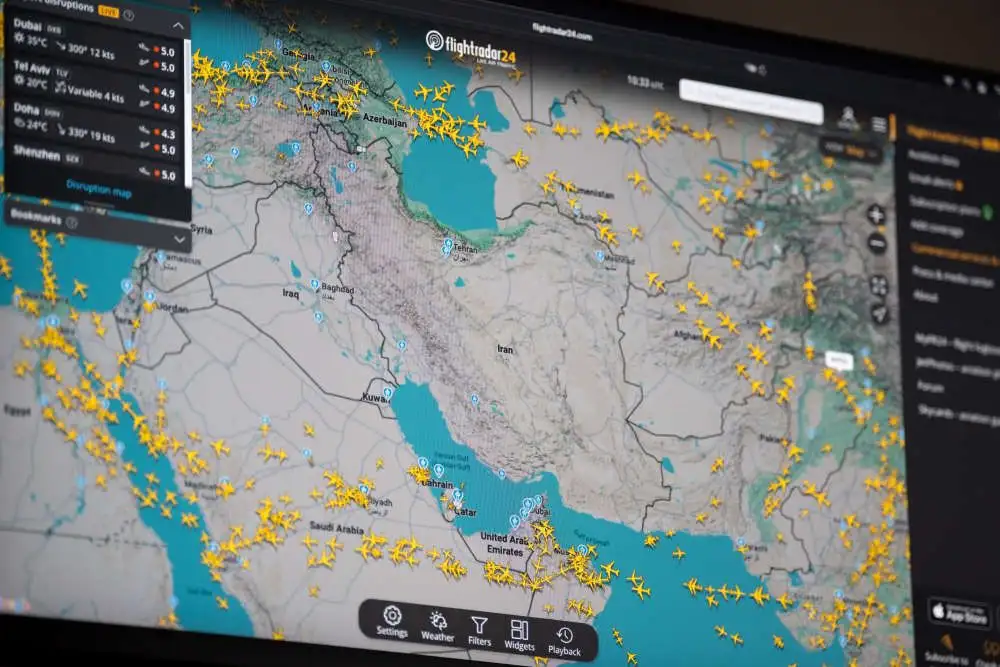
Airspace restrictions remain erratic across the Gulf, with Emirates operating a "reduced schedule."
Conflict Backdrop
The delay happens as regional skies tighten. Reports indicate the US military has struck nearly 2,000 targets in Iran, aimed at dismantling air defenses. This escalation follows joint strikes with Israel over the weekend.

Airspace closures in Kuwait, Bahrain, and the UAE have turned the region into a logistical bottleneck.
Irish Embassies in Abu Dhabi and Muscat are telling citizens to stay put or "shelter in place" unless a flight is explicitly confirmed.
The government’s advice has shifted toward non-essential travel warnings for almost the entire Gulf region.
Reflecting on the sheer volume of 24,000 citizens against a single 300-seat charter reveals a math of necessity that the State cannot—or will not—solve through official channels alone. The reliance on commercial entities like Emirates suggests the "charter" is more of a symbolic safety valve than a total solution.