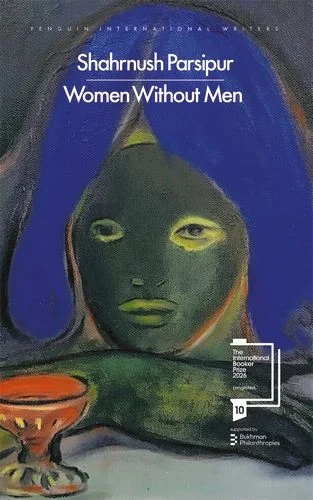
For over three decades, a work of fiction has persisted in Iran, defying official attempts to suppress its narrative. "Women Without Men," by Shahrnush Parsipur, chronicles the journeys of five women who escape abusive marriages, suffocating societal norms, and a climate of political unrest.

The novella, first published in 1989, employs mysticism and magical realism to depict women's transformations as acts of political resistance. It offers a vision of female agency that predates similar global movements by decades, highlighting the enduring impact of patriarchal structures on contemporary Iranian society. The book's ability to circulate secretly, passed from hand to hand, underscores its perceived importance.

Parsipur's work delves into the personal indignities imposed by patriarchy, particularly on women's bodies. The characters' metamorphoses represent a reclaiming of autonomy and dignity in the face of a system that seeks to diminish them. One character, Munis, actively confronts a brother who prioritizes her subjugation over her freedom.
Read More: Why Henry David Thoreau quotes on experience matter on May 6 2026

The author herself has faced scrutiny and imprisonment under both the Shah and the Ayatollahs. Parsipur has stated that "all [her] books are banned in Iran, except ones that they change themselves." This suggests a strategy by the regime to control or alter her output, while paradoxically acknowledging the physical existence of her published works.

"Women Without Men" has been recognized internationally, appearing in series like Penguin International Writers and Penguin Classics. It is noted for its 128 pages and dimensions suitable for portable circulation. The book draws upon recent Iranian history and incorporates elements of Islamic mysticism, weaving them into a narrative that continues to resonate. Its ability to remain relevant and insightful underscores the persistent challenges it addresses. The novel's enduring presence challenges notions of censorship and control in the literary sphere.
Read More: Iran Zagros Mountain Nuclear Site Construction Update April 2026