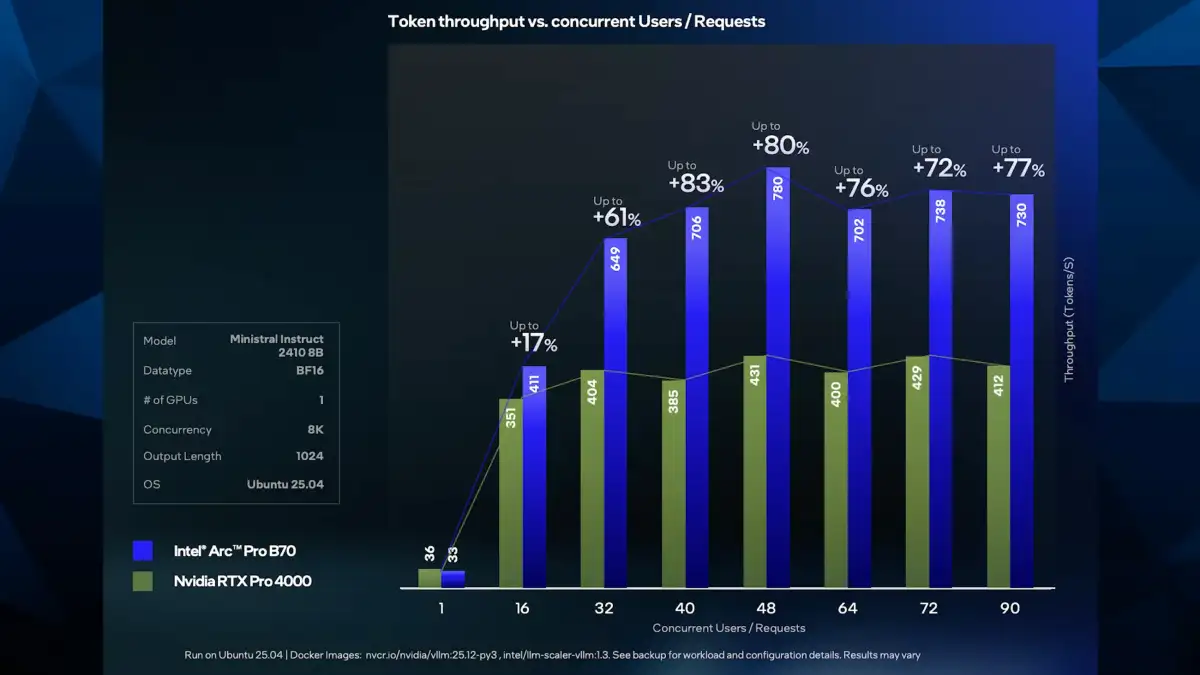
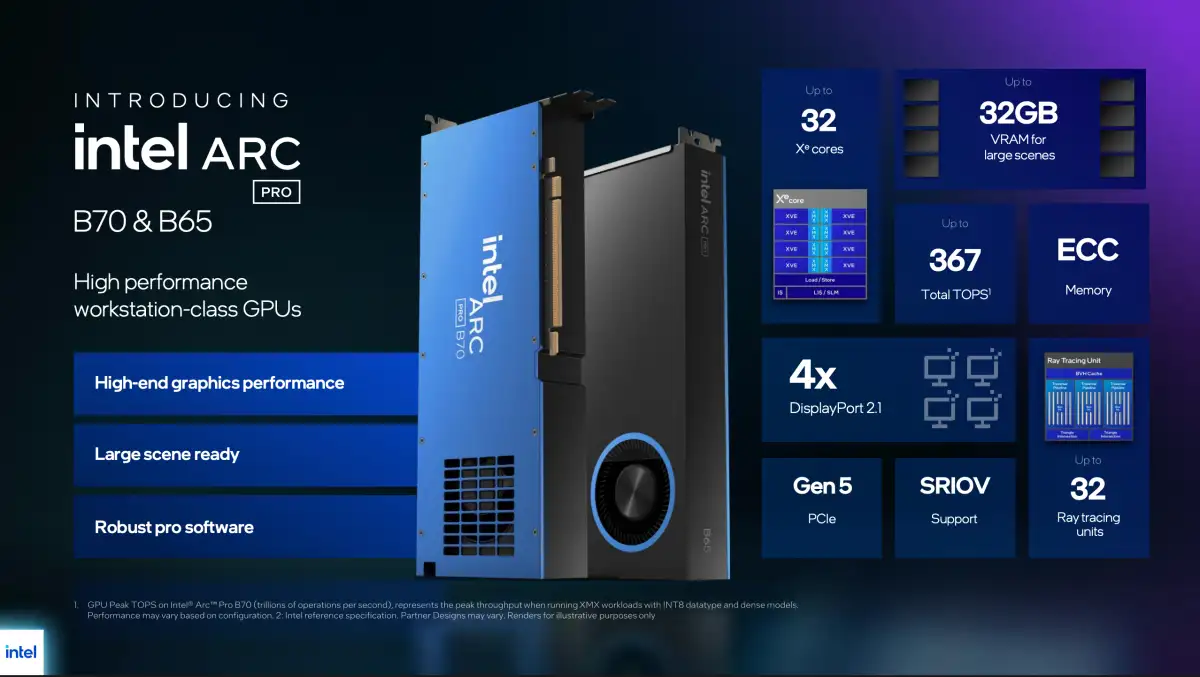
Intel has introduced its "Big Battlemage" graphics processing units, the Arc Pro B70 and Arc Pro B65. These cards, equipped with 32GB of ECC GDDR6 RAM, are positioned for professional applications, particularly AI inference, rather than the gaming market. The Arc Pro B70 features 32 Xe2 cores and a power draw ranging from 160W to 290W, while the B65 comes with 20 Xe2 cores and a 200W power rating. This release marks a departure from earlier expectations of a high-end gaming variant.
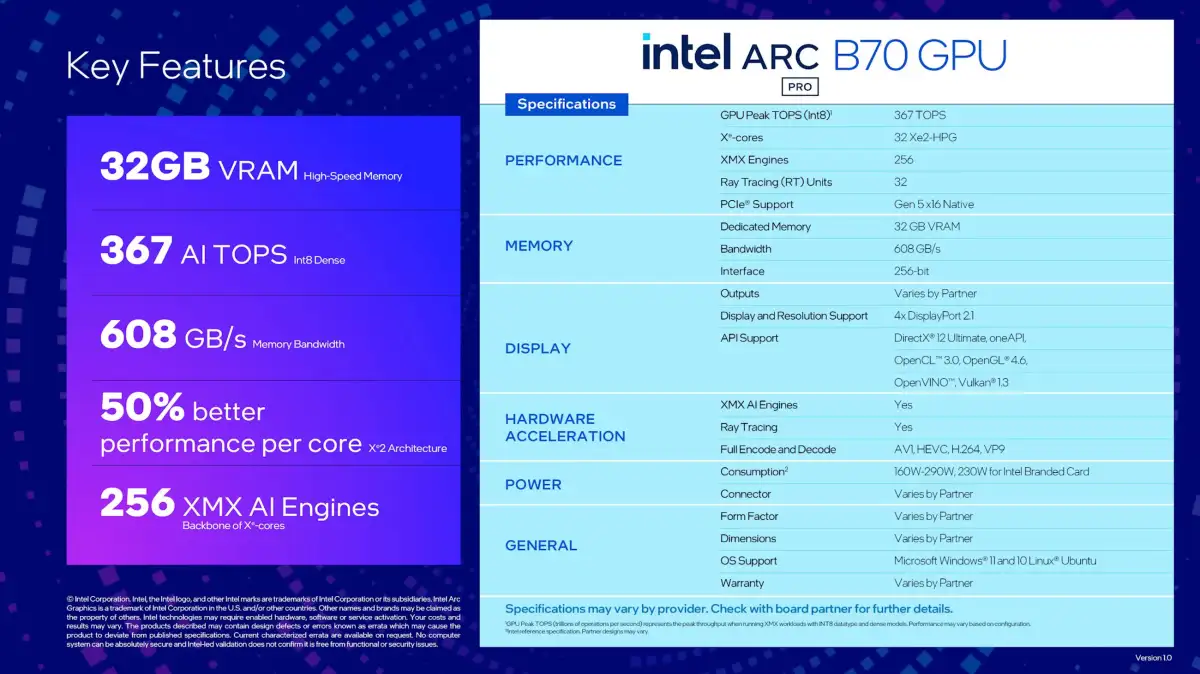
The explicit targeting of AI and professional workloads, coupled with the omission of a gaming-focused high-end model, suggests a strategic recalibration by Intel in the competitive GPU landscape.
Further complicating the narrative around Intel's Battlemage architecture is the reported cancellation of a rumored high-end gaming GPU, designated BMG-G31. This supposed gaming variant, which had previously appeared in unofficial Intel documentation, is now believed to be dead. Reports suggest the BMG-G31 would have featured 32 Xe cores, surpassing the specifications of other models like the B580.
Read More: Palantir CEO: LLM companies care more about money than users
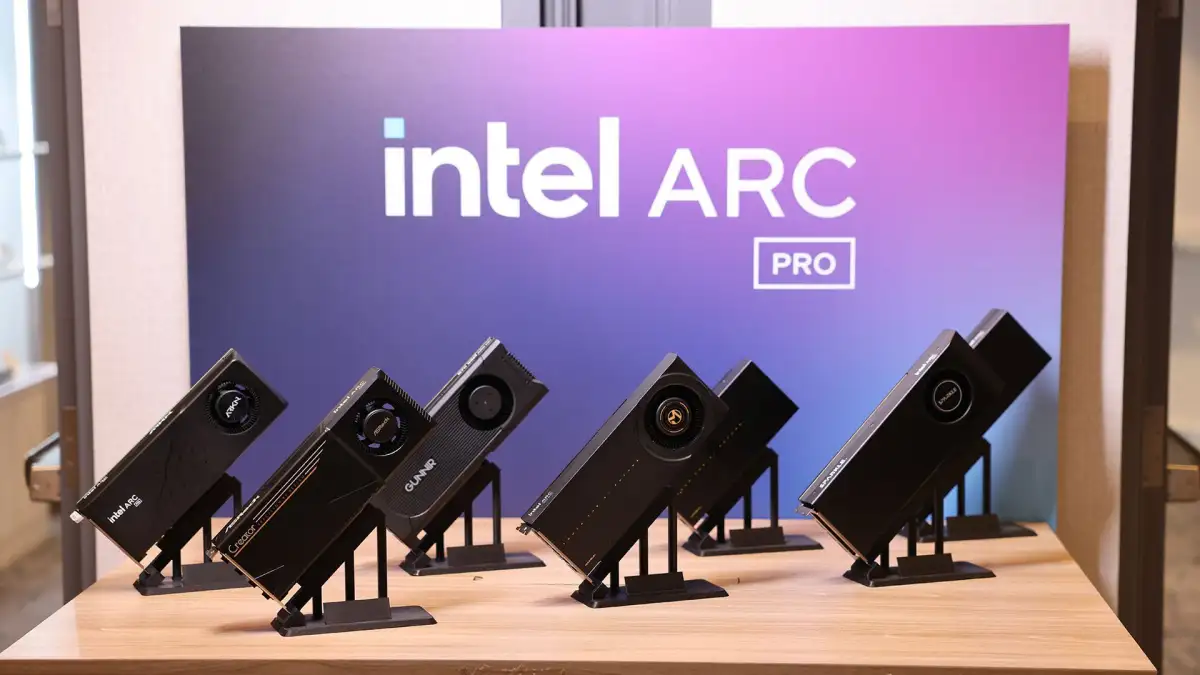
The launch of the Arc Pro B70 and B65 follows a series of speculative announcements and teasers regarding Intel's Battlemage lineup. Initial indications pointed towards a December 2024 reveal, with some anticipating the debut of gaming-oriented cards. However, the current focus on professional hardware shifts the perception of this architectural generation. A potential gaming-focused Arc B770, based on the G31 chip with 32 Xe2 cores, has been hinted at for a later release, possibly in 2026, alongside a Pro variant.
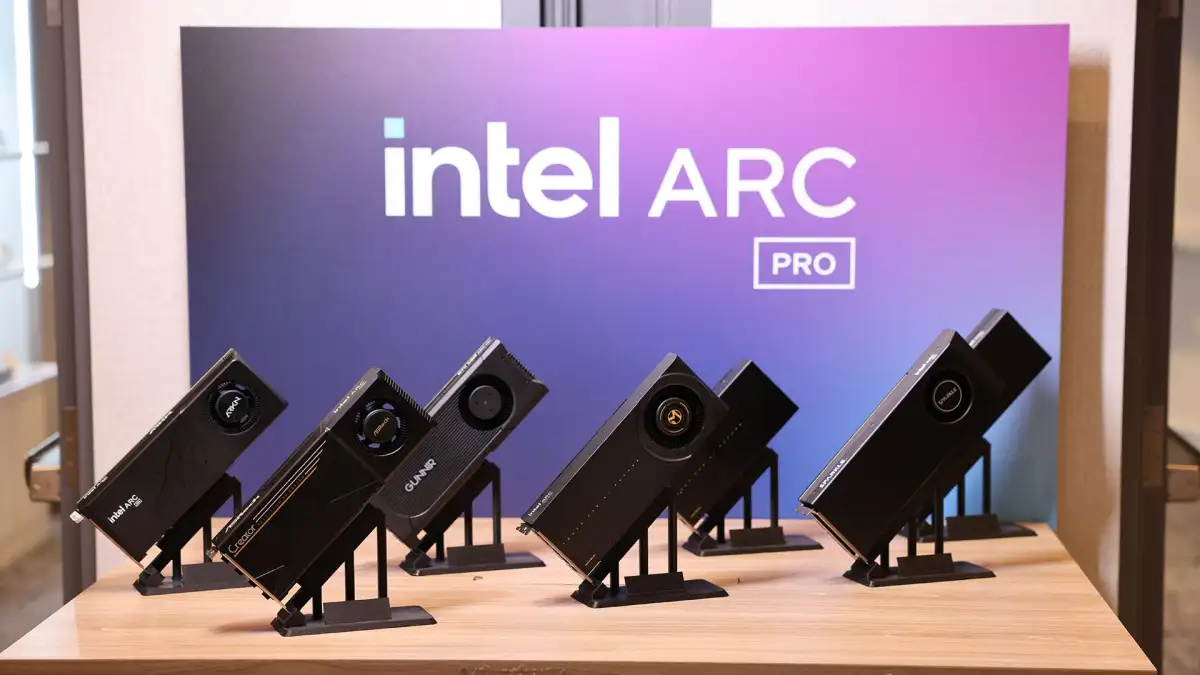
Intel's positioning of these new cards squarely within the professional and AI sectors implies a deliberate strategy to carve out a niche, potentially avoiding direct confrontation with established gaming GPU manufacturers in the immediate term. The sustained rumors and eventual arrival of the "Big Battlemage" as a professional-grade product highlight the fluid and often opaque nature of hardware development and market positioning.