

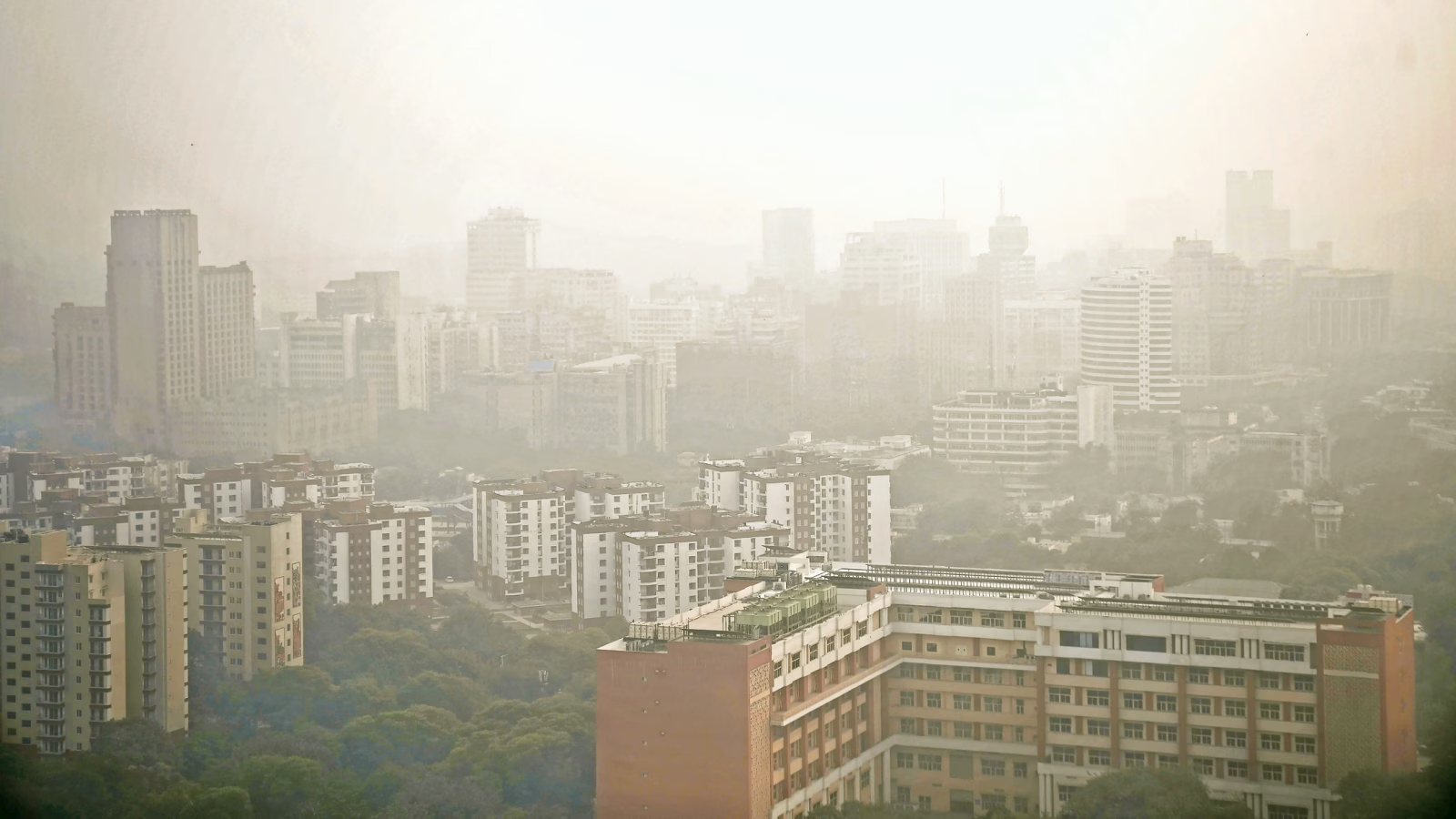
Widespread Pollution Across 238 Cities
A recent analysis by the Centre for Research on Energy and Clean Air (CREA) has found that a staggering 204 out of 238 Indian cities failed to meet national air quality standards. The report highlights that none of the analysed cities achieved the World Health Organization’s (WHO) stringent PM2.5 standard of 5 µg/m³. This pervasive issue underscores significant challenges in air quality management across the country, with substantial deviations from both national and international benchmarks.
Regional Hotspots and Stark Contrasts
The Indo-Gangetic Plain emerged as a particularly concerning region, with 75 out of 79 monitored cities exceeding the national PM2.5 standard. Even cities included in the National Clean Air Programme (NCAP), designated for focused improvement, showed little respite. Out of 96 such cities with adequate data, 84 recorded PM2.5 levels above India’s national limit, and all 96 surpassed the WHO guideline.
Read More: Madagascar Lemur Food Habits Threaten Forest Survival by 2025
Conversely, the report identified pockets of cleaner air. Chamarajanagar in Karnataka was noted as the cleanest city, with an average PM2.5 concentration of 19 µg/m³. Overall, eight of the ten cleanest cities were situated in Karnataka, with others in Madhya Pradesh and Meghalaya, pointing towards localized environmental conditions or perhaps more effective local measures.
Key Polluters and Megacity Woes
Cities in the National Capital Region (NCR) also showed significant non-compliance. Ghaziabad, Noida, and Delhi registered the highest PM2.5 concentrations, with figures reaching 172 µg/m³, 166 µg/m³, and 163 µg/m³ respectively. Other highly polluted areas in the vicinity included Greater Noida, Bahadurgarh, Dharuhera, Gurugram, Bhiwadi, Charkhi Dadri, and Baghpat.
Among India's major metropolises, Delhi exhibited the most severe air pollution, with all monitoring stations exceeding the annual PM2.5 standard by at least 1.8 times the permissible limit. Kolkata recorded an average PM2.5 concentration of 78 µg/m³, followed by Mumbai (48 µg/m³), Chennai (44 µg/m³), and Bengaluru (39 µg/m³), which was noted as being slightly below the national limit.
Read More: India Foreign Exchange Reserves Reach $728.5 Billion on February 27
Background: The Scope of the Problem
The CREA analysis considered PM2.5 (particulate matter ≤2.5 micrometers), which are extremely fine particles that can penetrate deep into the lungs and bloodstream, leading to a range of respiratory and other health issues. The National Ambient Air Quality Standards (NAAQS) set permissible pollutant levels within India, while the WHO provides global health-based guidelines. The disparity between these standards and the observed pollution levels underscores the scale of the air quality crisis. This latest assessment follows previous reports indicating persistent air quality degradation, particularly during winter months.