Introduction: Shifting Sands in the Diaspora
A recent survey reveals that a significant majority of Indian Americans hold an unfavorable view of Donald Trump's job performance during his first year as president. However, this widespread disapproval does not automatically translate into stronger support for the Democratic Party. The data suggests a complex political landscape within the Indian American community, marked by divisions across party lines and differing views on key policy areas.
Background: A Community at a Crossroads
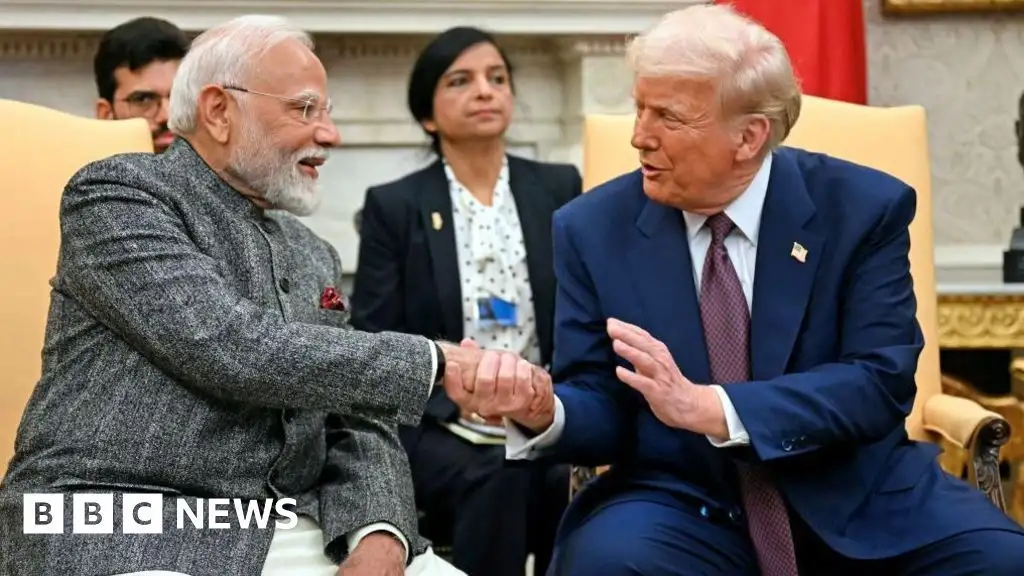
In the initial year of Donald Trump's presidency, a substantial portion of Indian Americans expressed dissatisfaction with his policies. This sentiment was particularly pronounced among Democrats within the community, who opposed most of the administration's initiatives. Conversely, Indian American Republicans generally offered more support, although their approval still showed nuances, especially regarding specific immigration policies.
The survey also highlighted demographic and religious differences. Hindus tended to lean more towards the Democratic Party, while Christians were more inclined to support Republicans. This indicates that political alignment is not uniform across the diverse Indian American population.
Read More: Taiwan Holds Nantou County Drills to Prepare for State Collapse
Evidence of Disapproval and Divided Loyalties
Broad Disapproval of Trump: Surveys consistently show a majority of Indian Americans disapproving of Donald Trump's performance. One report states that "large majorities of Indian Americans disapprove of Trump’s handling of all three issues" covered in their survey. Another adds, "One year into his second term, Indian Americans broadly disapprove of Donald Trump’s performance as president."
Immigration Policy Scrutiny: The Trump administration's immigration policies have been a focal point of concern. The survey examined specific measures, including:
Arresting undocumented immigrants without criminal records.
Conducting workplace raids.
Deporting immigrants to third countries.
Ending birthright citizenship.
Imposing a $100,000 H-1B visa fee for new petitions.A "sizeable majority of Democrats oppose all five categories of policies," while Republicans showed "lower support for each of these than for immigration policy as a whole, though a majority of Indian American Republicans, more often than not, still supported these individual policies."
Concerns Over US-India Relations: Indian Americans expressed greater optimism about India's future but harbored significant worries regarding US-India relations under a potential second Donald Trump administration. They rated the Biden administration's handling of these ties more favorably than Trump's first term.
Lack of Hope and Satisfaction: Data indicates a general sense of low morale within the community. "Fewer than one in ten report feeling hopeful (7 percent), happy (6 percent), or satisfied (5 percent)." Furthermore, "one in five (26 percent) report feeling hopeless."
Democratic Party's Stagnant Gains
Despite widespread disapproval of Trump, the Democratic Party has not seen a commensurate increase in support among Indian Americans.
Declining Support Among Non-Graduates: Support for the Democratic Party "declined significantly among those without a college degree and remained stable for those with a college degree." This suggests that educational attainment may play a role in political leanings within the community.
Perception of Party Focus: Some Indian Americans appear to be reacting against what they perceive as the Democratic Party's emphasis on "progressive social agendas over practical concerns like economic stability, national security, and family values." There is a sense that the party might be "prioritizing symbolic inclusivity over pressing issues like economic growth, national security, and social cohesion."
Diaspora Division: A significant portion of Indian Americans, "forty-five percent of respondents," believe that electing more officials with certain political leanings would divide the diaspora.
Contrasting Views on Policy Areas
The survey data illustrates differing perspectives on specific policy areas within the Indian American community, particularly when comparing Democrats and Republicans.
| Policy Area | Democratic View | Republican View |
|---|---|---|
| Arresting undocumented immigrants (no criminal record) | Majority oppose | Generally support (though less than overall immigration policy) |
| Workplace raids for undocumented immigrants | Majority oppose | Generally support (though less than overall immigration policy) |
| Deporting immigrants to third countries | Majority oppose | Generally support (though less than overall immigration policy) |
| Ending birthright citizenship | Majority oppose | Generally support (though less than overall immigration policy) |
| $100,000 H-1B visa fee for new petitions | Majority oppose | Generally support (though less than overall immigration policy) |
| Overall Immigration Policy | Opposition across most categories | Higher support than specific measures, with a majority of Indian American Republicans supporting them. |
| US-India Relations | Favorable view of Biden administration | Concerns over Trump administration's approach. |
Expert Analysis: A Nuanced Political Identity
Political analysts observe that the Indian American electorate is not monolithic. "Indian-Americans, like all Americans, demand leaders who will address their real, everyday concerns," suggesting a pragmatic approach to political choices. The community's engagement with political issues appears to be evolving, influenced by both domestic American politics and the relationship between the US and India. The observation that "the Indian-American vote should have been a slam dunk" for Democrats, particularly given figures like Kamala Harris, indicates a disconnect between party expectations and voter realities. This suggests that the community's political decisions are driven by a blend of policy concerns, national identity, and perceived party priorities.
Read More: US Voters May Support Gay Candidates Who Act Straight
Conclusion: Unresolved Tensions and Future Outlook
The available evidence indicates a clear disapproval of Donald Trump's first-year job performance among Indian Americans. However, this sentiment has not translated into substantial gains for the Democratic Party, which faces challenges in retaining or increasing its support base within this demographic. Factors such as educational attainment, perceptions of party focus on social versus economic issues, and the specific impact of immigration policies appear to be significant influences on political allegiance. The community's concerns extend to US-India relations, where Trump's policies are viewed with more apprehension than those of the Biden administration. The political landscape for Indian Americans remains dynamic, with diverse views shaping their engagement with the broader American political system.
Sources:
The Hindu: https://www.thehindu.com/news/international/indian-americans-largely-disapprove-of-trumps-first-year-job-performance-but-democrats-do-not-benefit-survey/article70653266.ece
Carnegie Endowment for International Peace: https://carnegieendowment.org/research/2026/02/indian-americans-in-a-time-of-turbulence-2026-survey-results
AP News: https://apnews.com/article/poll-trump-approval-economy-immigration-foreign-policy-0cf4ce30aa2bead033122b6d287e0c7f
TIME: https://time.com/7342632/trump-approval-ratings-2025-epstein-files-venezuela-economy-immigration/
Fortune: https://fortune.com/2024/11/07/why-indian-americans-are-breaking-from-democrats-elections-politics/