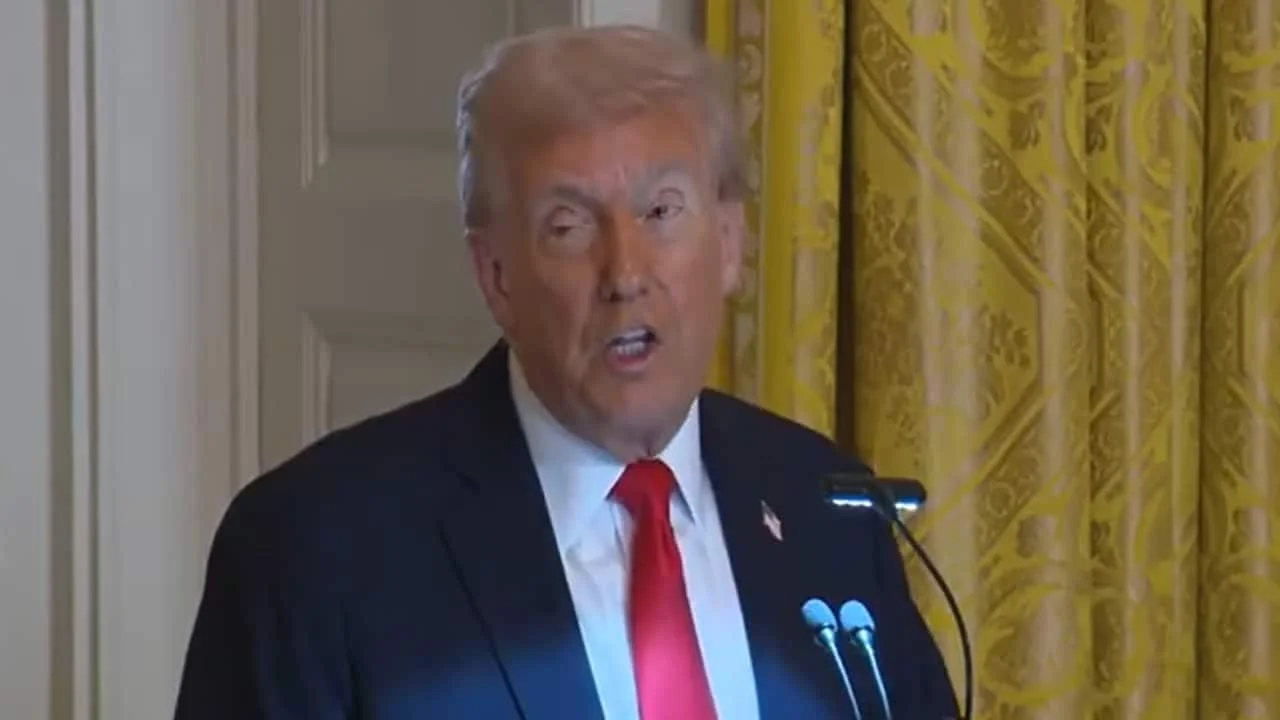
Former U.S. President Donald Trump has again asserted that his threat of imposing 200% tariffs on both India and Pakistan was the decisive factor in de-escalating a military standoff between the two nations. Trump made these statements at the "Board of Peace" event, where he reiterated his belief that economic pressure was the key to achieving peace. He also mentioned that eleven jets were shot down during the conflict, though he did not specify which country's aircraft were involved. India has formally distanced itself from Trump's narrative, stating that the conflict was resolved through bilateral efforts.
Context of Claims and Conflict
The period in question refers to a significant military tension between India and Pakistan in May. Trump's claims about his intervention have been made on multiple occasions.
May 2025 Standoff: Tensions flared in May following India's counterterror operation, Operation Sindoor. Pakistan reportedly intervened, defending militants accused of a deadly attack on tourists. This led to India's retaliatory air raids on Pakistani air bases and disruptions to their air defense systems.
Trump's Intervention Claims: Trump stated that he warned both nations of severe trade consequences, specifically threatening 200% tariffs if the fighting continued. He claimed that the prospect of significant financial loss deterred both countries from further conflict.
Nobel Prize Nomination: Notably, Pakistan's Army Chief Asim Munir and Prime Minister Shehbaz Sharif had previously nominated Trump for the Nobel Prize, acknowledging his purported role in peace efforts.
"Board of Peace" Event: Trump recently made these claims at the "Board of Peace" event, where Pakistan's Prime Minister Shehbaz Sharif was also present.
India's Stance: India has publicly stated its disagreement with Trump's account, maintaining that the conflict's resolution was a result of bilateral discussions.
Evidence of Trump's Statements
Multiple reports document Trump's assertions regarding his role in ending the India-Pakistan conflict through the threat of tariffs.
Read More: US F-15E Strike Eagle downed over Iran on Friday creates new military and diplomatic risks
Trump stated, "If you fight, I am going to put 200 per cent tariffs on each of your countries." He emphasized that the fear of losing money led them to reconsider fighting.
He also claimed that "11 jets were shot down, very expensive jets," adding that these were "nuclear nations." However, he did not specify which country lost the jets.
Trump described his approach as "Nothing like money," suggesting economic leverage was more effective than other methods.
He claimed to have spoken directly to leaders of both nations, stating, "I got him on phone and said…," implying a direct communication to halt hostilities.
Trump also noted that the conflict involved "seven jets were shot down," and mentioned that " $150 million planes were shot down."
Economic Leverage as a Peace Tool
Trump consistently framed his intervention through the lens of economic consequences, arguing that the threat of severe tariffs was sufficient to bring India and Pakistan to the negotiating table.

Tariff Threat: The core of Trump's claim rests on his promise to impose 200% tariffs on both India and Pakistan if they did not cease hostilities.
Financial Deterrent: He believes that "When it came to losing a lot of money, they said, I guess we do not want to fight." This suggests that the economic stakes outweighed the military confrontation in the eyes of the leaders.
Trade Deal Linkage: Trump also indicated he linked trade deals to the resolution of the conflict, stating, "I said we are not going to do a trade deal unless they stop the war."
Discrepancies in Aircraft Losses
A point of contention in Trump's narrative is the number of aircraft reported as shot down during the conflict. His accounts vary, and specifics remain undisclosed.
Eleven Jets Claim: Trump has repeatedly mentioned that eleven jets were shot down.
Seven Jets Claim: In another statement, he referred to "Seven planes were shot down."
Financial Loss Mention: He also stated, "$150 million planes were shot down; seven, maybe more than that, they didn’t even report the real number."
Unspecified Ownership: Crucially, Trump has not clarified which country or countries lost these aircraft, leaving the detail open to interpretation.
India's Official Position
India has officially refuted Trump's claims, emphasizing that the resolution of the May conflict was achieved through their own diplomatic and military channels, not external intervention.
Bilateral Resolution: India insists that the conflict "was resolved bilaterally."
Distancing from Claims: India has "distanced itself from Trump’s claims of mediation" in easing tensions.
Context of Air Raids: India's retaliatory air raids during the conflict had reportedly inflicted "heavy damage on nearly a dozen Pakistani air bases" and disrupted their air defense systems.
Expert Analysis
"When examining claims of geopolitical influence, it's crucial to consider corroborating evidence from all involved parties. Statements made at public events, especially by political figures, often serve multiple purposes, including domestic political messaging," noted a foreign policy analyst who requested anonymity due to the sensitive nature of international relations.
"The effectiveness of economic sanctions or the threat thereof as a tool for conflict resolution is a complex subject. Historical instances show varying degrees of success, often contingent on the specific economic conditions of the nations involved and the broader geopolitical context," stated a trade economist.
Conclusion and Implications
Donald Trump's repeated assertion that his threat of 200% tariffs compelled India and Pakistan to end their military standoff in May remains a point of contention. While Trump highlights his economic leverage as the decisive factor and cites varying numbers of downed jets, India has officially stated that the conflict was resolved bilaterally. The lack of independent corroboration for Trump's claims and India's explicit rebuttal suggest a significant divergence in perspectives on the events. The varying figures provided for aircraft losses further underscore the need for verified data. The implications of these conflicting narratives involve the perception of U.S. influence in regional conflicts and the effectiveness of economic tools in de-escalation.
Read More: Karoline Leavitt White House Press Secretary Job Unsteady After Criticism
Trump's Narrative: Focuses on direct, decisive intervention through economic threats.
India's Narrative: Emphasizes bilateral resolution and autonomy in conflict management.
Key Discrepancy: The role and impact of external pressure versus internal diplomatic efforts.
Next Steps: Further investigation would require examining declassified government documents, official statements from the time of the conflict, and detailed accounts from neutral observers or international bodies, if available.
Sources Used
Business Standard: https://www.business-standard.com/world-news/trump-claims-again-stopped-india-pak-war-200-pc-tariff-threat-1260219015431.html (Published 1 hour ago)
The Times of India: https://timesofindia.indiatimes.com/world/us/nothing-like-money-donald-trump-claims-200-tariffs-warning-forced-india-pakistan-to-stop-fighting/articleshow/128565480.cms (Published 2 hours ago)
The Week: https://www.theweek.in/news/world/2026/02/19/trump-at-it-again-claims-he-stopped-india-pak-conflict-after-threatening-200percent-tariff.html (Published 40 minutes ago)
Moneycontrol: https://www.moneycontrol.com/world/i-got-him-on-phone-and-said-trump-claims-200-tariff-threat-ended-india-pakistan-conflict-article-13618836.html (Published Oct 16, 2025)
NDTV: https://www.ndtv.com/world-news/donald-trump-doubles-down-on-india-pakistan-truce-claim-threatened-200-percent-tariffs-9443776 (Published Oct 13, 2025)
Islamabad Post: https://islamabadpost.com.pk/trump-again-claims-tariff-threat-stopped-indo-pak-war/ (Published Aug 27, 2025)
News18: https://www.news18.com/world/threatened-100-200-tariffs-trump-repeats-he-used-levies-to-settle-india-pakistan-conflict-ws-l-9631700.html (Published Oct 13, 2025)
Livemint: https://www.livemint.com/news/us-news/trump-claims-he-stopped-india-pakistan-war-through-threat-of-200-tariffs-i-got-him-on-phone-and-said-11760574065380.html (Published Oct 16, 2025)