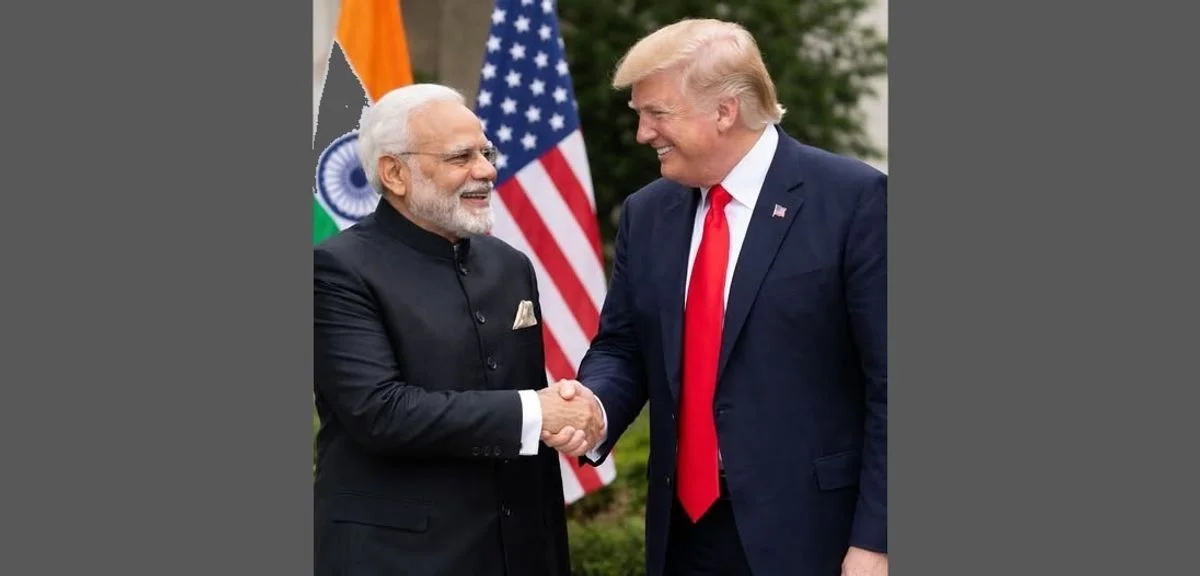
The ink is barely dry on the "framework for an Interim Trade Agreement" between India and the United States, and the pronouncements are already echoing with praise. Prime Minister Narendra Modi is hailing it as "great news," a catalyst for strengthening 'Make in India,' and a gateway to "new opportunities for farmers, entrepreneurs, MSMEs, startup innovators and youth." Yet, beneath the triumphant rhetoric, a critical eye must probe the actual substance: will this deal truly empower India's economic landscape, or does it predominantly serve to open new markets for American agricultural giants, potentially at the expense of India's own food security and domestic producers?
THE GRAND ANNOUNCEMENT: WHAT'S ON PAPER?
The joint statement, announced on February 7, 2026, paints a picture of mutual benefit and burgeoning partnership. Prime Minister Modi, in his X posts, emphasized a commitment to "building global partnerships that are future-oriented, empower our people and contribute to shared prosperity." The core of the agreement, as laid out in the various reports, centers on reciprocal tariff adjustments.
Read More: Goldman Sachs predicts 15 million US jobs lost to AI by 2036
India's Concessions: India has agreed to eliminate or significantly reduce tariffs on a "wide range of American food and agricultural products." This includes items like dried distillers’ grains, red sorghum (for animal feed), tree nuts, fresh and processed fruits, soybean oil, and wine and spirits. Additionally, tariffs on all U.S. industrial goods will be addressed.
U.S. Concessions: In return, the U.S. will apply a reciprocal tariff rate of 18% on originating goods from India, encompassing textiles, apparel, leather, footwear, plastics, rubber, organic chemicals, home decor, artisanal products, and certain machinery. Crucially, subject to the successful conclusion of the Interim Agreement, the U.S. will remove reciprocal tariffs on a range of Indian goods including generic pharmaceuticals, gems, diamonds, and aircraft parts. President Trump also signed an executive order removing a 25% penalty tariff imposed on India.
"Make in India" Boost: The narrative pushed by the Indian government is that this framework will strengthen the 'Make in India' initiative and create significant opportunities for domestic businesses and job seekers. Commerce Minister Piyush Goyal stated the deal would help India access advanced technologies from the U.S.
"This framework will also strengthen resilient and trusted supply chains and contribute to global growth." - PM Narendra Modi
HISTORICAL CONTEXT: A DANCE OF DIPLOMACY AND DEMANDS
This recent agreement isn't an isolated event. It's part of a long-standing, often complex, trade relationship between India and the U.S. Historically, trade disputes have flared, often triggered by India's protectionist policies and the U.S.'s persistent demands for greater market access, particularly in agriculture.
The Trump Era: During the Trump administration, trade tensions were palpable. The U.S. had previously imposed retaliatory tariffs on steel and aluminum imports from India, and India, in turn, had increased tariffs on various American products. There were also significant disagreements over market access for American agricultural goods, intellectual property rights, and e-commerce policies.
Past Grievances: For years, India has been a recipient of U.S. trade actions. In 2019, the U.S. had removed India from its Generalized System of Preferences (GSP) program, which provided preferential tariff treatment to over 3,000 Indian export items. This was largely attributed to concerns about India's trade practices, including tariffs and market access.
Modi's Vision: Prime Minister Modi's "Viksit Bharat" (Developed India) vision, frequently mentioned in the context of this deal, signifies an ambition for economic self-reliance and global integration. The question is whether this "interim agreement" truly serves that grand vision, or if it’s a tactical step that might have unforeseen consequences.
"We have agreed on a framework for an Interim Trade Agreement between our two great nations." - PM Narendra Modi
UNPACKING THE TARIFF CONCESSIONS: WHO REALLY WINS?
The devil, as they say, is in the details. While the Indian government emphasizes the benefits for its farmers and MSMEs, a closer look at the list of goods receiving reduced tariffs from India reveals a significant leaning towards American agricultural and processed food products.

| U.S. Agricultural/Food Products Receiving Tariff Reduction/Elimination from India | Potential Impact on Indian Domestic Producers |
|---|---|
| Dried distillers’ grains (for animal feed) | Increased competition for domestic feed sources. |
| Red sorghum (for animal feed) | Potential displacement of local grain farmers. |
| Tree nuts | Pressure on domestic nut growers and processors. |
| Fresh and processed fruits | Significant challenge for Indian fruit farmers and canning industries. |
| Soybean oil | Impact on domestic edible oil production and prices. |
| Wine and spirits | Increased competition for Indian alcohol producers. |
This begs the question: How will these tariff reductions directly benefit Indian farmers? While the government claims "new opportunities," it's crucial to understand if these opportunities are for exporting Indian produce, or for consuming more American imports. Furthermore, with reduced tariffs on U.S. industrial goods, what is the projected impact on India's manufacturing sector, especially its MSMEs? Will they be able to compete with established American industries, or will this lead to a surge in imports that stifles local production?
Read More: Australia-US Trade Dispute: New Tariffs Cause Friction
"This framework will also strengthen resilient and trusted supply chains and contribute to global growth." - PM Narendra Modi
BEYOND TARIFFS: THE UNSPOKEN GATES
The agreement mentions addressing "non-tariff barriers" and establishing "rules of origin" to ensure benefits accrue to both nations. However, what constitutes these non-tariff barriers from India's perspective? Are they regulatory hurdles, complex certification processes, or something else entirely? And how will these "rules of origin" be structured? Will they be robust enough to prevent transshipment or ensure that genuine Indian products are prioritized, or could they become another avenue for regulatory complexities that favor established foreign players?

Furthermore, the U.S. White House statement mentions its intent to "take into consideration, during the negotiations of the BTA, India’s request that the United States continue to work to lower tariffs on Indian goods." This is a significant point – the U.S. is considering lowering tariffs on Indian goods in future, broader negotiations, but has not made concrete commitments. This suggests that the immediate benefits, in terms of tariff removal on Indian exports to the U.S., might be more targeted and conditional.
Read More: New ways to measure AI's impact on jobs and economy
Pharmaceuticals, Gems, and Aircraft Parts: These are highlighted as sectors where the U.S. may remove tariffs, subject to the agreement's successful conclusion. While promising, the conditional nature leaves room for doubt.
Section 232 Tariffs: The U.S. is removing tariffs imposed under Proclamations related to national security concerns on aluminum, steel, and copper. While a victory for India, it raises questions about the U.S.'s unilateral use of such proclamations and the precedent it sets.
"The United States and India commit to provide each other preferential market access in sectors of respective interest on a sustained basis." - United States-India Joint Statement
EXPERT ANALYSIS: SKEPTICISM AND CAUTION
Independent trade analysts are urging a measured response, cautioning against an overestimation of immediate benefits for India.

"While the language of partnership and mutual benefit is welcome, we need to scrutinize the specifics. India's concessions on agricultural imports are substantial, and it remains to be seen if domestic producers will truly be shielded or empowered, or if this primarily opens the floodgates for American produce." - Dr. Priya Sharma, Trade Economist
"The 'Make in India' initiative has always faced the challenge of creating truly competitive domestic industries. This interim agreement needs to demonstrate how it actively supports local manufacturing and innovation, rather than just allowing for greater import penetration." - Mr. Rajiv Kapoor, Industrial Policy Analyst
THE ROAD AHEAD: A COMPREHENSIVE PICTURE EMERGES?
This "interim framework" is explicitly intended as a "bridge toward a comprehensive Bilateral Trade Agreement (BTA)." This means the current deal is just the first step. The real test will be in the subsequent negotiations for the BTA.
Transparency and Scrutiny: Will the terms of the comprehensive BTA be as transparent as this announcement? How will public consultations be conducted to ensure that the interests of all stakeholders, particularly farmers and MSMEs, are genuinely represented?
Reciprocity in Practice: Will the "preferential market access" promised to India materialize with tangible tariff reductions and non-tariff barrier removals in key Indian export sectors to the U.S., such as textiles, engineering goods, and services?
Impact on Food Security: Given the emphasis on U.S. agricultural imports, what is the long-term strategy for India's food security? Will this agreement inadvertently create dependencies that could be exploited in the future?
Technological Access: Minister Goyal's claim of accessing advanced technologies from the U.S. is significant. What are the specific technologies being referred to, and under what terms will they be shared? Will they genuinely foster indigenous innovation or create new forms of technological dependence?
The announcement of this India-U.S. interim trade framework is a complex development. While Prime Minister Modi heralds it as a win for India, a critical, free-thinking approach demands deeper investigation. The framework opens avenues, yes, but for whom, and at what cost? The true impact on India's farmers, entrepreneurs, and its ambition for self-reliance will only become clear as this "interim" arrangement unfolds into a more permanent trade architecture. The ball is now in India's court to ensure that this partnership truly serves its national interests, not just those of its powerful trade partner.
Read More: Iran Strait Traffic May Take 2 Months to Return to Normal
Sources:
The Hindu: https://www.thehindu.com/news/national/joint-statement-india-united-states-trade-framework-pm-modi/article70602781.ece
Times Now News: https://www.timesnownews.com/india/great-news-for-india-and-usa-pm-narendra-modis-first-reaction-on-joint-statement-on-india-us-trade-deal-article-153574189
Livemint: https://www.livemint.com/news/india/indiaus-trade-deal-pm-modi-interim-agreement-opens-new-opportunities-farmers-entrepreneurs-msmes-startup-employment-job-11770432387660.html
Sambad English: https://sambadenglish.com/national-international-news/india/modi-hails-usindia-interim-trade-framework-as-great-news-says-it-will-boost-make-in-india-11083861
Fortune India: https://www.fortuneindia.com/business-news/india-us-trade-agreement-to-open-new-opportunities-for-farmers-msmes-says-piyush-goyal/130029
Hindustan Times: https://www.hindustantimes.com/india-news/pm-narendra-modi-india-us-trade-deal-reaction-growing-depth-trust-and-dynamism-101770432227455.html
The Tribune: https://www.tribune.com/news/india/thank-president-trump-for-his-personal-commitment-pm-modi-on-india-us-deal/
The White House: https://www.whitehouse.gov/briefings-statements/2026/02/2026/02/07/united-states-india-joint-statement/
The Times of India: https://timesofindia.indiatimes.com/india/strengthens-make-in-india-pm-modi-hails-india-us-trade-deal-thanks-trump/articleshow/128016804.cms
Economic Times: https://economictimes.indiatimes.com/news/economy/foreign-trade/modi-hails-interim-trade-framework-with-us-as-big-win-for-jobs-msmes-and-startups-thanks-trump-for-personal-commitment/articleshow/128017796.cms