The financial health of India's trade has come under scrutiny as the trade deficit saw a significant increase in January. This widening gap occurred before recent agreements with the United States are expected to provide relief to exporters. The situation highlights pressures from increased imports, particularly in precious metals, while exports show modest growth. Policymakers and businesses are observing these trends closely as new trade frameworks take shape.
India’s merchandise trade deficit surged to $34.68 billion in January 2026, up from $23.43 billion a year earlier and well above market expectations of $26 billion. The gap was the largest since October’s record $41.68 billion, coming just weeks before New Delhi struck an interim trade deal with the US aimed at lowering tariffs.
Trade Deficit Figures Show Marked Increase
India's trade deficit, the difference between imports and exports, expanded significantly in January 2026.
The deficit reached $34.68 billion, a notable rise from $23.43 billion in the same period last year.
This figure also surpassed market expectations, which had predicted a deficit of around $26 billion.
The January deficit represented the widest gap seen since October 2025, when it recorded a high of $41.68 billion.
Drivers of Increased Imports
The rise in the overall import bill was substantially influenced by increased purchases of certain goods, notably gold and silver.
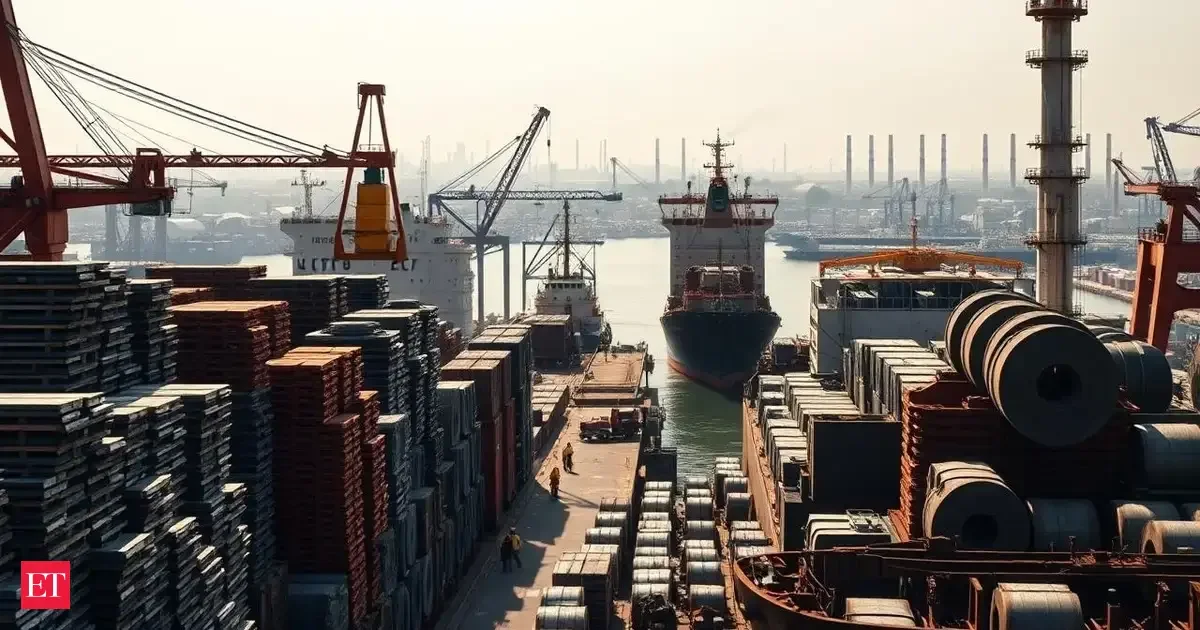
Imports, in general, saw a 19% increase in January, driven significantly by the rally in gold and silver prices.
While specific data on consumption volumes is still being analyzed, rising global prices appear to be a primary factor inflating the import costs.
Other sectors like engineering goods, electronic goods, drugs, and pharmaceuticals also posted growth in exports, indicating varied performance across different industries.
Export Performance and U.S. Tariff Relief
Despite the growing deficit, India's exports have shown some positive movement, with recent developments in trade relations with the U.S. expected to offer support.
Overall exports increased by 0.6% in January.
However, non-petroleum and non-gems-and-jewellery exports, a key indicator of underlying export strength, saw a slight contraction of 0.24%.
A crucial development is the recent interim trade agreement with the U.S., which includes a reduction in tariffs on Indian goods from 50% to 18%. This relief is anticipated to benefit exporters significantly.
A trade delegation is scheduled to visit Washington to finalize the trade agreement.
Services Trade Shows Resilience
In contrast to the merchandise trade, India's services sector has demonstrated a robust performance, contributing positively to the overall trade balance.
Read More: US added 228,000 jobs in March, but past months revised down
Services exports grew by a substantial 26.3% to $43.9 billion in January.
Services imports also increased, by 17.3%, reaching $19.6 billion.
This resulted in a significant surplus in the services trade of $24.3 billion.
The central bank's detailed services trade data, released later, will provide a more precise picture than initial estimates.
U.S. Trade Negotiations and India's Commitments
The recent trade pact with the U.S. is part of a broader strategy by India to strengthen trade ties with major global partners, following a similar agreement with the EU.

Under the new framework, India has agreed to reduce its purchases of Russian oil.
There is also an intention to more than double annual imports of U.S. goods.
This agreement, particularly the tariff reduction, is seen as a vital step towards alleviating pressure on Indian exporters.
Bilateral Trade Dynamics with China
Trade figures also indicate continued significant engagement with China, with both imports and exports showing an increase.
Imports from China during the April-January period rose by nearly 14% to $108.18 billion compared to the previous year.
This trend suggests a continued reliance on Chinese intermediate and electronic goods.
The data points to the persistent influence of trade with China on India's overall import figures.
Expert Observations on Trade Performance
Industry experts have commented on the implications of the recent trade data and the evolving trade landscape.
Ajay Srivastava, founder of the Global Trade Research Initiative (GTRI), noted that US tariffs had a visible impact on export performance.
He also pointed to "early signs of market diversification," suggesting India's efforts to broaden its export destinations.
Srivastava emphasized the resilience of India's merchandise and services sectors, despite global economic uncertainties.
Conclusion and Forward Outlook
India's trade deficit in January 2026 widened due to a significant increase in imports, primarily driven by higher gold prices. While exports showed some growth, a key measure of underlying export health contracted. The services sector, however, performed strongly, generating a substantial surplus.
The recently concluded interim trade agreement with the U.S., including tariff reductions, is poised to offer much-needed support to Indian exporters. Negotiations are ongoing to formalize this agreement. Meanwhile, trade dynamics with China remain robust, highlighting ongoing import dependencies.
Read More: India Plastic Rules Give Companies More Time to Recycle Amid Safety Rules
The data underscores the multifaceted nature of India's trade, influenced by global commodity prices, bilateral agreements, and structural import needs. The coming months will be critical in assessing the impact of the U.S. trade deal on India's export performance and overall trade balance.
Sources:
The Hindu: India's January trade deficit widens before U.S. tariff relief kicks in - Provides details on the trade pact, U.S. tariff relief, and upcoming negotiations.
Trading Economics: India’s Trade Deficit Widens Sharply Amid Rising Imports - Offers a clear summary of the trade deficit figures and the impact of U.S. tariff announcements.
Business Standard: Gold, silver rally drove January import bill up 19%; exports increased 0.6% - Details the increase in imports, export growth, and the contribution of services trade.
Livemint: Higher imports push India's trade deficit to $34.68 billion in January | Mint - Focuses on the surge in imports, trade deficit figures, and mentions bilateral trade with China and expert insights.
NDTV Profit: India's January Trade Deficit Widens To $34.7 Billion, US Stays Top Export Destination - Highlights the trade deficit size and mentions the trade relationship with China.