

A stark disconnect defines India's scientific landscape: women enter STEM fields in substantial numbers, yet their presence dwindles dramatically in actual research careers. This phenomenon, the 'leaky pipeline', deviates from global trends, suggesting a unique set of societal and systemic pressures at play within India. While globally women are a significant portion of the population, their underrepresentation in scientific research positions signifies a substantial loss of talent and potential.
The Educational Influx
The initial phase of scientific education in India presents a different picture. Girls and women are demonstrably entering STEM fields at rates comparable to their male counterparts, at least in educational institutions. This influx, however, doesn't translate into a sustained presence in research. The narrative is one of entry and then attrition, a pattern that begins to accelerate as individuals move from academia towards professional research roles.
Read More: Acoustic Waves Help Create New Light-Matter Condensation on Microchips
The Departure from Research
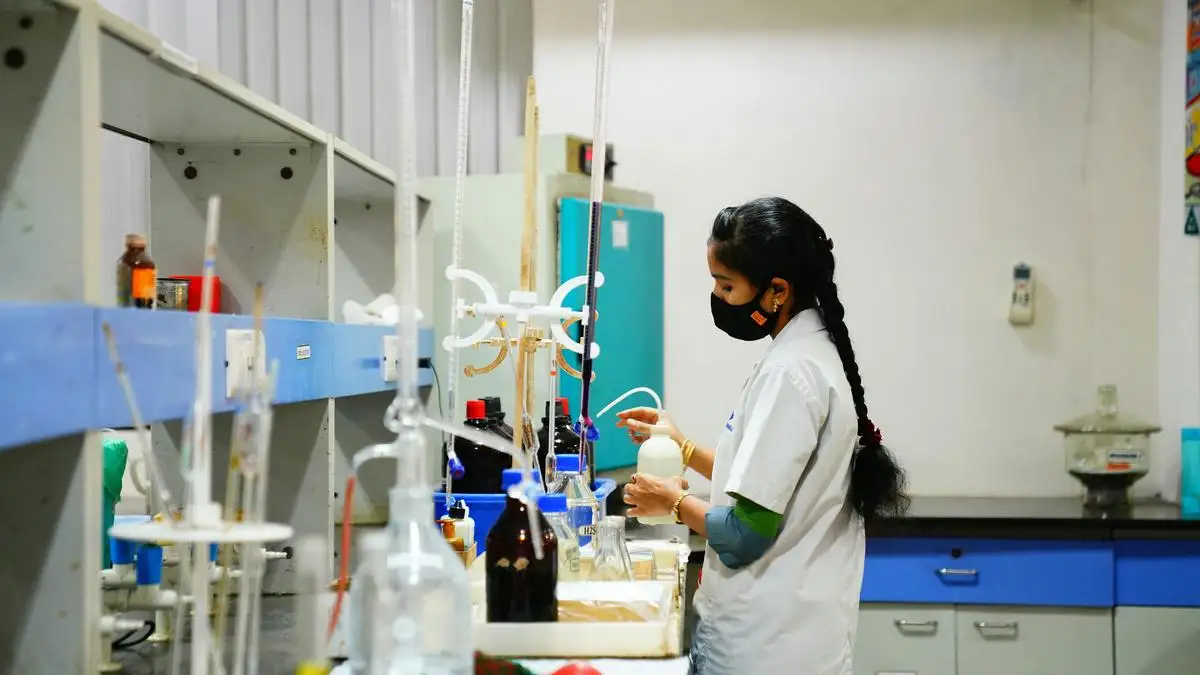
The crux of the issue lies in the transition from academic pursuits to securing long-term, remunerative, and respected research positions. A significant majority of women holding PhDs in STEM fields in India report being unable to access such opportunities. This indicates a systemic barrier that prevents educated women from fully integrating into the research ecosystem. The consequences are a cumulative erosion of female representation at every subsequent stage of a scientific career.
Factors Contributing to the Drain
While the broad term 'leaky pipeline' is applied, the specifics of the Indian context appear to magnify certain aspects. Reports suggest that in places like 'Bengaluru', a hub for scientific advancement, women remain noticeably absent from key research institutes. The presence of mentors and supportive peer groups is highlighted as crucial for women navigating these often male-dominated spaces, suggesting a need for targeted support structures.
Read More: India Defence Vision 2047: Drones, Space, Cyber Will Change Future Wars
Further complicating the issue are societal expectations and internalised pressures. For women, particularly in fields like medical science, professional ambitions can become entangled with caregiving responsibilities and self-imposed expectations. This intersection of personal commitment and professional identity presents a significant hurdle, influencing career trajectories and decisions.
Broader Context: Science Diplomacy and Governance
While the focus remains on the internal 'leaky pipeline', India's engagement with science on a global stage is also noteworthy. Platforms for 'science diplomacy' are seen as vital for shaping international regulatory norms, particularly concerning disruptive and emerging technologies. Discussions around 'strategic autonomy', the governance of these technologies, and global scientific cooperation form a parallel conversation. However, these broader geopolitical and technological considerations do not directly address the fundamental issue of retaining women within the nation's own research institutions.
Background: The Global Leaky Pipeline
Globally, the 'leaky pipeline' refers to the disproportionate decrease in women's participation in STEM careers as they advance. Factors often cited include implicit bias, lack of mentorship, work-life balance challenges, and hostile work environments. However, the Indian scenario appears to possess its own distinct flavour, with a particularly sharp drop-off after the educational phase, suggesting that the mechanisms causing attrition may be more pronounced or qualitatively different than in other parts of the world. The sheer volume of women entering STEM education initially makes the subsequent loss in research positions more conspicuous.
Read More: Ice Age Mammal Genes Show Survival After Volcano, Oldest DNA Found